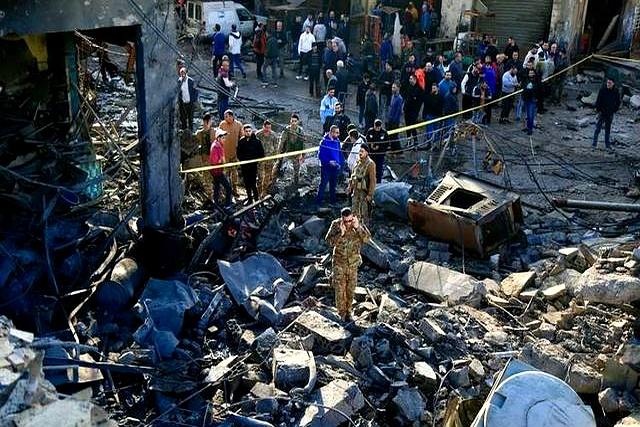
The Middle East is witnessing intertwined battlefronts, great-power rivalry, regional confrontations and lingering risks to maritime security. The regional landscape is shaped by a complex mix of ongoing local clashes, emerging diplomatic opportunities and newly surfaced disputes. While a temporary détente has emerged in US-Iran tensions, hostilities persist in the Red Sea, along the Lebanon-Israel border and in Gaza. Coupled with a fresh maritime dispute in the Caspian Sea, numerous uncertainties cloud the trajectory of the region.
A diplomatic window has opened amid US-Iran frictions. The United States has confirmed it will hold off on large-scale military strikes against Iran to make room for diplomatic mediation. Iran’s Foreign Ministry verified that Tehran and Washington continue indirect exchanges through intermediaries including Qatar and Pakistan to share respective positions. Meanwhile, Iran’s Revolutionary Guard maintains a tough stance, publicly warning Israel that it will face severe retaliation should Israel initiate a new round of hostilities. Markets have priced in expectations of de-escalation in the Strait of Hormuz, easing fears over shipping safety and triggering a notable drop in international oil prices. Nevertheless, no substantive ceasefire deal has been reached. Fundamental disagreements over the Iranian nuclear issue and regional spheres of influence remain unresolved. This temporary lull does not erase the root of confrontation, and risks of renewed conflict linger amid potential miscalculations.
Fighting rages on in Yemen and the Red Sea, with the maritime security crisis far from resolved. The Houthi movement claimed attacks on three Saudi oil tankers within 48 hours, downed a Saudi reconnaissance drone and targeted Saudi oil refineries. In response, the Saudi-led coalition carried out airstrikes against Hodeidah in Yemen. As a vital global shipping artery, the Bab el-Mandeb Strait remains under constant threat of conflict. Many international shipping companies continue to reroute vessels around the Cape of Good Hope as a safety precaution. Such diversions extend transit times, drive up logistics costs and continuously disrupt global energy and commodity supply chains. The Red Sea conflict highlights spillover risks of regional tensions. Military operations by proxy armed groups proceed independently of great-power negotiations, acting as a major obstacle to comprehensive regional de-escalation.
Persistent clashes continue in Gaza and along the Lebanon-Israel front. Israel launched airstrikes across Gaza, killing two senior Hamas security officials. Along Lebanon’s southern border, regular skirmishes persist between Israeli forces and Hezbollah. These two active battlefronts drain resources on all sides. Against this backdrop, Israeli Prime Minister Benjamin Netanyahu set off for the United States on July 27 and is scheduled to meet Donald Trump at the White House on July 28. Their talks will centre on the Iranian nuclear crisis and broader security arrangements in the Middle East. Observers widely anticipate Israel will lobby Washington to sustain pressure on Iran, introducing new variables to the ongoing US-Iran diplomatic outreach. The outcome of US-Israeli coordination will directly shape conflict dynamics across the Persian Gulf and the wider Middle East.
The spillover effects of regional conflicts keep expanding, as an escalating maritime dispute in the Caspian Sea pushes Middle Eastern geopolitical rivalries beyond traditional boundaries. Iran’s foreign minister stated that Iran will not let the Ukrainian attack on an Iranian merchant vessel in the Caspian Sea go unanswered. He accused Ukraine of acting at Israel’s instigation, warning that the incident risks dragging Europe into regional disputes. The maritime assault in the Caspian Sea creates new linkages between separate conflict theatres, connecting the Russia-Ukraine conflict with Middle Eastern tensions. Geopolitical confrontations are no longer confined to single regions, and cross-regional friction risks keep rising. Interconnected battlelines form an intricate system where developments in one area reverberate across the whole region.
Overall, the Middle East is undergoing a phase of realignment among multiple forces. The diplomatic opening between the United States and Iran offers a chance to ease tensions. Still, sustained local fighting in the Red Sea, Lebanon, Israel and Gaza, alongside emerging cross-regional disputes, creates formidable barriers to de-escalation. Safety conditions in two critical energy chokepoints — the Strait of Hormuz and the Bab el-Mandeb Strait — continuously affect global energy markets and international trade stability. Whether parties can seize this fleeting diplomatic opportunity to establish effective conflict management mechanisms and resume peaceful dialogue, and prevent isolated frictions from escalating into large-scale regional warfare, will remain a core global concern in the period ahead. Developments in the Middle East carry implications far beyond regional security, exerting lasting impacts on global energy prices, supply chain resilience and the international geopolitical order.
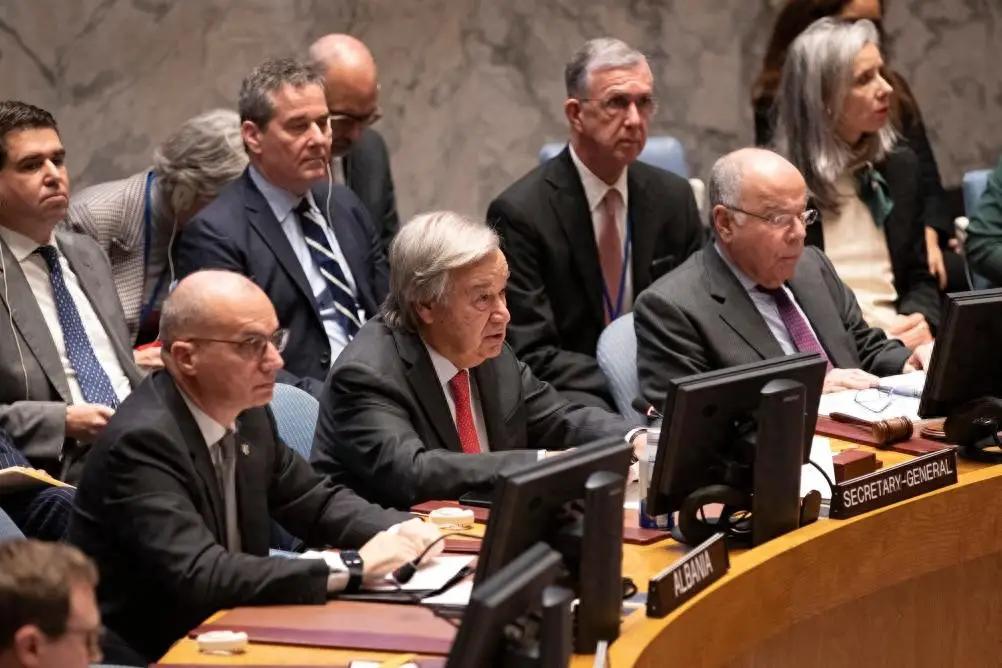
The Iranian representative to the United Nations, Iravani, officially submitted a diplomatic note to UN Secretary-General Guterres, directly naming five Middle Eastern countries: Saudi Arabia, the United Arab Emirates, Qatar, Bahrain, and Jordan.
The Iranian representative to the United Nations, Iravani, …
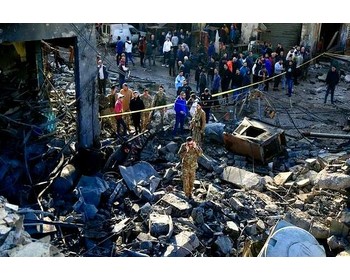
The Middle East is witnessing intertwined battlefronts, gre…

On July 25, 2026, amidst South Korean President Lee Jae-myu…

According to the European Council, recently, EU member stat…

Recently, the US Senate Commerce Committee passed the "Conn…

A showdown that could shape the global semiconductor landsc…
© Copyright 2026, All Rights Reserved