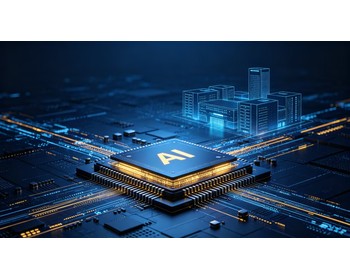
On July 25, 2026, amidst South Korean President Lee Jae-myung’s visit to the United States, sensational news emerged from San Francisco: Samsung Electronics and SK Group would embark on a massive commercial partnership—valued at a combined $950 billion—with U.S. AI giants such as Nvidia and Broadcom. This figure represents nearly 60% of South Korea’s projected 2025 GDP, marking the largest-scale commercial collaboration in the history of the semiconductor industry.
This astronomical deal is not a single contract but a "combined package" of multiple collaborative projects. Notably, Samsung Electronics signed a $200 billion memorandum of understanding (MOU) with Broadcom, covering the supply of advanced memory chips and AI chip foundry services over the next five years. This entails Samsung not only supplying critical memory products—such as High Bandwidth Memory (HBM)—to Broadcom but also opening up its advanced manufacturing capacity to produce Broadcom’s custom AI chips.
The lion's share of the deal comes from SK Group. SK Hynix secured a long-term partnership with Nvidia valued at over $500 billion, centered on the stable supply of HBM—currently the most critically scarce component for AI chips. The two parties also plan to jointly build AI data centers and AI manufacturing facilities in South Korea with a total capacity of 2 gigawatts, with the first facility expected to begin operations in 2027. Additionally, SK Group entered into partnerships worth approximately $250 billion with companies such as Microsoft, Anthropic, and Amazon Web Services (AWS), bringing the total value of SK-led collaborations to $750 billion.
Underpinning this deal is the South Korean government's clear strategic intent to redefine the nation's industrial standing in the AI era. In the "San Francisco AI Declaration" issued at the AI summit in San Francisco, President Lee Jae-myung explicitly outlined the goal of transforming South Korea into a "global AI production base and a core supply chain hub."
For a long time, South Korea's semiconductor industry has relied heavily on the memory chip sector, making it highly susceptible to cyclical fluctuations. The AI boom offers a historic opportunity for industrial upgrading: High Bandwidth Memory (HBM)—a critical component for AI accelerators—demands advanced technology and yields high profit margins, playing directly to the strengths of Samsung and SK Hynix. By forging ties with AI-era powerhouses like Nvidia and Broadcom, South Korea aims to extend its dominance in memory technology into the core segments of the broader AI supply chain.
From a business perspective, this massive deal is essentially a mutually beneficial move to "lock in production capacity." For US companies like Nvidia and Broadcom, the explosive growth in demand for AI computing power has made the supply of advanced chips a critical bottleneck. With HBM capacity in particularly short supply, securing a guaranteed supply for the next five years is akin to holding the key to the "ammunition depot" in the AI arms race.
For South Korean companies, signing long-term agreements with top-tier clients not only ensures revenue stability but also provides the certainty needed for massive investments in production capacity. Under the semiconductor industry's logic of "counter-cyclical investment," the backing of long-term orders allows Samsung and SK Hynix to expand production more aggressively, further widening the gap between themselves and their competitors.
However, the $950 billion figure has been mired in controversy since its announcement. Analysts point out that this sum encompasses a wide range of categories—including reciprocal procurement, infrastructure investment, and joint R&D—and even factors in South Korean firms' purchases of GPUs from the U.S.; consequently, the actual volume of new orders may be far lower than the headline figure suggests.
Such deep integration with U.S. tech giants could heighten the South Korean industry's reliance on the United States and undermine its technological autonomy. At the same time, an excessive concentration of resources in the AI memory sector risks squeezing out development in other semiconductor categories, potentially leading to further imbalances in the industrial structure.
Market reaction has been intriguing. Following the announcement, SK Hynix’s US-listed ADRs fell rather than rose, dropping by more than 8% at one point. This likely reflects the mixed sentiment among investors: while they acknowledge the value of long-term collaboration, they remain cautious about the sustainability of the AI chip cycle.
In any case, the realization of this $950 billion partnership will have a profound impact on the global AI industry landscape. The deep integration between South Korea’s "memory chip duo" and a US AI giant has created a trans-Pacific "AI axis." The synergies generated by this alliance—spanning critical areas such as HBM, advanced foundry services, and AI infrastructure—could reshape the global supply landscape for AI computing power.
Overall, this situation presents both a warning and an opportunity. It clearly demonstrates that competition in the AI era has evolved from a contest of individual technologies into a comprehensive battle of supply chain ecosystems. Whoever controls the production capacity and technology for key components will seize the initiative in this AI revolution. South Korea’s $950 billion high-stakes gamble is now underway. The outcome will depend not only on the continued surge in AI demand but, more crucially, on whether South Korea can safeguard its technological sovereignty within the partnership and achieve a genuine transformation from a mere "supply chain participant" into a "rule-maker."

The Iranian representative to the United Nations, Iravani, officially submitted a diplomatic note to UN Secretary-General Guterres, directly naming five Middle Eastern countries: Saudi Arabia, the United Arab Emirates, Qatar, Bahrain, and Jordan.
The Iranian representative to the United Nations, Iravani, …

The Middle East is witnessing intertwined battlefronts, gre…
On July 25, 2026, amidst South Korean President Lee Jae-myu…

According to the European Council, recently, EU member stat…

Recently, the US Senate Commerce Committee passed the "Conn…

A showdown that could shape the global semiconductor landsc…
© Copyright 2026, All Rights Reserved