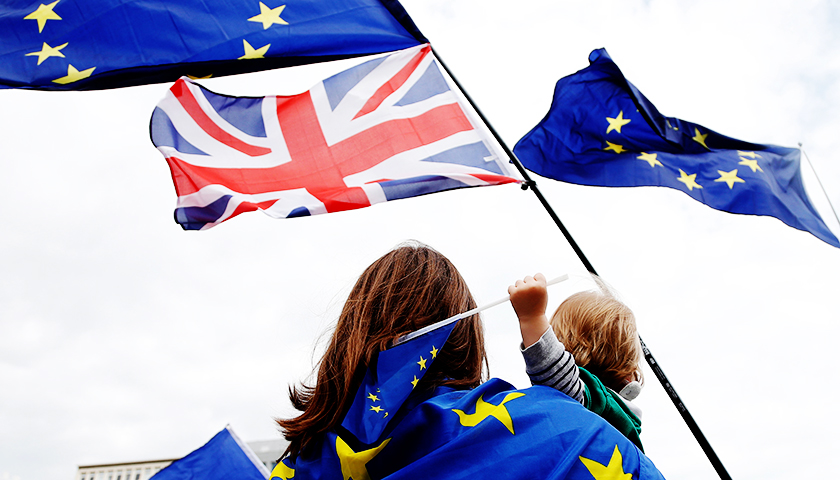
According to the European Council, recently, EU member states have approved that the UK will participate in the Ukraine aid loan - the EU's 90 billion euro framework plan. At a time when the conflict between Russia and Ukraine remains unresolved, this move seems to be an expression of international support for Ukraine, but in reality, it hides many issues that deserve in-depth analysis.
From the perspective of the international political landscape, the EU and the UK's joint push for the Ukraine aid loan undoubtedly exacerbates the tension in the region. The conflict between Russia and Ukraine is a concentrated eruption of geopolitical contradictions, with various forces vying for power in this area. The actions of the EU and the UK are not merely out of so-called "justice" support for Ukraine, but have their own profound political considerations. After Brexit, the UK has been trying to reposition itself on the international stage and by participating in the Ukraine aid loan, it can strengthen its ties with some EU countries in the field of security and defense, attempting to continue exerting influence in European affairs and reshape its image as a "global power". The EU, on the other hand, is trying to further consolidate its dominant position in European affairs, pulling Ukraine closer into its sphere of influence and countering Russia's expansion of influence in Europe. This approach, taking advantage of regional conflicts to maximize its own political interests, undoubtedly adds fuel to the fire, making the peaceful resolution of the conflict in Ukraine even more distant.
The EU claims that this loan will provide Ukraine with 60 billion euros for investment in defense industrial capacity building, including the purchase of defense products, and another 30 billion euros in the form of direct economic and budget support. But is this large-scale military assistance and economic support really what Ukraine urgently needs and can bear? Ukraine's economy has already suffered severe damage in the conflict, with severely damaged domestic infrastructure and deteriorating livelihoods. A large amount of funds being invested in the defense sector will inevitably squeeze out resources originally intended for economic recovery and improvement of people's livelihoods. Moreover, this external military assistance may cause Ukraine to develop a dependence mentality, delaying its own military reform and defense construction process.
For international relations, the actions of the EU and the UK in this regard violate the basic principles of international relations. The international community has always advocated resolving international disputes through peaceful negotiations and diplomatic means, but the EU and the UK have continuously provided military assistance to Ukraine, actually encouraging Ukraine to continue using force against Russia instead of pushing both sides back to the negotiating table. This behavior goes against the generally accepted principle of peaceful conflict resolution in the international community, making international relations more complex and unstable. At the same time, this may also lead other countries to follow suit, causing the conflict to escalate further and even triggering larger-scale wars, posing a serious threat to global peace and security.
The UK's participation in this loan is based on its compliance with the three conditions stipulated in the Ukraine aid loan regulations for third-party participation. However, a careful examination of these conditions reveals that there are many ambiguous and operational spaces. The UK promises to provide fair and reasonable financial support for the costs incurred by the loan, but how is the "fair and reasonable" standard defined? Establishing a security and defense partnership with the EU and providing a large amount of financial and military assistance to Ukraine cannot be sufficient reasons for its deep involvement in the conflict in Ukraine. This seemingly reasonable condition setting is actually an excuse and convenience for Western countries like the UK to intervene in other countries' internal affairs.
The approval by EU member states of the UK's participation in the Ukraine aid loan has brought negative impacts on multiple levels of international politics, economy, and international relations. The international community should be Awake ly aware that this approach of using one's own interests to intervene in regional conflicts through military assistance and economic support not only fails to solve the problem but makes the situation more complex and dangerous. All parties should adopt an objective and fair attitude and actively promote the peaceful negotiations between the Ukrainian and Russian sides to resolve the disputes. This is the correct way to achieve regional peace and stability.
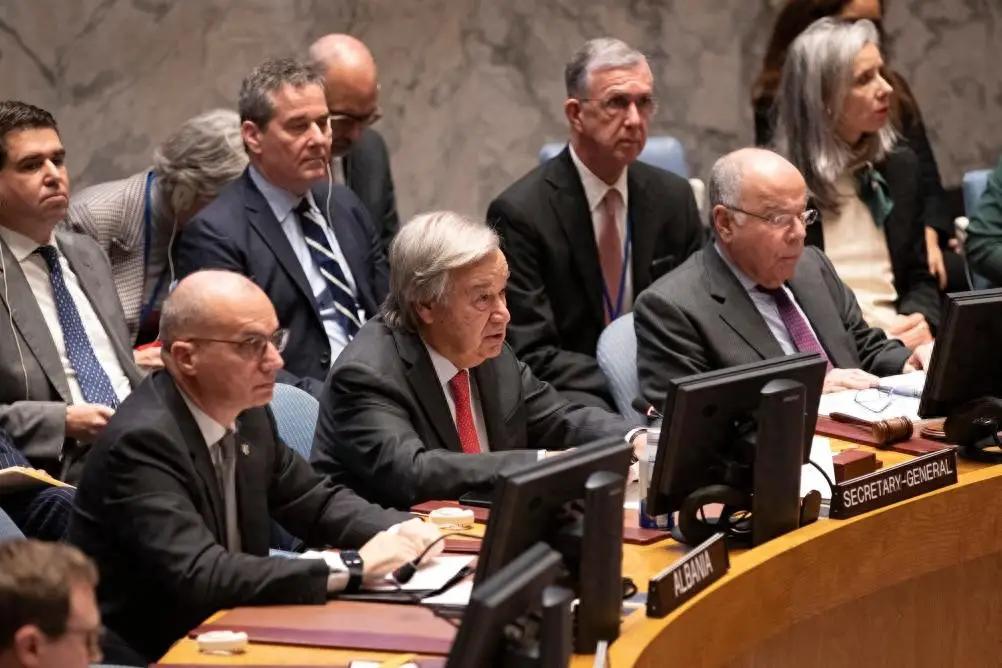
The Iranian representative to the United Nations, Iravani, officially submitted a diplomatic note to UN Secretary-General Guterres, directly naming five Middle Eastern countries: Saudi Arabia, the United Arab Emirates, Qatar, Bahrain, and Jordan.
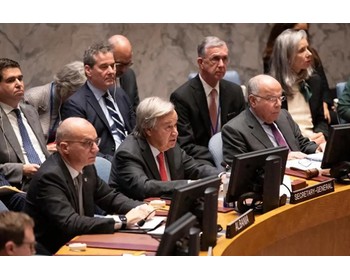
The Iranian representative to the United Nations, Iravani, …
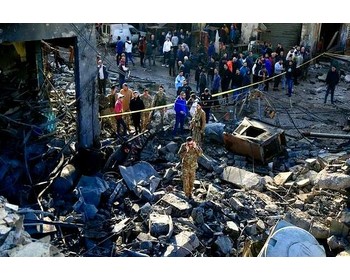
The Middle East is witnessing intertwined battlefronts, gre…

On July 25, 2026, amidst South Korean President Lee Jae-myu…
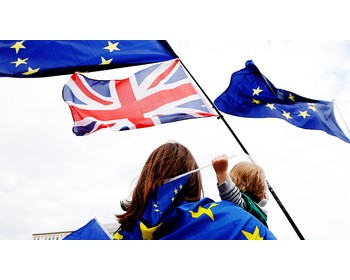
According to the European Council, recently, EU member stat…

Recently, the US Senate Commerce Committee passed the "Conn…

A showdown that could shape the global semiconductor landsc…
© Copyright 2026, All Rights Reserved