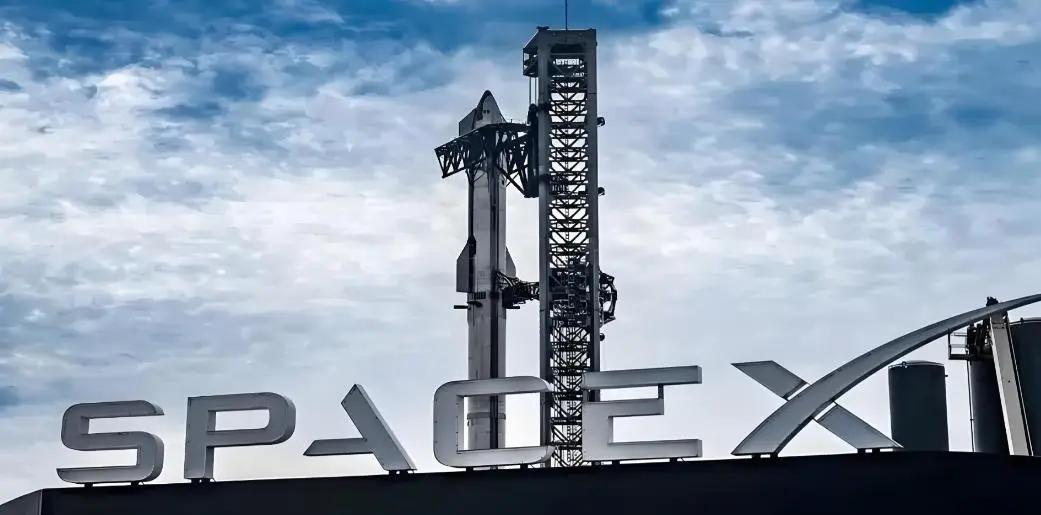
From three launch failures and a brush with bankruptcy to now targeting the biggest initial public offering in the history of human commerce, SpaceX’s two-decade journey is nothing short of a real-life business legend. Founded by Elon Musk, the company has long outgrown its initial goal of transforming humanity’s access to space; it now seeks to push the boundaries of what capital markets perceive as the limit of a company’s value.
Multiple recent sources confirm that SpaceX is planning to go public in the mid-to-late 2026, with a targeted valuation potentially reaching an astonishing $1.5 trillion and expected fundraising far exceeding $30 billion. If successful, this will surpass the record set by Saudi Aramco in 2019, making it the largest IPO ever. Underpinning this astronomical figure is not only SpaceX’s established dominant position in the aerospace transportation sector but also its ambitious vision to deploy next-generation AI computing infrastructure into Earth’s orbit.
The foundation of SpaceX’s bold bid for the largest IPO in history lies first in the nearly unassailable commercial and technological barriers it has built. After years of development, it is no longer merely an aerospace manufacturer. Professional institutions prefer to describe it as “a space logistics and infrastructure monopolist that applies first principles to their utmost potential.” Its core competitive edge stems from the disruptive cost advantage brought by reusable rocket technology. By fully reusing the first stage of the Falcon 9 rocket, SpaceX has slashed the marginal cost per launch to approximately $15 million. When a rocket is reused five times, its gross profit margin can soar to around 68%. This allows its launch prices to be far lower than those of traditional defense giants, enabling it to capture nearly 90% of the global payload mass to orbit and firmly control the “tollgate” to space.
More ingeniously, SpaceX has leveraged this cost advantage to build a self-reinforcing, interconnected business ecosystem. It uses the reliable and low-cost Falcon 9 rockets to deploy and operate its Starlink satellite internet on a large scale. In turn, the massive cash flow generated by the Starlink business fuels Starship—the most ambitious aerospace project in human history, a fully reusable launch system. As of November 2025, Starlink’s global active users have exceeded 7.6 million, and the service has turned profitable, becoming a key revenue stream for the company. Meanwhile, every test flight of Starship, whether successful or not, steadily advances toward the ultimate goal of reducing space transportation costs by another order of magnitude. This combination of “stable cash flow + high-growth business + long-term future options” forms the basis for the market’s sky-high valuation of SpaceX.
However, relying solely on its existing rocket launch and satellite communications businesses seems insufficient to fully justify the enormous expectations tied to a $1.5 trillion market capitalization. Thus, Musk has told capital markets a more disruptive new story: building data centers in space—i.e., deploying large-scale computing infrastructure for AI training and inference into low Earth orbit. This narrative directly addresses two major bottlenecks plaguing current terrestrial AI development: exorbitant energy consumption and costly cooling expenses. Musk points out that Earth’s orbit offers virtually unlimited free solar energy, while the vacuum and extreme cold of space serve as a natural “ultimate heat sink.” The key pillar of this vision is Starship, which SpaceX is sparing no effort to develop. Its design goal is to minimize the cost of sending cargo to orbit per kilogram, making the construction and maintenance of space-based data centers economically feasible.
This “space-based AI computing” story is not pure fantasy; it has already begun to attract Silicon Valley’s most cutting-edge investors. Leading the charge is Cathie Wood’s Ark Invest, which in its valuation model regards SpaceX as a high-growth software and AI infrastructure company rather than a traditional aerospace enterprise. Their projections even suggest that by 2030, the orbital data center business could generate $80 billion to $120 billion in annual revenue for SpaceX, with a net profit margin exceeding 70%. Institutions like Morgan Stanley also believe this concept is the core new narrative driving the surge in SpaceX’s valuation in the short term. It expands the company’s scope of imagination from space transportation and communications directly into the global tech industry’s most critical arena of computing power competition.
Of course, the path to orbital data centers is fraught with obstacles. Technical challenges are the primary hurdle: How to ensure precision AI chips operate stably in the harsh space environment filled with cosmic rays and charged particles? How to achieve efficient heat dissipation in a vacuum? These require entirely new engineering solutions. While SpaceX is drawing on experience from Tesla’s automotive chips to enhance radiation resistance through multiple redundant designs, the reliability and cost-effectiveness of these solutions remain unproven. Competition has also quietly begun: Jeff Bezos’ Blue Origin is similarly developing orbital AI data center technology; Amazon’s Project Kuiper, backed by its massive AWS cloud service ecosystem, aims to provide integrated space-ground computing products. There are even rumors that Sam Altman of OpenAI has considered acquiring a rocket company to explore the potential of space-based computing. Additionally, going public itself will present new challenges for SpaceX. As a publicly traded company, it will be required to disclose financial data regularly and face scrutiny from Wall Street over short-term performance—a pressure that could impact long-term, capital-intensive strategic initiatives such as Starship development and Mars colonization.
From a broader perspective, SpaceX’s IPO will mark a turning point in an era. It signifies that commercial spaceflight has evolved from a high-risk technological exploration phase into a new epoch where large-scale capital markets are needed to drive expansion and ecosystem building. The potentially over-$30 billion in massive financing will be directly injected into capital-intensive projects like Starship R&D and the procurement of chips for space data centers, accelerating the realization of its grand business blueprint. For Musk himself, this is not only another pinnacle of his business empire but could also propel his personal wealth toward the trillion-dollar mark. More importantly, it declares to the world that the most radical dreams of the future—whether migrating to Mars or building an “alternative brain” in orbit to support Earth’s civilization—require not only the ultimate innovation of engineers but also the immense courage and long-term consensus of capital markets. As the fiery exhaust of rockets intersects with the flickering candlestick charts of the stock market, the course of humanity’s quest to push boundaries is being reshaped by a new force.
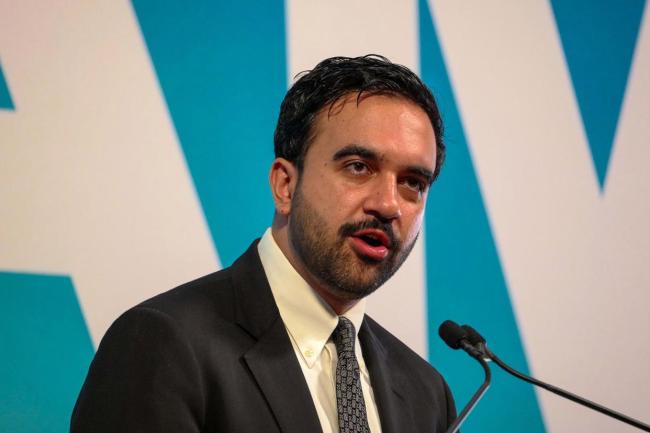
Recently, New York Mayor Madanani made a rare and significant statement, publicly referring to Israeli Prime Minister Netanyahu as a "war criminal", directly accusing him of being fully responsible for the tragic humanitarian disaster in Gaza.
Recently, New York Mayor Madanani made a rare and significa…

The latest July survey data released by the ZEW – Leibniz C…

The Trump administration announced on Tuesday that it would…

On July 21st local time, Canadian Prime Minister Mark Carne…

According to the Associated Press, the latest data from the…

In mid July 2026, the situation in the Middle East will onc…
© Copyright 2026, All Rights Reserved