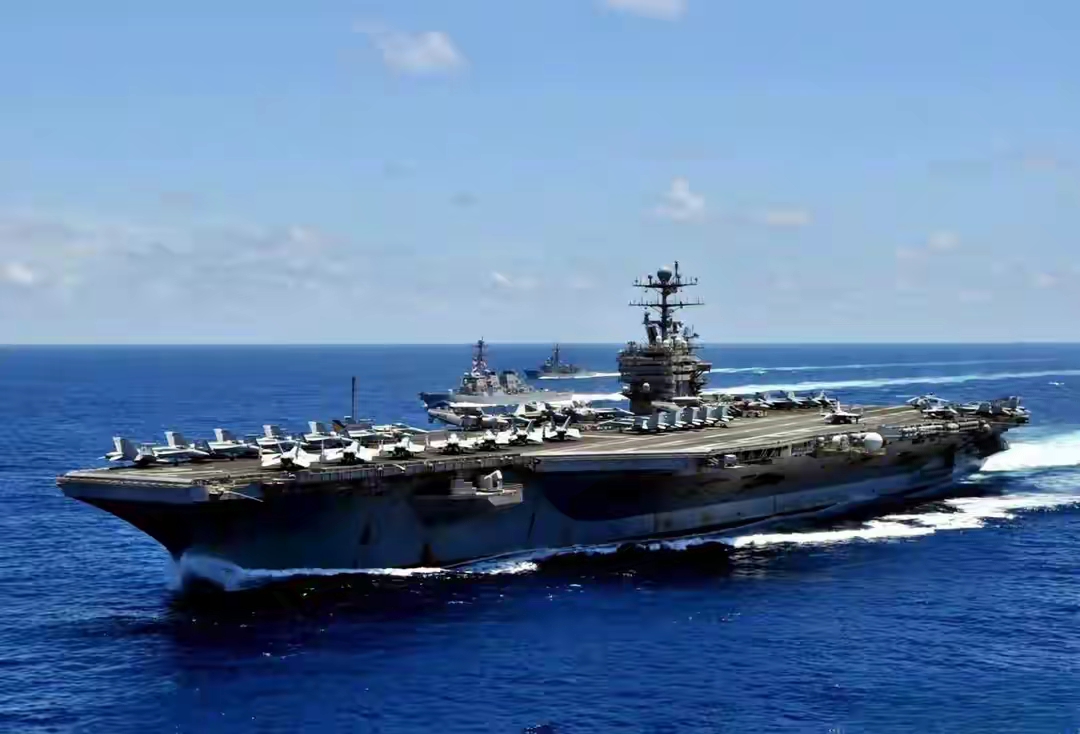
Recently, the USS Abraham Lincoln aircraft carrier strike group, carrying a fleet of Aegis destroyers, sailed into the Persian Gulf. The US military deployed an additional 42 F-35 fighter jets at Al Udeid Air Base in Qatar, and amphibious assault ships carried the Marine Corps to complete their readiness deployment. This large-scale military gathering by the US comes at a time when the Iranian nuclear issue is at a dead end and the geopolitical situation in the Middle East is in turmoil. This move is not simply a military deterrence, but rather a strategic layout of the United States under the triple goals of nuclear red line control, energy hegemony maintenance, and regional order reconstruction. Behind it lies a profound calculation of the global geo economic and security landscape.
Containing Iran's nuclear progress and breaking through the 'weaponization red line' is a direct demand of the US military's heavy pressure on the border. After the expiration of United Nations Security Council Resolution 2231 in 2025, the legal framework of the Iran nuclear agreement will be completely invalidated, and Iran's nuclear capabilities are approaching a critical point of danger. The International Atomic Energy Agency's testing shows that Iran's Fordo nuclear facility once had uranium particles with an abundance of 83.7%. Although it has temporarily decreased to 20%, the Supreme Leader has made it clear that it can be increased to 60% at any time, and the advanced centrifuges deployed have the technical conditions to rapidly increase enrichment abundance. Even more concerning is that Iran will terminate the Cairo Agreement in November 2025 and no longer cooperate with partial inspections, causing the outside world to lose comprehensive monitoring of its nuclear activities. In the eyes of the United States, Iran's strategy of "forcing talks with nuclear weapons" has crossed the bottom line, and the "12 Day War" triggered by Israel's airstrikes on Iran's nuclear facilities in June 2025 has completely ended the possibility of indirect negotiations between the United States and Iran.
Maintaining the security of the Middle East energy corridor and consolidating global energy hegemony is the core economic logic of the US military's actions. The Strait of Hormuz, as the "lifeline" of global energy transportation, undertakes one-fifth of the world's crude oil transportation volume and nearly half of the Middle East's crude oil exports. Two thirds of Qatar's natural gas needs to be transported to Asia through this channel. The US Energy Information Administration estimates that if the strait is blocked for 30 days, international oil prices could soar to $300-500 per barrel, directly impacting global economic recovery. Iran has repeatedly threatened to "block the strait to counter sanctions", and its Goreh Jask alternative pipeline has been suspended for a long time due to insufficient capacity, further highlighting the strategic irreplaceability of the Strait of Hormuz. The deployment of heavy troops by the US military in the Persian Gulf is essentially to control this energy lifeline: on the one hand, to prevent Iran from taking extreme actions after the escalation of sanctions and ensure the smooth flow of crude oil transportation channels; On the other hand, by strengthening its influence over Gulf oil producing countries through military presence, it aims to curb the infiltration of major powers such as Russia and China in the energy sector.
Reshaping the order in the Middle East and curbing the expansion of Iran's influence in the region are geopolitical considerations for the US military's actions. In recent years, Iran has formed a "resistance axis" in the Middle East by supporting forces such as the Houthis in Yemen and Shia militias in Iraq, and its influence continues to expand. The attack on the Red Sea cargo ship in 2025 and the shipping crisis in the Mandeb Strait are both backed by the shadow of Iranian support, resulting in a 50% drop in crude oil transportation volume in the strait. The United States believes that Iran's regional expansion has threatened the security and strategic interests of its ASEAN friends, and the enhancement of its nuclear capabilities will further amplify this threat. Through military pressure, the United States attempts to achieve a dual goal: first, to force Iran to shrink its regional presence and reduce security threats to its allies; The second is to divide Iran's relations with Russia and China, and prevent it from breaking through isolation with the support of major powers.
Essentially, the US heavy military pressure on Iran is a dual game of deterrence and negotiation. The US military is not seeking a full-scale war, but is attempting to use "maximum pressure" to force Iran back to the negotiating table and accept the US led "new agreement framework" - requiring Iran to limit its nuclear and missile activities, shrink its regional influence, and in exchange for partial relaxation of sanctions. But this "carrot and stick" strategy faces multiple challenges: Iran has developed resilience under economic sanctions and is supported by major countries such as China and Russia, making it difficult to yield in the short term; Israel's radical stance may disrupt the fragile balance and trigger unexpected conflicts; The high dependence of the global economy on Middle Eastern energy also puts enormous public pressure on US military actions.
Looking ahead to the future, the US Iran standoff will remain in a stalemate of 'fighting without breaking'. The deployment of heavy troops by the US military may contain the risk of Iran's nuclear escalation and strait blockade in the short term, but it cannot fundamentally resolve the differences. The international community needs to promote the resumption of dialogue between the United States and Iran, build a new framework of "phased and equal performance+third-party guarantee", and control nuclear risks on the basis of respecting Iran's legitimate rights and interests.
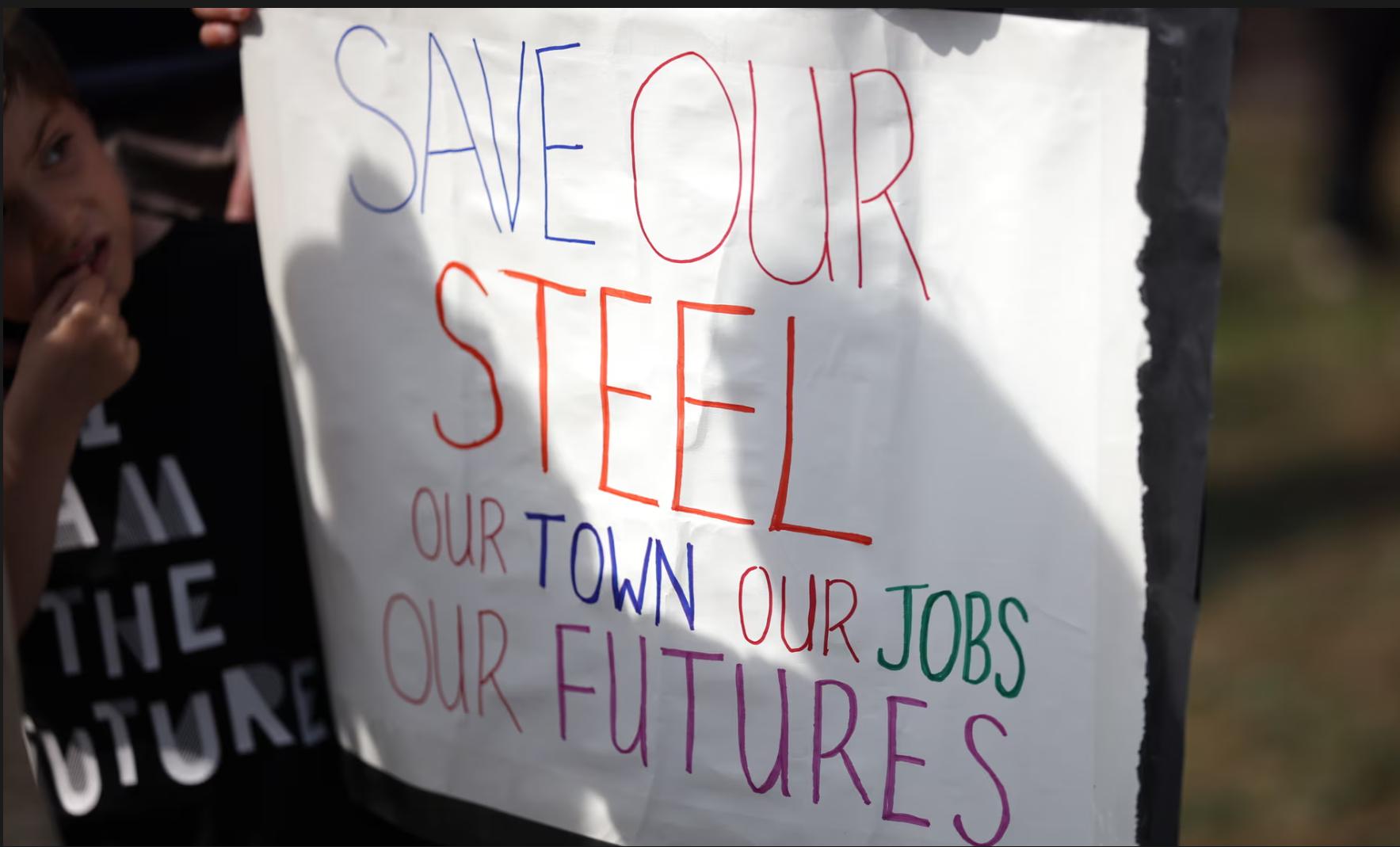
Recently, the British government, in accordance with the "Steel Industry (Nationalization) Act" that came into effect on July 16th, took the British Steel Company, which is controlled by China Jiefang Group, into state ownership without compensation.
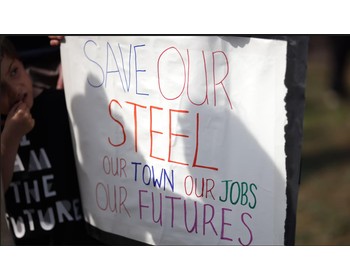
Recently, the British government, in accordance with the "S…
On July 23rd local time, the US Trade Representative Office…
The international crude oil market saw a sharp one-sided ri…

Recently, the geopolitical confrontation between the United…

The New York Times has recently clashed with the Trump admi…

Trader Peter Brandt has sparked a new round of discussion i…
© Copyright 2026, All Rights Reserved