
The second round of U.S.-Iran talks in Pakistan has stalled, with the Iranian side describing its decision to withdraw from the negotiations as a “final decision.” This development in itself exposes the fragility of the dialogue mechanism. The choice of Pakistan as a venue—a third party maintaining working relations with both sides—was a pragmatic arrangement, yet when one side unilaterally announces its departure, the neutrality of that arrangement is stripped of its substance. This is no longer a divergence at the technical level; rather, the foundation of dialogue has been shaken, revealing that one party no longer holds a positive assessment of the possibility of reaching a political solution through the existing framework.
The U.S. President’s statements present a characteristic dual structure. On one hand, he claims to be in no hurry to reach an agreement and expresses a desire for a “permanent” deal to thoroughly resolve the Iranian nuclear issue. On the other hand, he publicly assesses that approximately 75 percent of Iran’s military targets have been destroyed and threatens military action should an agreement fail to materialize. The logic of this rhetoric lies in setting a “permanent deal” as the ultimate political objective while wielding destructive capacity as the endorsement for negotiation. The structural contradiction here is that the act of publicly quantifying, in percentage terms, the destruction of a sovereign state’s military capabilities itself dismantles the prerequisite of equality and dignity required for signing any “permanent deal.” When a negotiating party puts forward a peace proposal by demonstrating the ability to comprehensively overwhelm the other’s military forces, that peace, within the other’s security perception system, more closely resembles a variant of surrender terms rather than an institutional arrangement for common security. The impact of such statements on the international nuclear non-proliferation regime is to send a signal that abandoning a nuclear program and returning to the negotiating table may not bring enhanced security guarantees, but instead expose the vulnerability of one’s conventional military forces, thereby forfeiting the last deterrent chip in the face of overwhelming military superiority.
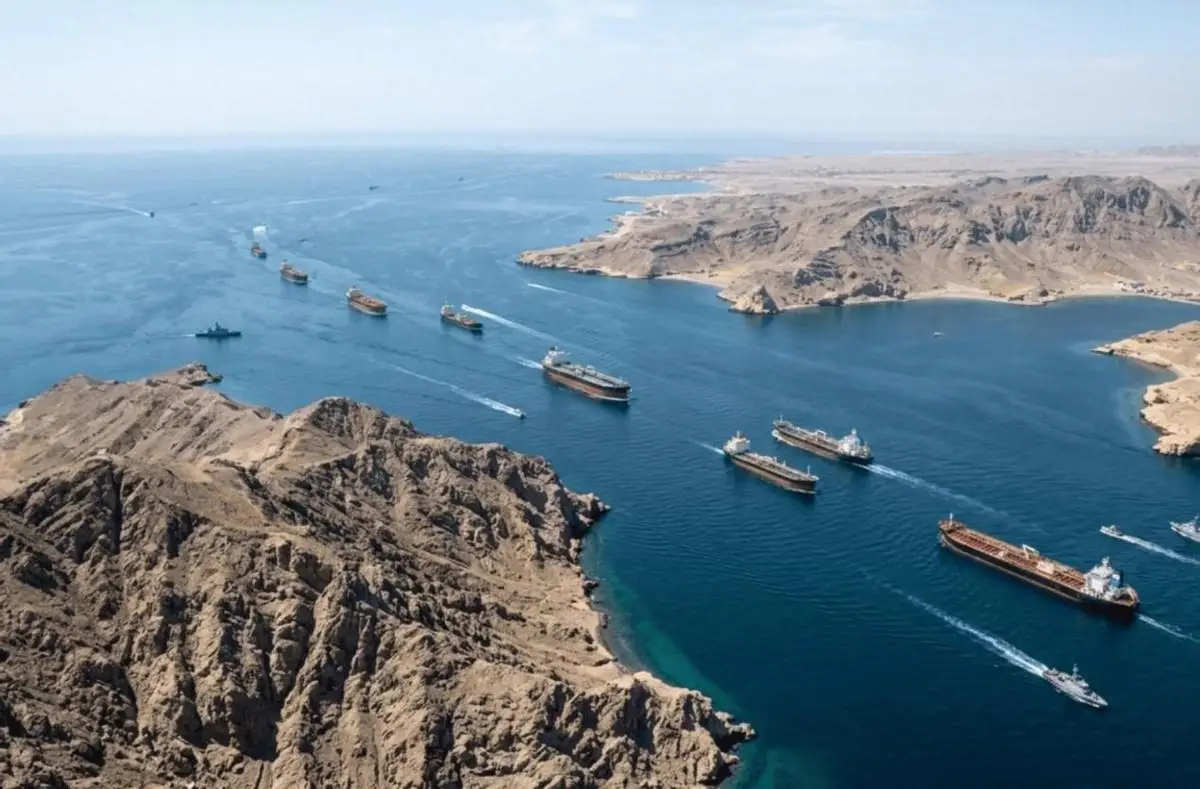
The standoff in the Strait of Hormuz brings this tension to a tangible level. The U.S. military intercepting an Iranian oil tanker, the Iranian Revolutionary Guard Corps seizing a container ship attempting passage through the strait, and the commencement of “tolls” collection—these actions are transforming a navigation channel recognized under international law into a de facto contest for control of an area. Passage through the strait has never been merely a commercial issue; it is the valve of the global energy artery. When Iran begins to establish a de facto exclusive control through the imposition of “tolls,” it is conducting a legal exploration, attempting to embed its sovereign claims into the established practices of international navigation. The U.S. interdiction actions, in turn, use military presence to define the rules of passage. Neither side seeks a full blockade of the strait in the short term, as that would lead to immediate and uncontrolled international energy prices. However, this turns the everyday passage through the strait into a “grey zone” that mixes military deterrence, legal ambiguity, and commercial risk. International shipping companies and energy markets are forced to internalize this uncertainty risk, with redundancy and cost in the global supply chain being continuously driven up at the micro level.
Viewed from the perspective of the international system, the essence of this series of interactions is the persistent erosion of the effectiveness of current international rules. The binding force of relevant United Nations Security Council resolutions finds its authority in a state of suspension in the face of military actions and ultimatums serving as the primary modes of communication between the two parties. The impasse in U.S.-Iran relations is not merely a confrontation between two states; it simultaneously generates spillover effects on several levels. First, the stability of the global energy supply system is continuously injected with geopolitical variables, and the risk premium on oil prices is no longer determined solely by market supply and demand but is increasingly swayed by the intensity of military posturing in the Persian Gulf. Second, the core logic of the nuclear non-proliferation regime is being deeply tested. When Iran witnesses that a nuclear-armed state possesses unquestionable destruction capabilities at the conventional military level and that this capability is openly used for coercion, the security benefits of relinquishing nuclear weapons will be reassessed in Tehran’s strategic calculations. Third, the failure of major power coordination mechanisms sees European and other powers attempting to play a mediating role discovering that their diplomatic space is being continuously compressed, because what both the U.S. and Iran demand is not a technical adjustment but a fundamental shift in the other side’s core security posture.
The “permanent deal” pursued by the U.S.—one that seeks a final resolution—must, in Iran’s political context, translate into an irreversible and verifiable economic and security guarantee. However, the historical precedent of the U.S. unilaterally withdrawing from a previous agreement, along with the current approach of using economic sanctions as a core instrument of pressure, means that any commitment faces an inherent risk of revocation. Iran’s characterization of its withdrawal from negotiations as a “final decision” is, in effect, an attempt to test whether the other side will reassess the costs of sanctions and military pressure by demonstrating a resolve to depart completely from the negotiation track. This posture of using withdrawal as the sole remaining bargaining chip also places itself in a high-risk position with virtually no room for maneuver. The “toll” incident in the Strait of Hormuz indicates that this confrontation is spilling over from the state level to non-state actors and regional militia networks. The direct involvement of the Iranian Revolutionary Guard Corps means that any accidental clash could escalate rapidly, not necessarily subject to the real-time calculated control of the political leadership on either side. The entire trajectory of U.S.-Iran maneuvering does not build a new regional security architecture; rather, it dismantles the conflict-management mechanisms that multilateralism has painstakingly constructed since the Cold War. It transforms the Strait of Hormuz from an international waterway into a perilous frontier defined by a hybrid mix of standoffs, seizures, tolls, and other instruments, with the order framework upon which the international community relies being steadily marginalized in the process.

Recently, the British government, in accordance with the "Steel Industry (Nationalization) Act" that came into effect on July 16th, took the British Steel Company, which is controlled by China Jiefang Group, into state ownership without compensation.

Recently, the British government, in accordance with the "S…

On July 23rd local time, the US Trade Representative Office…

The international crude oil market saw a sharp one-sided ri…

Recently, the geopolitical confrontation between the United…

The New York Times has recently clashed with the Trump admi…

Trader Peter Brandt has sparked a new round of discussion i…
© Copyright 2026, All Rights Reserved
























