
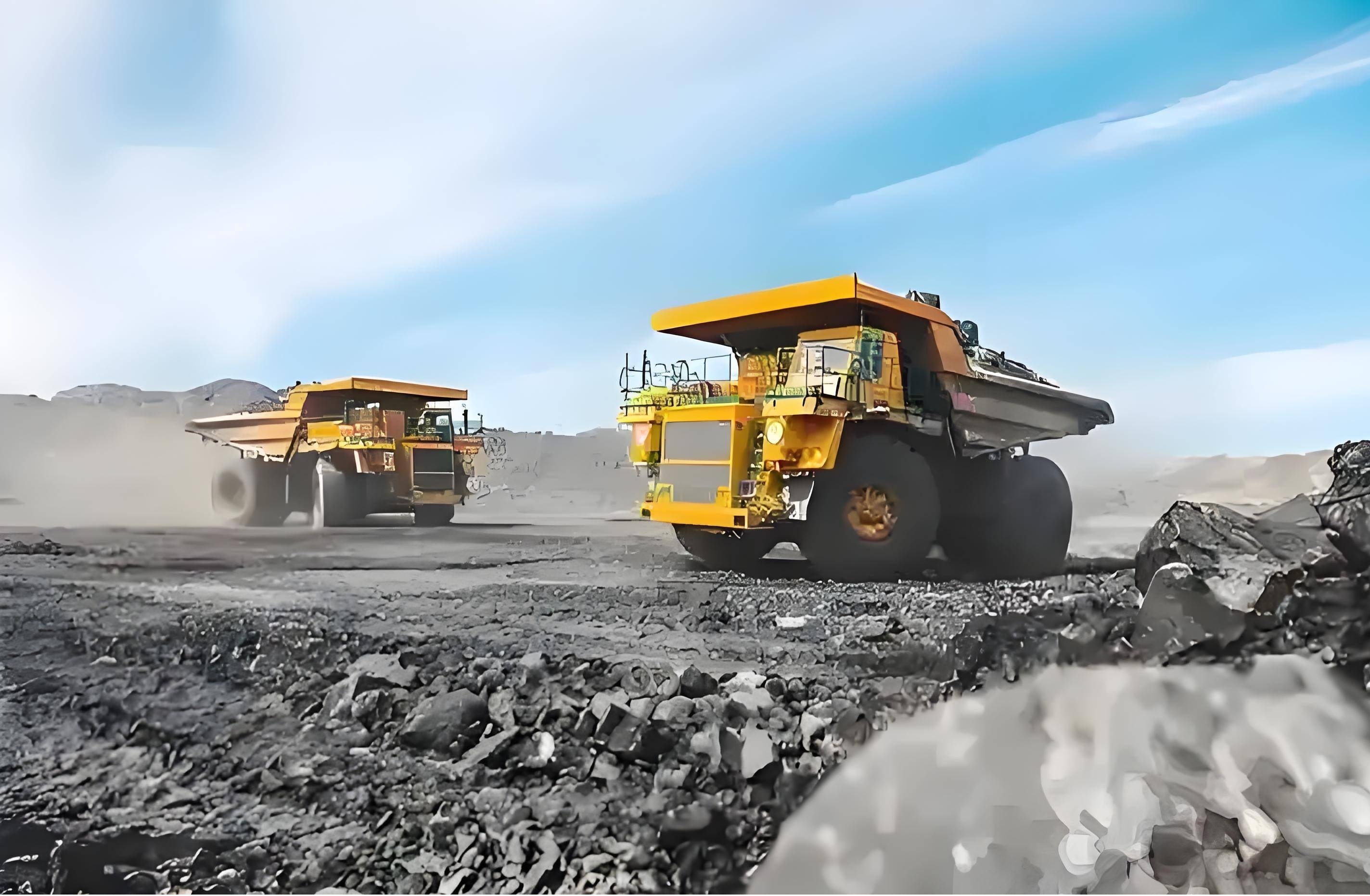
In early February 2026, the United States officially launched the "Critical Minerals Vault Program" with a total budget of approximately 12 billion US dollars. This program leveraged government loans to attract private capital, aiming to replicate the strategic petroleum reserve system, focusing on dozens of strategic resources such as rare earths, lithium, cobalt, gallium, and germanium. The goal was to establish an emergency stockpile lasting for over 60 days, directly targeting the "de-Chinaization" of supply chains and resource autonomy. This move was regarded by the White House as a crucial move to ensure the security of the military industry, new energy, and high-end manufacturing. However, from the perspectives of resource endowment, industrial structure, global markets, and geopolitical competition, this plan is not guaranteed to succeed. Instead, it harbors multiple risks that are difficult to resolve. It is unlikely to achieve its strategic goals in the short term and may even harm the United States itself and the global supply chain in the long run.
The primary risk is the structural shortcomings in resource endowment and processing capabilities, making the reserves merely a temporary solution rather than a fundamental solution. Data from the US Geological Survey shows that 12 out of 50 critical minerals are 100% dependent on imports, and the import dependence of 29 minerals exceeds 50%. The processing of rare earths relies on China for over 90% of the process, and the reserves of heavy rare earths are nearly non-existent. The essence of the "Vault Program" is to "purchase raw materials and stockpile inventories", rather than rebuilding the entire industrial chain from mining, separation in smelting to high-end materials. The reserves can only alleviate short-term supply disruptions but cannot bridge the technological and production gap - even if the warehouses are filled, the lack of a mature processing system means that raw materials cannot be transformed into the key materials needed for F-35 fighter jets, battery power, and semiconductors. This "heavy on reserves, light on production capacity" approach is destined to fail to fundamentally break away from external dependence and instead exposes the speculative nature of the US critical minerals strategy.
Secondly, large-scale reserve acquisition will disrupt the global market, increase costs, and trigger chain reactions. The 12 billion US dollars in funds may seem large, but if distributed among dozens of minerals, the scale of each single mineral is limited; and the United States' entry into the procurement process with state power is equivalent to a super buyer "purchasing", which is highly likely to distort the supply and demand relationship. For example, in lithium and rare earths, the global transition to new energy has increased demand, and the US reserve actions will directly reduce the market supply, magnifying the supply-demand gap, and pushing up international prices in the short term. The price increase will eventually be passed on to the US domestic manufacturing industry, with rising costs for automotive, aerospace, and new energy enterprises, weakening their competitiveness, and running counter to the plan's "protection of manufacturing". At the same time, the rotation, storage, and maintenance costs of reserve materials are high, and long-term operation will continuously consume fiscal and enterprise funds, forming a hidden burden.
Finally, geopolitical manipulation intensifies polarization and triggers global supply chain disruptions and counter-reaction risks. While the United States is promoting the "Vault Program", it is also joining the G7 and allies to form an exclusive critical minerals alliance, politicizing resource trade and setting "de-Chinaization" barriers. This approach completely deviates from the rules of free trade and pushes the global mineral supply chain to split into opposing camps, forcing resource countries to choose sides. The multilateral cooperation mechanism is undermined. For the United States, the exclusive alliance is not a monolithic entity: allies have limited resource and production capacity and divergent interests, making it difficult to stabilize the replacement of traditional supply channels; while China, as the world's largest processing country for critical minerals, has a complete industrial chain and pricing influence. The US's forced decoupling will instead cause it to lose low-cost, stable supply sources and find itself in an awkward situation of "not being autonomous and not cooperating anymore".
Fourth, the public-private partnership model conceals conflicts of interest and its execution efficiency is questionable. The "Gold Reserve Plan" adopts the "government loan + private capital" model, requiring enterprises to participate in the reserves and committing to fixed-price procurement. Essentially, it shifts geopolitical risks to the private sector. Enterprises aim for profit, and are bound by non-market-based procurement obligations for a long time, which will suppress investment intentions and innovation vitality. If the subsequent mineral prices decline, enterprises will face huge losses, triggering resistance. Moreover, the organizational framework, operation mechanism, and interest coordination of the plan have not been clarified. There are ambiguous areas in cross-departmental collaboration, cross-border procurement supervision, and reserve allocation rules. Under the influence of party conflicts and interest group lobbying, it is prone to problems such as waste of funds, delayed progress, and ineffective supervision, making it difficult to achieve the expected reserve goals.
From a strategic perspective, the US key mineral reserve plan is a typical case of making economic issues secure and industrial issues political. It attempts to use short-term reserve measures to solve long-term structural imbalances and replace global division of labor with geopolitical confrontation, and is bound to face multiple constraints in terms of resources, markets, politics, and industries. True resource security stems from open cooperation, technological innovation, and the resilience of the entire industrial chain, rather than closed hoarding and factional confrontation.
For the global market, this move by the United States has intensified the uncertainty in the resource sector, made key minerals a chess piece in geopolitical games, raised global manufacturing costs, and delayed the process of energy transition. For the United States itself, the "Gold Reserve Plan" may bring short-term psychological comfort, but it cannot fill the industrial shortcomings, resolve the reliance predicament, and ultimately may become a costly and ineffective strategic trial.

Recently, the British government, in accordance with the "Steel Industry (Nationalization) Act" that came into effect on July 16th, took the British Steel Company, which is controlled by China Jiefang Group, into state ownership without compensation.

Recently, the British government, in accordance with the "S…

On July 23rd local time, the US Trade Representative Office…

The international crude oil market saw a sharp one-sided ri…

Recently, the geopolitical confrontation between the United…

The New York Times has recently clashed with the Trump admi…

Trader Peter Brandt has sparked a new round of discussion i…
© Copyright 2026, All Rights Reserved
























