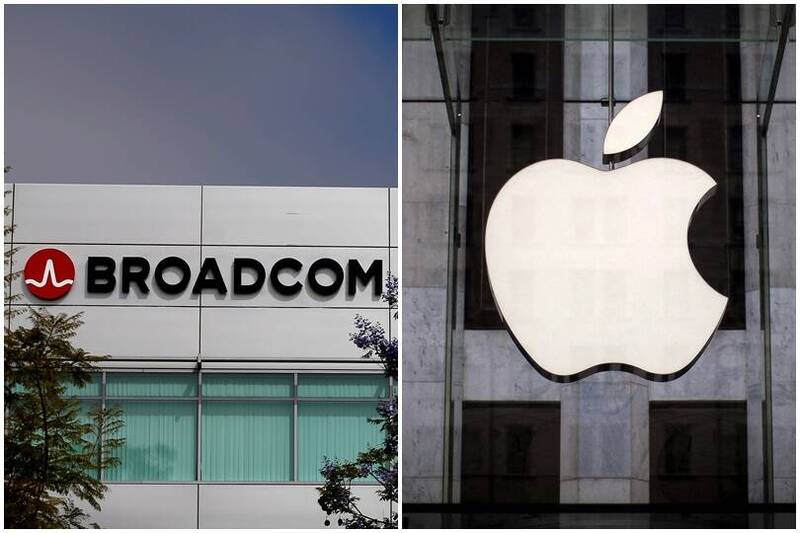
In July 2026, Apple and Broadcom signed a long-term chip procurement agreement worth over 30 billion US dollars. As the core implementation project of Apple's 600 billion US dollars investment framework in the United States, this collaboration is not merely a simple commercial purchase; it is a key strategic layout for Apple to balance its self-developed technology, hedge against geopolitical risks, and restructure the global semiconductor supply chain. It also marks a new stage in the global localization of chip production. According to the agreement, Broadcom will expand its factory in Colorado, USA, and produce 1.5 billion RF and wireless chips in the future, fully adapting to Apple's entire range of terminal products.
From an enterprise strategy perspective, this collaboration is the precise choice for Apple's dual-track chip layout of "self-developed + external procurement". Over the years, Apple has continuously focused on the self-development of core processors such as the A series and M series, gradually achieving independent control of the main chips. However, the technical barriers of RF and wireless chips are extremely high, and after years of deep research, Broadcom has accumulated rich patent resources and mature processes in this field, making it difficult to be replaced by self-developed technologies in the short term. Apple chose to lock in long-term orders for procurement, gave up the blind and comprehensive self-development, focused on its own advantageous fields, and significantly reduced the cost of research and development trial and error. At the same time, the long-term fixed procurement model can hedge against the cyclical fluctuations in the chip industry, stabilize the production costs of hardware, and ensure product quality and iteration rhythm.
Geopolitical policy competition is the core underlying logic of this collaboration. Currently, the United States is vigorously promoting the return of manufacturing, guiding the semiconductor industry to be localized through policy support and tariff regulation. Apple's this billion-dollar local production capacity binding is both a response to the US industrial policy and a building of a moat for its own operation. Localized chip production helps Apple avoid the risks of import tariffs for components from overseas, stabilizes profits in the core North American market. At the same time, this cooperation fills the gap in wireless component manufacturing in the United States, and in combination with projects such as TSMC's Arizona factory, helps Apple build a complete local silicon supply chain in the United States, significantly reducing the risks of supply chain disruptions from overseas.
This significant transaction has profoundly reshaped the global semiconductor industry competition landscape. For Broadcom, the 30 billion US dollar long-term order has locked in its core revenue for the next five years, and the stable cash flow will support its technological research and capacity expansion, further consolidating its monopoly position in high-end RF chips. For the global RF industry chain, Apple has fully locked the high-end chip production capacity in the United States, significantly reducing the opportunities for other manufacturers to enter the high-end supply chain, building higher industry barriers for the high-end and substitutional development of domestic RF chips. Market competition will further sink to the mid-to-low-end fields.
At the same time, Apple's localization layout contains many hidden risks. The labor, land, and energy costs in the United States are much higher than those in Asian production areas. The increase in manufacturing costs brought by capacity expansion will eventually compress Apple's hardware gross profit margin. Moreover, there is a large shortage of skilled workers in the semiconductor industry in the United States, and the ramp-up period of new capacity is uncertain, or there may be delivery delays and risks affecting the iteration of new products. In the long run, Apple has not terminated the RF chip self-development plan. Once the self-developed technology achieves a breakthrough after the five-year agreement expires, Broadcom may face a crisis of a sharp reduction in orders, and the long-term uncertainty of the cooperation exists.
Apple's localization layout with Broadcom's implementation of local chip production is an important layout driven by three factors: commercial operation, geopolitical competition,and industrial transformation. This measure not only strengthens the security and stability of Apple's supply chain but also accelerates the regionalization and localization reconfiguration of the global chip supply chain. In the context of the rising global technological competition and trade protection, the localization of core components by leading technology enterprises has become an irreversible development trend in the industry, and the cooperation between Apple and Broadcom is a landmark case of this round of industrial transformation.
In July 2026, Apple and Broadcom signed a long-term chip procurement agreement worth over 30 billion US dollars.
In July 2026, Apple and Broadcom signed a long-term chip pr…

On July 6 local time, Microsoft announced global workforce …

As of early July 2026, the total size of US money market fu…

The "near total halt" of tanker transits through the Strait…

On July 8, during the NATO summit in Turkey, U.S. President…

A recent poll shows a growing number of Americans are conce…
© Copyright 2026, All Rights Reserved