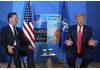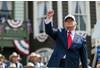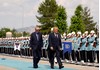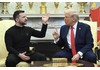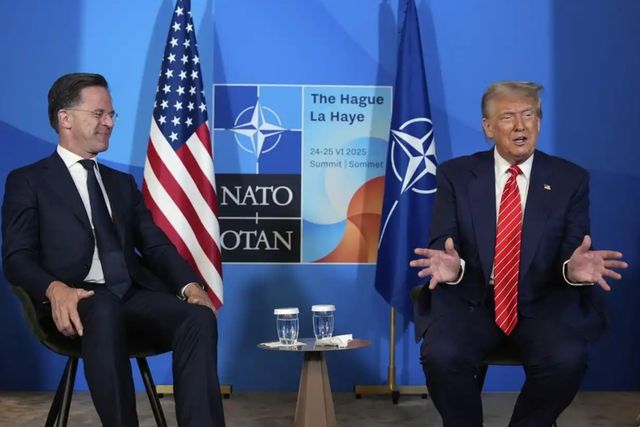
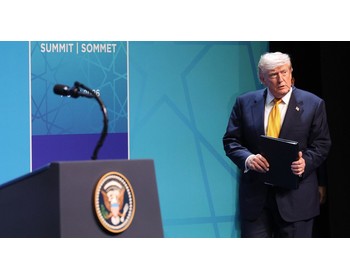
On July 8, during the NATO summit in Turkey, U.S. President Trump publicly declared that American forces "very likely" would launch another heavy strike against Iran that night. This highly provocative statement not only marked the practical collapse of the understanding reached between the United States and Iran in June but also pushed an already fragile Middle East situation to the brink of full-scale conflict. Trump’s remarks were not impulsive; rather, they represent a concentrated expression of his consistent logic of “maximum pressure” and “transactional diplomacy,” driven by complex military calculations, geopolitical maneuvering, and domestic political demands.
First, from a military and diplomatic strategy standpoint, Trump’s threat exemplifies the classic approach of “fighting while negotiating” and “using pressure to force talks.” Just hours before his announcement, U.S. forces launched a high-intensity airstrike targeting Iran’s coastal air defense systems, radar stations, and dozens of Revolutionary Guard speedboats in southern Iran, while the U.S. Treasury announced the withdrawal of temporary exemptions allowing Iranian oil sales. This dual pressure—military strikes combined with economic sanctions—aims to leverage overwhelming force to compel Iran into making substantial concessions in future negotiations. However, Trump’s timing—choosing to act during the sensitive period when Iran was holding funeral ceremonies for its late Supreme Leader Khamenei—was particularly calculated, exploiting Iran’s internal mourning period to achieve a strategic surprise effect. This utterly reckless approach fully exposed the United States’ lack of credibility regarding diplomatic agreements.
Second, Trump’s hardline stance is closely tied to his broader geopolitical strategy in the Middle East. In Ankara, Turkey, he used promises of lifting sanctions and delivering F-35 fighter jets as incentives to win over Turkey, seeking to solidify America’s regional foothold. At the same time, he publicly criticized NATO allies such as Britain, France, and Germany for refusing to cooperate in pressuring Iran. This divide-and-conquer tactic serves two purposes: first, isolating Iran ahead of military action to prevent it from receiving tangible external support; second, leveraging the opportunity to pressure NATO itself, demanding greater European compromises on defense and Iran policy. By using Middle Eastern conflict as leverage, Trump aims to reshape a U.S.-dominated regional order. Yet this unilateral approach has undoubtedly deepened fractures within the alliance system.
Yet behind Trump's narrative of a "complete victory" lies an undeniable strategic dilemma. Although U.S. forces achieved certain tactical gains, Iran still retains formidable capabilities in ballistic missiles and drone counterattacks. Following the American airstrikes, Iran swiftly launched coordinated strikes against U.S. bases in Bahrain and Kuwait, claiming to have shot down an MQ-9 Reaper drone. This demonstrates that the United States cannot decisively defeat Iran without paying a heavy price. Meanwhile, growing public fatigue with endless Middle Eastern conflicts at home has led Congress to attempt legislative measures restricting presidential war powers. If Trump continues escalating the conflict, he risks becoming mired in a prolonged war similar to the Russia-Ukraine conflict; if he hastily backs down, he faces the risk of domestic political humiliation. This precarious situation is precisely why he has resorted to erratic and frequent threats.
In summary, Trump’s statement about possibly striking Iran again tonight reflects a high-stakes political gamble driven by strategic anxiety. He seeks to gain leverage at the negotiating table through short-term military adventures and economic sanctions. However, this approach—lacking long-term credibility and focused solely on immediate gains—is systematically eroding the already fragile foundation of mutual trust between the U.S. and Iran. For Iran, facing an adversary who may unilaterally abandon agreements at any moment, maintaining high military readiness and a firm posture of retaliation is the only way to avoid falling into another trap. The new storm ignited by Trump not only heightens the risk of large-scale, multi-front warfare in the Middle East but also threatens to trigger severe disruptions in global energy markets. The true tempest may yet lie ahead, and once again, the brutal reality of great-power rivalry proves: in an international jungle devoid of trust, no verbal agreement can replace solid strength and vigilant caution.
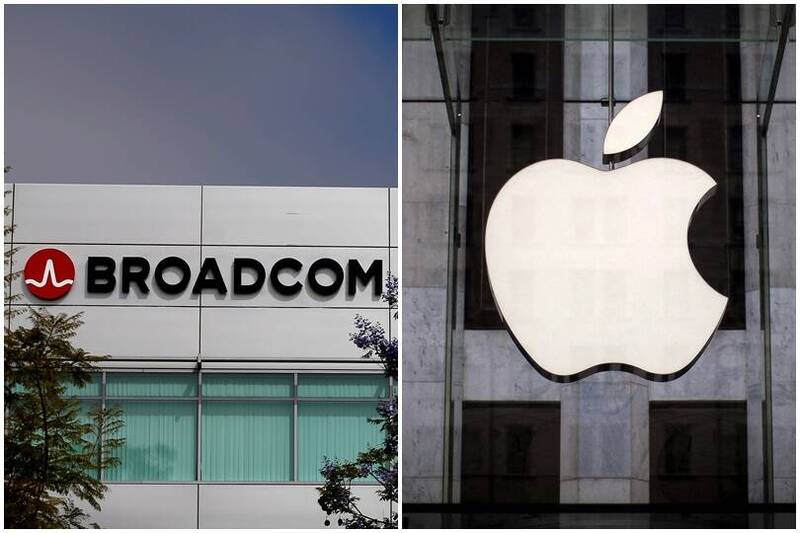
In July 2026, Apple and Broadcom signed a long-term chip procurement agreement worth over 30 billion US dollars.
In July 2026, Apple and Broadcom signed a long-term chip pr…

On July 6 local time, Microsoft announced global workforce …

As of early July 2026, the total size of US money market fu…

The "near total halt" of tanker transits through the Strait…
On July 8, during the NATO summit in Turkey, U.S. President…
A recent poll shows a growing number of Americans are conce…
© Copyright 2026, All Rights Reserved