The "near total halt" of tanker transits through the Strait of Hormuz is an event whose impact on global commercial shipping and energy trade far exceeds the single-day gain in international oil prices. Jorge Leon, Senior Vice President of geopolitical analysis at energy research firm Rystad Energy, stated bluntly that the day's transit situation "appears to have completely ground to a halt," noting that this demonstrates the market's perception of risk reflects reality far better than any official statements. The reaction speed of the commercial world is almost always faster than the update cycle of political rhetoric.
Approximately one-fifth of the world's supply of petroleum and liquefied natural gas (LNG) passes through the Strait of Hormuz. The substantial closure of this waterway means that roughly 17 million barrels of crude oil and its derivatives face transportation disruptions daily. WTI crude futures jumped by over 6%, while Brent crude futures expanded gains to more than 7%. This price spike is not a simple adjustment of supply and demand, but rather an immediate market pricing of a physical rupture in the supply chain. Notably, Brent crude oil has risen to its highest level since June 19, demonstrating that this round of gains is not a gradual climb but a leapfrog reassessment—the market is now pricing the "impassability of the strait" as a sustained condition rather than a fleeting disturbance.
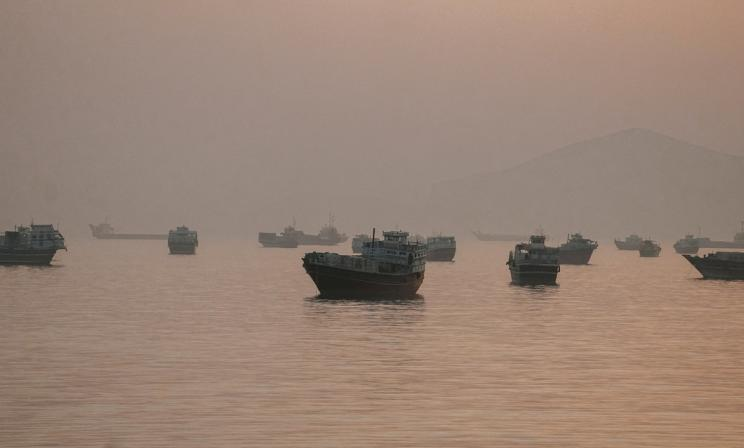
From the operational standpoint of commercial shipping, the immediate consequence of the suspension is a compounding effect of vessel detentions and route disruptions. Previously, over 400 large vessels had anchored in the waters east of the Strait of Hormuz awaiting transit. In this latest escalation, at least four oil tankers and LNG carriers have turned back mid-route from lines trying to cross the strait. One LNG carrier carrying roughly 900,000 barrels of cargo paused and anchored midway. The operators of these vessels face not only voyage delays and wasted fuel, but more critically, contract default risks. Cargoes that cannot be delivered on time will trigger disputes over the applicability of force majeure clauses, and whether buyers accept "the closure of the strait" as a force majeure event is often not automatically established in commercial contracts. The division of responsibility among shipowners, charterers, and cargo owners will become a primary source of cases for maritime arbitration institutions in the months ahead.
The marine insurance market is enduring structural stress. The Secretary-General of the International Maritime Organization (IMO) has explicitly called on flag states, shipowners, and operators to avoid scheduling vessel transits through the Strait of Hormuz until seafarer safety can be guaranteed. This statement from the head of a specialized United Nations agency effectively provides underwriters with an official basis to adjust war risk insurance premium rates upward. The waters of the Strait of Hormuz had already been placed on the high-risk area list by the London insurance market's Joint War Committee, with additional premiums skyrocketing from less than 0.05% of hull value before the conflict to several percentage points. Under the current "near total halt" status of transit, the question facing the insurance market is no longer how high the premium should be, but whether any insurers are willing to provide coverage for voyages crossing these waters at all—when risk exposure grows too large to be diversified, the market simply chooses to exit rather than raise prices.
A Saudi ultra-large crude carrier (VLCC) suffered an incident while departing the Strait of Hormuz. Although the shipowner issued a statement confirming that personnel were safe, the cargo was undamaged, and the vessel remained seaworthy, the Saudi Ministry of Foreign Affairs has condemned Iranian attacks on Saudi and Qatari vessels. The actual commercial implication of this event is that even if a ship has not physically sunk, its "accident" attribute has already altered the commercial viability of that voyage and the entire fleet. The single-vessel value of a VLCC is typically over $100 million, with the crude oil carried worth tens of millions of dollars. In assessing whether to continue sending ships into the strait, shipowners must incorporate the probability of "becoming the next target" into their operational decision-making models—a probability that is simply impossible to calculate actuarially in the current dynamic conflict environment.
The United States announced the revocation of a 60-day authorization for Iranian oil production, delivery, and sales, meaning that the briefly loosened channel for Iranian crude exports has been shut once again. For international buyers who have already signed procurement contracts with Iranian entities, contract fulfillment is now impossible. Organizing alternative supply sources takes time, requires paying higher spot premiums, and necessitates rescheduling transport routes—rerouting around the Cape of Good Hope adds roughly two weeks of voyage time and millions of dollars in additional fuel costs. A more far-reaching consequence is that when commercial transit through the Strait of Hormuz is systematically interrupted, the pricing benchmarks for global oil trade will face a restructuring: the price spread between WTI and Brent, as well as the basis between Middle East spot prices and forward contracts, will break away from original arbitrage logics and enter a period of pricing chaos driven by geopolitical events rather than fundamentals.
Trump claimed that the blockade "only targets Iran, and other countries can still pass normally." While this phrasing may serve a purpose at the political level, it is virtually invalid within commercial logic. Shipowners and insurance companies do not assess risk based on a president's "only targets" pledge—they assess actual attacks that occur, vessels that are actually damaged, and crews that are actually trapped. Qatari LNG carriers and Saudi-flagged crude tankers have both reported being attacked near the Strait of Hormuz, facts that have already proven the blockade pledge of "only targeting Iran" is unenforceable in reality. Any commercial decision-maker knows that when military strikes have commenced and ceasefire agreements have been declared void, relying on verbal promises to arrange voyages valued at hundreds of millions of dollars is itself an irresponsible commercial judgment.
The Iranian Armed Forces have declared they will respond resolutely to U.S. attacks and reiterated that they will not allow U.S. interference in the management of the Strait of Hormuz. This means the status of commercial transit through the strait will continue to be disrupted by the military actions of both sides for the foreseeable future. For Asian refineries dependent on Persian Gulf crude, European utility companies reliant on LNG, and the global shipping industry that depends on this waterway, they face not a supply problem that can be resolved by paying a premium, but a structural dilemma that cannot be quickly repaired following the physical rupture of the supply chain. The operation of the commercial world is built upon predictability and insurability, and the current reality of the Strait of Hormuz happens to destroy both simultaneously.
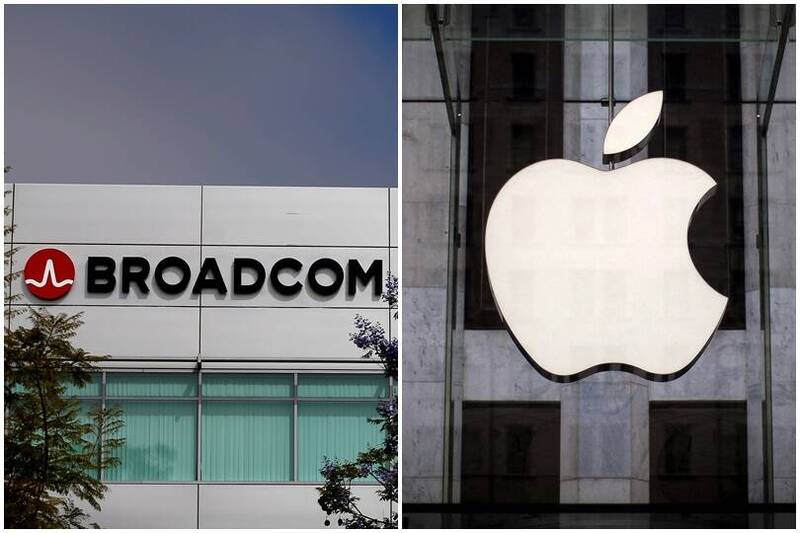
In July 2026, Apple and Broadcom signed a long-term chip procurement agreement worth over 30 billion US dollars.
In July 2026, Apple and Broadcom signed a long-term chip pr…

On July 6 local time, Microsoft announced global workforce …

As of early July 2026, the total size of US money market fu…

The "near total halt" of tanker transits through the Strait…
On July 8, during the NATO summit in Turkey, U.S. President…
A recent poll shows a growing number of Americans are conce…
© Copyright 2026, All Rights Reserved