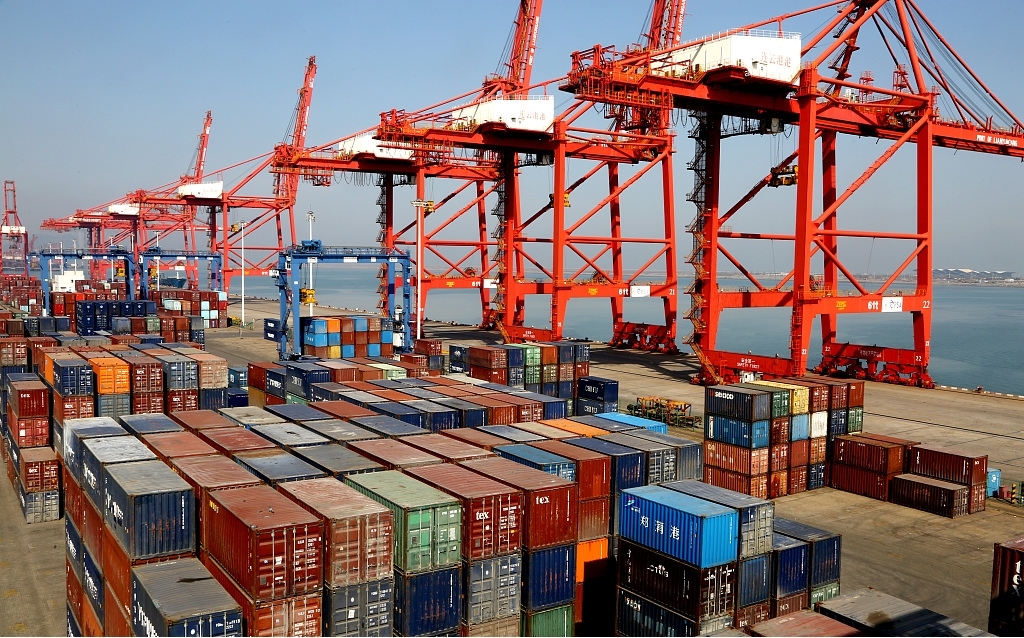
The script of world trade is being quietly rewritten. As protectionist voices grow louder and geopolitical conflicts frequently make headlines, many people assume that globalization is on the verge of reversal. Yet interestingly, the pulse of global trade has not weakened; instead, it has demonstrated remarkable vitality amid turbulence and even hit a new high.
The latest report from the World Trade Organization (WTO) predicts that global trade will still grow by 2.4% in 2025, nearly three times the previous forecast. Behind this seemingly contradictory phenomenon lies not the continuation of the old order, but the unfolding of a brand-new trade map before our eyes—its main artery is no longer the traditional transatlantic route, but more diversified new corridors connecting Asia, Africa and Latin America, bonded by South-South Cooperation and underpinned by regionalized supply chains.
The key driver of this transformation first comes from the rapid growth of trade between emerging market countries—namely, South-South Trade. In the first half of this year, the growth rate of South-South Trade reached 8%, significantly higher than the global average of 6%. This is no accident; rather, it is a spontaneous and pragmatic choice made by global enterprises in the face of barriers in traditional markets. For instance, to cope with tariff pressures in specific markets, many Chinese enterprises have swiftly adjusted their direction, diverting more trade flows to partners in Asia, Europe and other parts of the Global South. This move has not only stabilized their core business, but also unexpectedly opened up new room for growth. Prime examples include the expanding agricultural trade between China and Brazil, and the rapid short-term surge in China’s exports to Africa. Trade is no longer centered around a handful of developed countries; instead, it has become more decentralized and web-like.
The deepening of South-South Trade is far more than simple commodity transactions—it is truly reshaping the geographical layout of global supply chains. Among these shifts, intra-Asian linkages and Asia-Africa interactions have emerged as the most dynamic regions on the new map. Across Asia, from Japan and South Korea to ASEAN countries, all are pursuing the same strategy: adjusting policies to ensure resource security and drive supply chain diversification. Enterprises from Japan and South Korea have been flocking to Africa and Southeast Asia to seek mineral resources and sign long-term agreements, aiming to build more independent and resilient industrial chains. ASEAN countries are also keeping busy; endowed with critical resources such as nickel and bauxite, they are striving to develop local processing industries, hoping to secure a more favorable position in the global supply chains for new energy materials.
In this process, Africa’s role is also evolving—from a mere resource supplier to a potential manufacturing hub and key node in supply chains. The industrial and supply chain cooperation between China and Africa is a classic case in point. Thanks to Belt and Road Initiative projects such as the Mombasa-Nairobi Standard Gauge Railway and the Djibouti Free Trade Zone, connectivity within the African continent and logistics efficiency have been greatly improved. This is more than just "building roads"; it is a strategy of "constructing nests to attract phoenixes". Chinese enterprises have brought not only capital, but also technology, experience and the industrial park development model, helping local economies turn resource advantages into industrial strengths. Examples include the production of glass fiber using local quartz sand in Egypt, and the processing of laterite into high-end building materials in Kenya. This model of "Chinese technology + African resources" and "Chinese experience + African characteristics" has enabled Africa to integrate more deeply and value-addedly into the global supply chain network.
At the same time, developed countries are not standing idle—they are also proactively adjusting their strategies to participate in this redrawing of the global trade map. A landmark event is the historic trade agreement reached between the European Union (EU) and the Southern Common Market (MERCOSUR) after more than two decades of negotiations. A key reason behind the EU’s move is to hedge against risks posed by external unilateral tariffs and diversify its trade partners. The agreement aims to open up new markets for European industrial products and specialty agricultural goods, while securing mineral resources needed for its green transition. This move sends a clear signal: even mature economies cannot go it alone. Building cross-regional partnerships to enhance the resilience and breadth of their supply chains has become a universal consensus.
If we take a step back and look at the bigger picture, the fundamental reason why global trade has been able to reach new heights against headwinds is that the logic of the world economy has shifted: the old model of globalization that prioritized efficiency above all else is giving way to regionalization that emphasizes security and resilience. Enterprises are no longer chasing the "theoretically cheapest" single global supply chain; instead, they are starting to build more shock-resistant, diversified, nearshoring or friendshoring supply chain networks. This transformation has fostered closer regional economic cycles. Multiple dynamic trade blocs are taking shape—intra-Asia, Europe-Africa, and trans-Pacific South-South corridors among them. These blocs are not completely isolated; instead, they are interconnected through key hubs and digital links, collectively forming a more resilient and complex new global trade ecosystem.
Therefore, the resilience currently demonstrated by global trade is not a fleeting calm before a storm, but a real surge of energy amid the transition from the old order to the new. As external pressures, protectionism and geopolitical conflicts have not crushed global trade; on the contrary, they have acted as catalysts, accelerating the reallocation of trade flows from traditional arteries to emerging corridors, and driving supply chains from a state of high concentration toward diversified balance. This new map, driven by South-South Trade and defined by regionalized supply chains, holds significance far beyond economic data. It signifies a profound shift in the driving forces of global economic growth and in political and economic influence—a more multipolar and interdependent world economic pattern is taking shape at an accelerated pace.
The future of global prosperity will likely depend on whether all countries can find their positions on this new map and work together to write a new chapter that is more inclusive and sustainable.
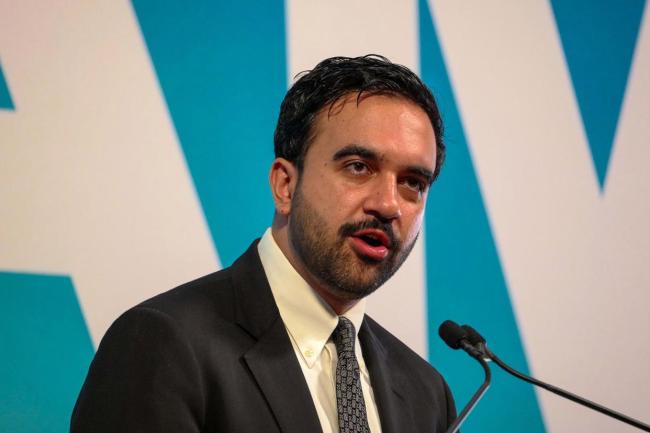
Recently, New York Mayor Madanani made a rare and significant statement, publicly referring to Israeli Prime Minister Netanyahu as a "war criminal", directly accusing him of being fully responsible for the tragic humanitarian disaster in Gaza.

Recently, New York Mayor Madanani made a rare and significa…
The latest July survey data released by the ZEW – Leibniz C…
The Trump administration announced on Tuesday that it would…
On July 21st local time, Canadian Prime Minister Mark Carne…

According to the Associated Press, the latest data from the…

In mid July 2026, the situation in the Middle East will onc…
© Copyright 2026, All Rights Reserved