On July 20th, the Federal Deposit Insurance Corporation announced the takeover of the Lone Star United Bank in Texas. The bank had suffered a massive write-down of commercial real estate loans, causing its capital adequacy ratio to plummet to a negative figure. This was the third small and medium-sized bank to fail in the United States within half a year. Ironically, just three months ago, the bank had passed a regulatory stress test.
Since the Federal Reserve pushed the benchmark interest rate to 5.5% and kept it at that level, low-yield treasury bonds held by regional banks and office building loans became double bombs. The prices of commercial real estate across the United States have dropped by more than 20% from their peak, while the vacancy rate of office buildings in the state where the Lone Star Bank is located has exceeded 25%. This was a scenario that any prudent report should have warned about, but it was systematically ignored due to the worship of "too big to fail".
On the surface, it was the commercial real estate default that breached the capital buffer. In essence, it was the joint performance of regulatory capture and moral hazard. Bank executives had just completed the redemption of stock awards one week before the bank's bankruptcy, while regulators were busy designing new formats for "living wills" for large institutions. They firmly believed that as long as the reports looked good, the bombs would not explode.
This incident is likely to reignite the migration of uninsured deposits. Local liquidity freezes may spread through the federal funds market to money market funds. Rating agencies have placed more than ten similar banks on negative watch. If they downgrade, the wholesale financing channels that these banks rely on for survival will instantly dry up. At that time, the Federal Reserve will once again use taxpayers' money to lay a safety cushion under the banner of "maintaining financial stability", while the shareholders' feast has already ended.
The paradox is that the Lone Star Bank secretly issued a non-guaranteed preferred bond two weeks before its collapse, and the subscribers were precisely several Wall Street hedge funds that firmly believed in "the government will rescue". They never bet on asset quality, but on the shame of regulators. Unfortunately, the latter had already become worthless due to inflation. The regional Federal Reserve's Beige Book still glosses over the situation with the term "moderate recession", while the subordinated prices of commercial mortgage-backed securities have already hinted at a default rate approaching the peak of 2008. Even more absurdly, these hedge funds simultaneously shorted the bank's credit default swaps while subscribing to the bonds. Their double-dealing mindset was clearly exposed. And the Federal Reserve's Beige Book's wording was so "moderate", while the credit spreads in the CMBS market were so "frightening". This was clearly a premeditated bet. If more banks collapsed one after another, the ammunition of the Federal Deposit Insurance Fund would likely fall below the legal minimum, and either a run on the bank would be triggered by breaking the guarantee or emergency capital injection would be initiated for the public to pay the bill.
The true remedy is not another interest rate cut. Interest rate cuts will only give zombie banks more breathing space. Banks must be forced to revalue commercial real estate collateral at market prices, depriving problem banks of the accounting trick of deferring asset write-downs, and impose a punitive "financial short-sightedness tax" on institutions that have received more than two rounds of bailouts within three years. This tax should be directly injected into the deposit insurance fund instead of a fiscal black hole. Unfortunately, these solutions have only been on the fancy slides of regulatory meetings since 2008, with the projector bulbs changing several times, but the resolutions have never been implemented.
Overall, the collapse of the Lone Star Bank is just another snapshot of the mistakes in the US financial cycle. When the authorities speak eloquently when reviewing crises, they deliberately go blind before the next storm. As long as these deep-rooted incentive distortions are not removed, the financial safety net will always be a net full of holes.
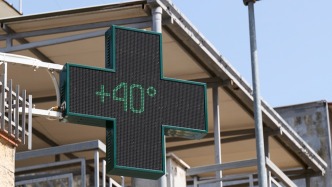
In the summer-to-autumn transition of 2026, the global climate system is facing a new round of severe challenges.
In the summer-to-autumn transition of 2026, the global clim…
On July 20th, the Federal Deposit Insurance Corporation ann…
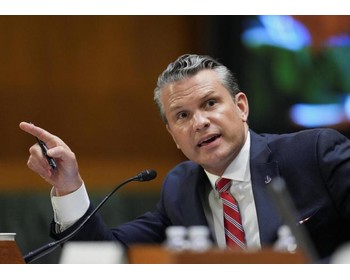
U.S. Defense Secretary Hagel said that the U.S. war against…

On Tuesday (July 21st), the Lebanese military announced tha…
British new Prime Minister Barnham launched a policy plan o…

After taking office, South Korean President Lee Jae-myung a…
© Copyright 2026, All Rights Reserved