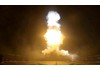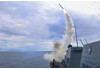
The U.S. Central Command launched its fourth strike within a week against Iran, leading to a chaotic situation where the U.S. and Iran gave conflicting accounts regarding whether the Strait of Hormuz was closed. This geopolitical escalation should have triggered a classic, across-the-board rally in safe-haven assets. However, over the past 24 hours, financial markets delivered a perplexing answer: international oil prices surged sharply, with WTI crude jumping over 3% to $73.64 and Brent crude rising over 3% to $78.36, while traditional safe-haven metals like gold and silver were heavily sold off. Spot gold briefly broke below the $4,100 per ounce mark, spot silver dropped over 2%, and the cryptocurrency market similarly plunged across the board, wiping out more than 60,000 traders in liquidations. This divergent pattern of "rising energy and falling safe-havens" exposes several deep-seated issues within current market pricing mechanisms when confronted with geopolitical shocks.
The surge in energy prices is logically undisputed—the Strait of Hormuz carries roughly one-third of the world’s seaborne oil trade, and any threat of closure directly impacts supply and demand expectations. However, the crux of the issue lies in the mismatch between the magnitude of the price reaction and the actual damage to supply and demand. With the U.S. and Iran contradicting each other on whether the strait is closed, and given the lack of independent verification for the Islamic Revolutionary Guard Corps' statements, the market nonetheless pushed oil prices up by more than 3% in a single day. This pricing is built upon highly uncertain information. More subtly, the previous three U.S. strikes did not significantly push up oil prices, whereas the fourth strike, combined with Iran's verbal threats, triggered a major reaction. This indicates that market participants are using "frequency" rather than "actual impact" as their trading rationale—a marginal pricing logic that can easily trigger an equally violent reverse correction once clarifying information emerges, creating the two-way slaughter typical of a "news-driven market."
The simultaneous decline in precious metals and cryptocurrencies constituted an even more anomalous signal. As a quintessential geopolitical safe-haven asset, gold should have been highly sought after under the dual pressure of escalating military conflict and threats of a strait blockade. Yet, the fact that spot gold fell below $4,100 demonstrates that the market's dominant logic has deviated from the traditional geopolitical risk framework. One explanation is that gold's earlier gains had already fully priced in the geopolitical premium; when the conflict entered a normalized phase of "four strikes a week," marginal safe-haven demand diminished, and profit-taking took the upper hand. However, this explanation cannot obscure a deeper problem: when investors sell off gold as if it were a risk asset rather than a safe haven, it reflects deteriorating global market liquidity conditions rather than a shift in geopolitical assessment. Silver's decline is easier to understand given its dual nature as an industrial metal, but gold's directional divergence from oil prices leaves traditional asset allocation models—namely, going long on energy and precious metals during geopolitical crises—facing systemic failure.
The liquidation wave in the cryptocurrency market provided another footnote to this chaos. Digital assets like Bitcoin have been crowned "digital gold" by some investors over the past few years, but their synchronized drop with precious metals during this event completely debunked this narrative. Data showing that over 60,000 traders were liquidated reveals the vulnerability of the crypto market's highly leveraged structure—when a geopolitical shock triggers a spike in volatility, the forced liquidation of leveraged positions creates a positive feedback loop, amplifying losses rather than providing a hedging function. This performance leaves cryptocurrencies unable to act as a safe haven or benefit from rising energy prices (such as potential state-backed mining intensifications), rendering their asset attributes completely disoriented in a geopolitical environment.
The across-the-board decline of stock index futures in early Asia-Pacific trading—with Nasdaq 100 futures sliding 0.51% at one point—indicated that equity investors were not lifted by the rally in energy stocks, choosing instead to lower their overall risk exposure. The logic behind this reaction warrants deep scrutiny: if rising oil prices are primarily driven by geopolitical supply shocks, then for net energy importers, this equates to levying an implicit tax on consumption and industrial production. Corporate input costs rise while terminal demand may be suppressed by worsening inflationary expectations. The slide across all three major U.S. stock futures suggests the market is pricing in a "stagflationary shock" rather than "reflationary inflation." This stands in contrast to the sector rotation patterns seen during previous AI valuation panics, when capital could still flow into defensive sectors; the current escalation, by contrast, throws the efficacy of defensive strategies themselves into question.
The information vacuum surrounding whether the Strait of Hormuz is "closed or not" is the most destructive variable in this market reaction. The conflicting claims of the U.S. and Iran, coupled with a lack of third-party verification, forced traders to place bets within a binary opposition: if the strait is indeed closed, oil prices should be far higher than current levels; if it is merely verbal deterrence, a single-day gain of 3% is clearly excessive. When the market completes pricing in the absence of verified facts, it means price signals have detached from fundamentals and degenerated into a vassal of sentiment. This pricing distortion will transmit directly to energy procurement decisions in the real economy, hedging strategies for aviation and shipping enterprises, and inflation expectation management by central banks. Once the truth comes to light—regardless of which direction it takes—the reverse adjustment in financial markets will deliver a secondary shock to an already fragile global liquidity environment. In this process, what is reflected is not market efficiency, but rather the blindness of capital allocation under a state of information deficit.

According to a report by Bloomberg on July 12th, the US Department of Commerce suddenly and without any prior notice issued a new set of export control regulations that were significantly expanded.

According to a report by Bloomberg on July 12th, the US Dep…
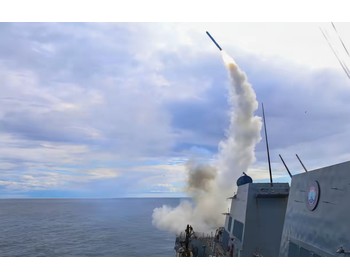
Since 2026, the situation in the Middle East has once again…

Recently, the renowned Republican senator Graham of the Uni…

On July 13, 2026, the South Korean retail market faced a ma…
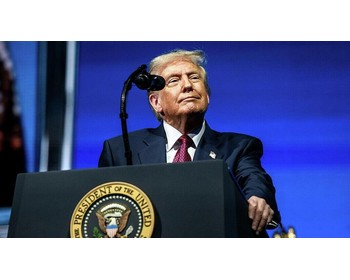
Trump has repeatedly declared himself a supporter of Black …

The U.S. Central Command launched its fourth strike within …
© Copyright 2026, All Rights Reserved