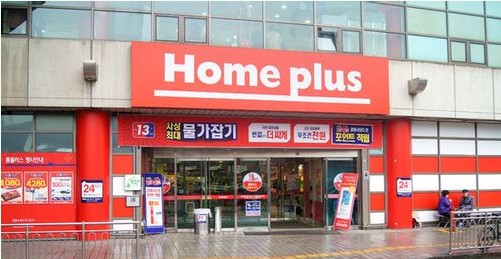
On July 13, 2026, the South Korean retail market faced a massive shock. Homeplus, the country's second-largest supermarket chain, announced the temporary closure of all its stores nationwide, with headquarters also suspending operations. This industry giant, which once ranked second in the Korean supermarket scene and had over a hundred stores at its peak, has run out of operating funds and can no longer cover basic expenses like bills, rent, and wages. It has basically ground to a halt, making it one of the most representative retail collapses in Asia this year.
This shutdown wasn’t sudden; it was the result of a crisis that had been building for over a year. As early as March 2025, Homeplus applied for corporate restructuring due to continued losses, trying to revive the business by closing stores, laying off staff, selling assets, and reorganizing. Over more than a year, its store count dropped from 126 to 67, and its workforce shrank from nearly 20,000 to 9,000. Despite this ongoing contraction, it failed to reverse the downward trend. In July this year, the Seoul court officially ended its restructuring proceedings and set a final deadline: raise 200 billion KRW by July 20, or face formal bankruptcy liquidation. The nationwide shutdown is a direct outcome of failing to secure funds and the full-blown debt crisis.
Looking closely at the root of the crisis, Homeplus's collapse is a typical example of the mismatch between a heavy-asset offline retail model and the new era market environment. First, South Korea's strict retail industry regulations have continuously suppressed the vitality of physical supermarkets. Policies like mandatory closures twice a month and restrictions on nighttime operations were originally intended to protect small businesses and traditional markets, but they significantly reduce the operational flexibility of large supermarkets, effectively handing over a huge market share to e-commerce platforms. Online retailers like Coupang, leveraging round-the-clock operation and low-cost advantages, continue to divert offline customer traffic and revenue.
Second, capital operations and heavy debt pressure have crushed the company's foundation. After being acquired by private equity, Homeplus relied on leveraged operations for a long time, and with Meritz Financial’s subsequent guarantee loans totaling over a trillion Korean won, the debt burden became increasingly heavy. As high-quality store assets were gradually sold off, liquidating the remaining assets became more difficult, and with the offline retail sector as a whole struggling, no one took over, financing options dried up, and the cash flow completely broke down. Meanwhile, with high inflation, South Korean consumers cut back on discretionary spending, essential retail profits continue to thin, and heavy-asset supermarkets find it hard to cover rent and rigid labor costs, causing the losses to grow.
Currently, Homeplus only maintains store security and facility upkeep, while non-operated merchants inside can run independently. The supermarket’s core business has completely stopped. If the July 20 financing talks fail completely, the company will officially enter liquidation, and nearly 10,000 employees will face unemployment, reshaping South Korea's local retail landscape. Industry predictions suggest that the large supermarket market in South Korea will form a duopoly with E-Mart and Lotte Mart, but the return of foot traffic and market share will be limited, with most consumer demand likely shifting further online.
Homeplus's dramatic fall is a wake-up call for traditional offline retail globally. Under the multiple pressures of consumption downgrading, e-commerce impact, high costs, and tightened regulations, relying on large-scale store expansions and fixed-scene customer acquisition in a heavy-asset retail model has completely failed. Long-standing supermarkets that cannot break free from path dependence, achieve a lighter model, and adapt to new consumer demands will eventually be eliminated by the market. The crisis of this South Korean retail giant is not just the end of a single company but also a real portrayal of the growing pains of global traditional offline retail transformation.

According to a report by Bloomberg on July 12th, the US Department of Commerce suddenly and without any prior notice issued a new set of export control regulations that were significantly expanded.

According to a report by Bloomberg on July 12th, the US Dep…

Since 2026, the situation in the Middle East has once again…

Recently, the renowned Republican senator Graham of the Uni…
On July 13, 2026, the South Korean retail market faced a ma…

Trump has repeatedly declared himself a supporter of Black …

The U.S. Central Command launched its fourth strike within …
© Copyright 2026, All Rights Reserved