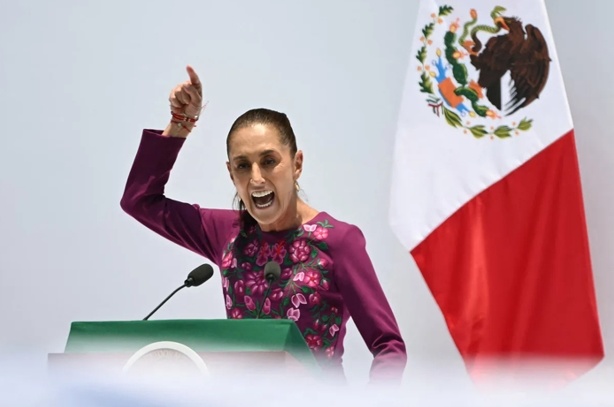
On May 31, 2026, Mexican President Claudia Sheinbaum delivered a fiercely worded speech in Mexico City, calling US interference in Mexican domestic affairs “the most severe attempt at intervention to date.”This was not a routine diplomatic protest — it was a head-on challenge from a sovereign nation's leader to a great power.
The trigger dates back to April 19. Two CIA operatives were killed in a car crash during a counter-narcotics operation in northern Mexico. The Mexican government made clear that neither operative had been authorized to operate on Mexican soil. This meant US intelligence personnel conducted an operation on Mexican territory without the knowledge or approval of the Mexican government — a serious violation of Mexican sovereignty in itself.
But the situation did not stop there. Just ten days later, on April 29, the US Department of Justice indicted 10 current and former Mexican officials, including sitting Sinaloa Governor Rubén Rocha Moya, accusing them of colluding with the Sinaloa Cartel to facilitate drug trafficking into the United States. This marked the first time in history that the US government demanded the arrest and extradition of a sitting Mexican official.
Sheinbaum connected the two events and reached a conclusion that put Washington on the defensive: these were not isolated incidents, but an organized, purposeful campaign of intervention. She asked: “Is this really out of genuine, sincere intent to help Mexico? Or are we seeing US far-right groups positioning themselves ahead of the 2026 elections?”
This question hit the mark. Political polarization in the United States is severe, and anti-immigrant, anti-Mexico sentiment continues to rise among certain political forces. Putting Mexican officials on trial serves a dual purpose — it caters to domestic voters demanding a “tough border policy” while pressuring Mexico into making greater concessions on immigration and drugs. Sheinbaum saw through this political calculus.
What infuriated Mexico even more was the question of evidence. The Mexican government pointed out that the US Department of Justice had not provided compelling evidence against the accused. Mexico's Attorney General's Office has launched its own independent investigation. To Mexico, the US indictment looks less like a judicial action and more like a political performance.
One line from Sheinbaum's speech was particularly sharp: “They target one group, then another, until the US Department of Justice becomes the main decision-maker in Mexico. Who is in charge in Mexico — foreign agents or the people?” This line pulled the issue from the diplomatic level back to the level of sovereignty — when one country's judicial system begins filing criminal charges against a sitting official of another country without providing sufficient evidence, it has crossed the line from “cooperation” into “interference.”
In fact, Sheinbaum did not reject US-Mexico security cooperation outright. She made clear that Mexico is willing and committed to maintaining security cooperation to combat drug trafficking. But she drew a clear red line: cooperation does not mean submission, and collaboration does not mean ceding sovereignty. When external forces pressure Mexican institutions, when another country's interference in matters that should be handled by Mexicans becomes acceptable, “we are no longer talking about cooperation — we are talking about interference,” she said.
The deeper backdrop of this crisis is the long-standing structural asymmetry in US-Mexico relations. The United States is Mexico's largest trading partner and the biggest consumer market for Mexican drugs. This economic dependency has historically left Mexico in a passive position when facing US pressure. But Sheinbaum's tough stance signals that the new Mexican government is no longer willing to follow the old playbook of “keeping a low profile and avoiding conflict.”
For the Trump administration, this case has become a thorny dilemma on its foreign policy agenda. Pushing further could worsen bilateral relations and damage cooperation on border security and immigration — key priorities. But backing down would invite accusations from domestic political opponents of being “soft on Mexico.”
US-Mexico relations stand at a dangerous crossroads. Sheinbaum has made her bottom line clear: Mexico can cooperate, but it will never accept being put on trial. The ball is now in Washington's court.

In July 2026, Apple and Broadcom signed a long-term chip procurement agreement worth over 30 billion US dollars.

In July 2026, Apple and Broadcom signed a long-term chip pr…

On July 6 local time, Microsoft announced global workforce …

As of early July 2026, the total size of US money market fu…

The "near total halt" of tanker transits through the Strait…
On July 8, during the NATO summit in Turkey, U.S. President…
A recent poll shows a growing number of Americans are conce…
© Copyright 2026, All Rights Reserved