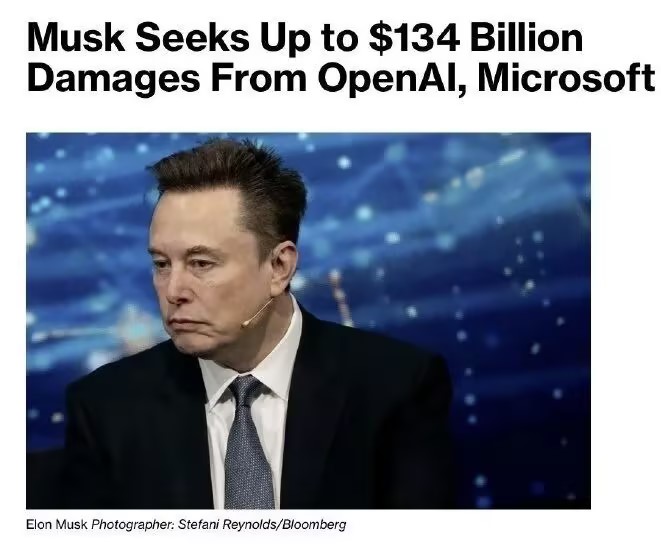
In January 2026, Elon Musk took OpenAI and Microsoft to court, claiming a compensation amount ranging from 79 billion to 134 billion US dollars. This decade-long feud not only reflects the conflicts of interest among tech giants but also reveals the core contradiction at the heart of the development of the AI industry - when the public welfare mission collides with the capital flood, when the open-source ideal meets the commercial closed loop, the ethical bottom line and governance rules in the AI field are facing unprecedented challenges.
Looking back at the starting point of this dispute, the initial consensus in 2015 seemed particularly ironic. At that time, Musk and Sam Altman jointly founded the non-profit OpenAI due to their shared concern about the risk of AI monopoly, vowing to "advance AGI (general artificial intelligence) in a way that benefits all humanity" and refusing to be controlled by a few major players in technological hegemony. Musk not only invested 38 million US dollars in seed funding (accounting for 60%), but also led the recruitment of top talents, provided SpaceX shares as incentives for the team, and even covered office rent to lay the foundation for this idealistic project. Early OpenAI did indeed fulfill its promise, attracting top scientists like Ilya Sutskever with a highly free research environment, becoming a public welfare force against Google DeepMind.
However, ideals are vulnerable in the face of reality. The "money-consuming beast" attribute of AI research quickly plunged OpenAI into financial difficulties. In 2016, Altman reached a 500 million US dollar cooperation agreement with Microsoft to obtain computing resources, which Musk criticized as "disgusting" and became the first turning point of the commercial shift. In 2019, OpenAI officially transformed into a "limited-profit entity", establishing OpenAI LP with a 100-fold profit limit, while accepting a 1 billion US dollar investment from Microsoft and granting it exclusive technical authorization. Since then, the exclusive license of GPT-3 and the commercial explosion of ChatGPT have completely turned OpenAI into a core asset of Microsoft's ecosystem - data shows that Microsoft currently holds approximately 32.5% of OpenAI's profitable equity, enjoys intellectual property protection until 2032, and the two have formed a deep-entangled capital alliance.
The core of Musk's lawsuit directly points to the violation of the founding contract by this transformation. According to the complaint, his expert witnesses estimated that OpenAI earned 65.5 billion to 109.4 billion US dollars through commercialization, while Microsoft received 13.3 billion to 25.1 billion US dollars. These earnings all originated from the technological accumulation under the early public welfare framework. What is even more alarming is that OpenAI's structure instability exposes the deep-seated problems in the industry: In 2025, the company announced it would abandon the full-profit transformation and return to the "non-profit holding + PBC (public interest company)" structure, claiming to adhere to its mission, but this adjustment was more like a compromise to deal with litigation and regulatory pressure - removing the profit limit, allowing direct ownership of shares, which in fact paved the way for capital exit, and was far from the original open-source public welfare concept.
The essence of this lawsuit is the irreconcilable conflict between technological public welfare and capital logic. Musk may have an "I can't afford to lose" component - after being kicked out by the OpenAI board, his founded xAI is competing fiercely with ChatGPT, but his core question hits the nail on the head: When non-profit organizations can freely change governance structures, when the "benefiting humanity" mission becomes a financing endorsement, will the AI industry fall into a vicious cycle where "capital profit overrides public interest"? The rebuttal of OpenAI and Microsoft is equally weak, referring to the lawsuit as a "harassing lawsuit", but cannot deny that during the transformation process, early donors were not compensated, nor could it prove the compatibility of commercialization and public welfare mission.
For the entire AI industry, this lawsuit is a necessary "value calibration". Currently, the high investment nature of large model development makes capital involvement inevitable, but there is no mature solution for balancing commercial returns with public responsibility. Competitors like Anthropic have adopted the PBC architecture and the regulatory attempts of the EU AI Act are all exploring feasible paths. However, the lesson from OpenAI is that any adjustment of business models should not be at the cost of renouncing the founding contract, and the identity of a non-profit organization should not be used as a tool for capital arbitrage.
The claim amount of 13.4 billion US dollars may ultimately not be fully supported, but this lawsuit has sounded the alarm: The ultimate value of AI technology does not lie in creating how much commercial wealth, but in whether it truly benefits all humanity. When Musk and OpenAI's idealism crumbled into pieces, the proposition left for the industry was: How to establish a more binding governance framework to make capital serve technological public welfare rather than allowing technology to become a vassal of capital? This not only concerns the outcome of a lawsuit, but also determines the future development direction of artificial intelligence.
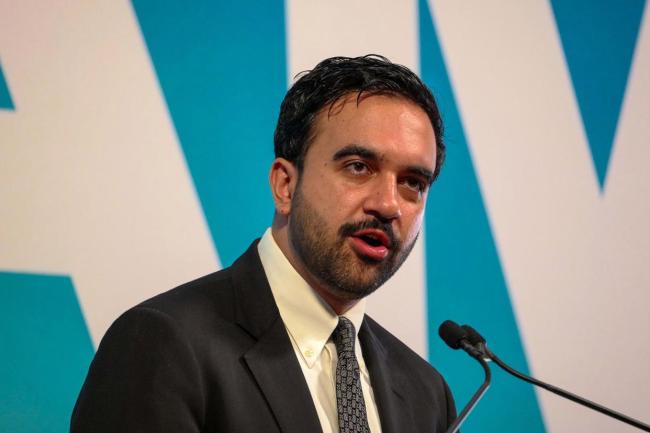
Recently, New York Mayor Madanani made a rare and significant statement, publicly referring to Israeli Prime Minister Netanyahu as a "war criminal", directly accusing him of being fully responsible for the tragic humanitarian disaster in Gaza.
Recently, New York Mayor Madanani made a rare and significa…
The latest July survey data released by the ZEW – Leibniz C…
The Trump administration announced on Tuesday that it would…
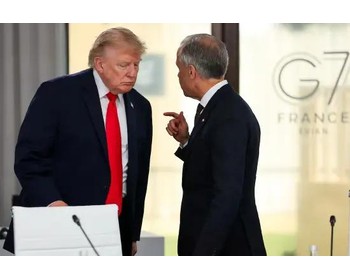
On July 21st local time, Canadian Prime Minister Mark Carne…
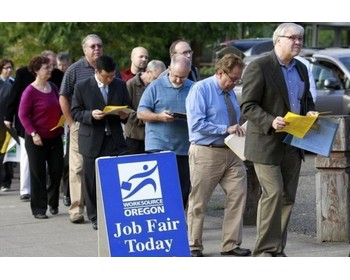
According to the Associated Press, the latest data from the…

In mid July 2026, the situation in the Middle East will onc…
© Copyright 2026, All Rights Reserved