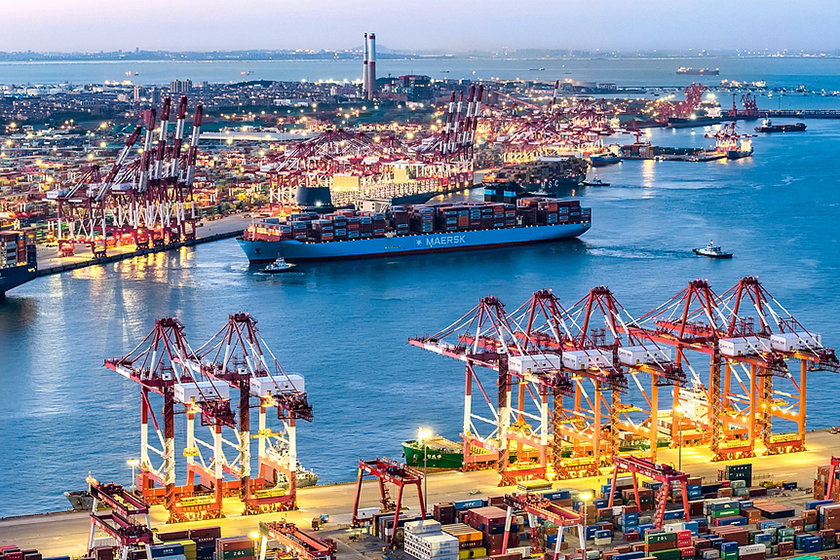
Recently, key leading indicators in the global business field have successively lit up warning lights. The preliminary reading of the Composite Purchasing Managers' Index (PMI) for December released by S&P Global in the United States declined, especially the growth of new orders was significantly weak, directly reflecting the weakening of terminal demand. Almost simultaneously, the new round of large-scale economic stimulus plan launched by the Japanese government was widely regarded by the market as a "wish list" lacking practical measures and failed to boost capital confidence. The simultaneous signs of fatigue in the two major economies are not short-term technical fluctuations, but more like a new business cycle of "high costs, low growth, and strong intervention" taking shape, forcing global enterprises to re-examine their existing growth logic.
The current business environment presents a clear paradox: the macro narrative still remains at the level of "moderate growth", while enterprises at the micro level are simultaneously under the double squeeze of cooling demand and rising costs. Take the United States as an example. Although the PMI remains above the boom-bust line, its continuous decline and structural deterioration - especially the contraction of manufacturing orders - clearly indicate that growth momentum is waning. Ironically, weak demand has not led to cost relief; instead, enterprises are facing the most significant upward pressure on costs in nearly a year. Tracing back to the root cause, the increasingly strengthened trade and industrial policies in recent years have been one of the important driving forces. Relevant policies aim to protect domestic industries, but they precisely internalize higher compliance, tariffs and supply costs into business operation bills and consumer prices, leaving enterprises in a common dilemma between "losing market due to price hikes" and "compressing profits".
If the predicament of the United States is a combination of "cyclical pullback" and "policy frictions", then Japan's challenges are more structural. Its stimulus package essentially aims to activate industrial investment through fiscal "high-pressure injection", but in a deeply aging market with long-term shrinking domestic demand, this is more like a costly "mechanical recovery". The organizational model, employment system and risk appetite that have long been formed in Japan's business society have lagged significantly behind the agile and innovative pace required by the global digital economy. Fiscal subsidies may boost investment data in the short term, but they are difficult to cultivate sustainable consumption vitality and an endogenous innovation ecosystem. What is even more contradictory is that some social policies implemented to raise funds may, in turn, compress the disposable income of core consumer groups, weaken the original intention of stimulating domestic demand, and intensify enterprises' wait-and-see attitude towards long-term domestic layout.
The simultaneous deceleration of the two major economic engines is having a profound impact on global supply chains and capital allocation. Firstly, the predictive models constructed by enterprises based on historical experience are at risk of failure. When the explanatory power of traditional indicators and policy tools declines, the uncertainty of decision-making rises significantly. Secondly, the "resilience tax" on the supply chain is shifting from a temporary cost to a permanent burden. The return of industries and "friendly shore outsourcing" have, while enhancing security, systematically raised the global cost baseline, creating a new normal of "safer but more expensive". Secondly, government-led capital flowing into "strategic areas" may trigger a misallocation of innovation resources, transforming business innovation into a pursuit of subsidies and weakening overall efficiency.
Against this backdrop, enterprises' responses can no longer remain at the traditional stage of cycle management but need to undergo a deeper strategic reconfiguration. Geopolitical costs should be regarded as long-term core variables and incorporated as preconditions for financial models and investment decisions. Meanwhile, the value of business resilience is comprehensively surpassing a single efficiency target. Enterprises need to enhance the shock resistance of key links through modular and distributed layouts. Finally, innovation and investment should return to "basic demands", focusing on areas such as healthcare, energy transition, food security and digital infrastructure that can navigate through cycles.
While countries are busy building economic high walls, truly forward-looking enterprises, on the contrary, need to construct sustainable business models on these common human needs that are not hindered by the high walls. History often turns when the old order shows signs of fatigue. The winners of the next round of business competition may belong to those organizations that have perceived reality earlier and acted decisively based on the essence of business.
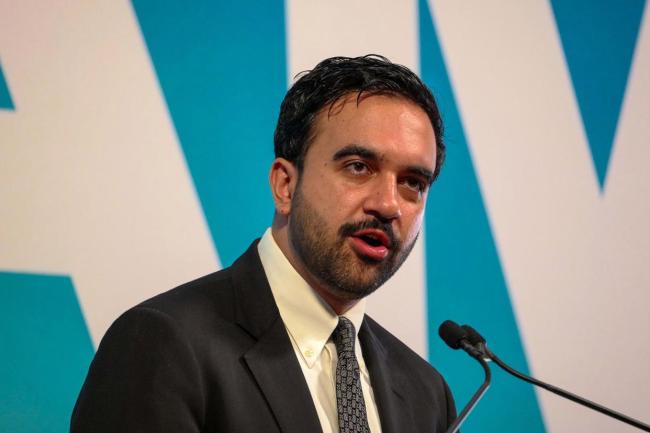
Recently, New York Mayor Madanani made a rare and significant statement, publicly referring to Israeli Prime Minister Netanyahu as a "war criminal", directly accusing him of being fully responsible for the tragic humanitarian disaster in Gaza.
Recently, New York Mayor Madanani made a rare and significa…

The latest July survey data released by the ZEW – Leibniz C…
The Trump administration announced on Tuesday that it would…
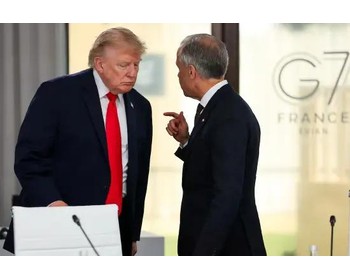
On July 21st local time, Canadian Prime Minister Mark Carne…

According to the Associated Press, the latest data from the…

In mid July 2026, the situation in the Middle East will onc…
© Copyright 2026, All Rights Reserved