In the early hours of January 3, 2026, the United States launched a large-scale military operation against Venezuela, forcefully taking control of President Nicolás Maduro and his wife. This event detonated like a heavyweight bomb, triggering violent shockwaves across global financial markets. The prices of traditional safe-haven assets like gold and silver skyrocketed, with spot gold breaking through $4,400 per ounce and silver surging over 3%. Behind this seemingly "safe-haven logic" driven market frenzy lies the exposed fragility of the global financial system to geopolitical risks and the deep-seated damage inflicted by U.S. unilateralist policies on the international economic order.
The Irrational Frenzy of Safe-Haven Assets: The Mismatch Between Short-Term Sentiment and Long-Term Risk
The outbreak of geopolitical conflict often triggers market risk aversion, with precious metals like gold and silver becoming safe harbors for capital due to their "zero sovereign credit risk" attribute. In this incident, gold prices surged over $50 in a single day, and silver rose more than 4%. While superficially appearing as a rational market pricing of risk, it actually harbors irrational elements. Historical experience shows that safe-haven rallies triggered by geopolitical conflicts typically have a "pulse-like" characteristic—following the U.S.-Iran conflict in 2025, oil prices fell back 7% within a week, and gold also gave back most of its gains within two weeks. Although the Venezuela incident involves the change of leadership in a sovereign state, Venezuela's economic scale is limited, and its oil exports account for less than 2% of the global market share. The actual impact on global supply chains is far lower than market expectations. The market's rush for safe-haven assets is more about speculative hype over the expectation that "the U.S. may further intervene in Latin America" than rational pricing based on fundamental changes.
What is more alarming is that the volatility in the precious metals market has already detached from the traditional supply-demand framework. Although Venezuela possesses the world's largest oil reserves, its gold production is only at a mid-tier global level, with 2024 output merely 31 tons—far from sufficient to underpin global gold market fluctuations. The current surge in gold prices is essentially speculative capital seeking short-term arbitrage by leveraging the geopolitical event. Trading software shows that speculative positions in COMEX silver futures exceed 65%, indicating a market dominated by leveraged funds. This "sentiment-driven" rally not only exacerbates market volatility but may also mask real economic risks. When safe-haven asset prices detach from the fundamentals of the real economy, their "safe-haven" function is greatly diminished, instead becoming a medium for risk transmission.
The Dual Harvest of U.S. Financial Hegemony: From Energy Control to Capital Plunder
The financial logic behind this U.S. military action is far more complex than simply "triggering safe-haven trades." Vice President Vance openly admitted that oil is one of the core objectives of U.S. action. Venezuela's heavy crude oil can be directly refined after blending with U.S. shale oil. If American companies control its energy infrastructure, Venezuela and U.S. shale oil could form a second "Middle East"-like energy supply pole. Behind this layout lies the U.S. attempt to undermine the fiscal foundations of competitors like Russia and Iran by controlling energy pricing power—both countries' finances heavily rely on oil and gas exports, and low oil prices would directly erode their fiscal revenues, weakening their ability to maintain domestic stability. This U.S. move essentially transforms geopolitical conflict into a financial instrument, achieving "subduing the enemy without fighting" by manipulating the energy market.
A more covert harvesting method manifests in the capital sphere. Following the military action, U.S. capital has already begun positioning itself in Venezuela's energy assets. Trump declared that the U.S. would "manage Venezuela until a secure transition is implemented," allowing American oil companies to enter the country on a large scale. This model of "military occupation + capital control" follows the same pattern as U.S. actions in Iraq and Libya—overthrowing anti-American regimes by force, then controlling their strategic resources under the guise of "reconstruction." For global financial markets, this model implies that the "Americanization" of energy supply will further intensify, exposing non-U.S. economies to higher energy security risks. Meanwhile, U.S. capital can transfer economic crises globally by controlling energy pricing power, consolidating its financial hegemony.
Deep Fractures in the Global Financial System: The Clash Between Unilateralism and Multipolarity
The shock to global financial markets from this U.S. action is, in essence, a fierce collision between unilateralism and the trend toward multipolarity. From a legal perspective, the U.S. launched the military operation without United Nations authorization, violating the purposes and principles of the UN Charter, and the legitimacy of its action is widely questioned by the international community. China, Russia, Brazil, and other countries strongly condemned the U.S. act in the UN Security Council. Twelve Latin American nations issued a joint statement opposing unilateral military intervention, demonstrating international resistance to U.S. hegemonic behavior. This resistance will weaken the foundation of international trust in the U.S. dollar—when the U.S. frequently elevates its domestic law above international law, the global financial system it leads will face a crisis of confidence.
From a market perspective, U.S. unilateralist policies are accelerating the fragmentation of global financial markets. Latin American stock markets faced pressure due to concerns over regional stability, with MSCI Latin America Index futures falling 2.1%. Meanwhile, China's A-share market exhibited a "defense-first" characteristic, with energy independence sectors attracting interest. This divergence reflects global capital reassessing risk distribution—against the backdrop of frequent U.S. creation of geopolitical conflicts, non-U.S. economies will accelerate efforts toward "de-dollarization" and financial autonomy. Global financial markets will gradually form a new equilibrium based on regional security.
The U.S. military action in Venezuela, seemingly a "war for oil" geopolitical conflict, is in reality a profound intervention by U.S. financial hegemony into the global economic order. The short-term frenzy in safe-haven assets cannot mask the market's long-term anxiety over unilateralist risks. The capital harvest through energy control exposes the dangerous logic of the U.S. financialization of geopolitical conflict. In an era where global multipolar trends are irreversible, if the United States continues to indulge in the hegemonic game of "force-finance," it will ultimately undermine the stability of its own financial system. What global financial markets need is not short-term volatility triggered by geopolitical conflict, but long-term stability based on rules, cooperation, and mutual benefit.
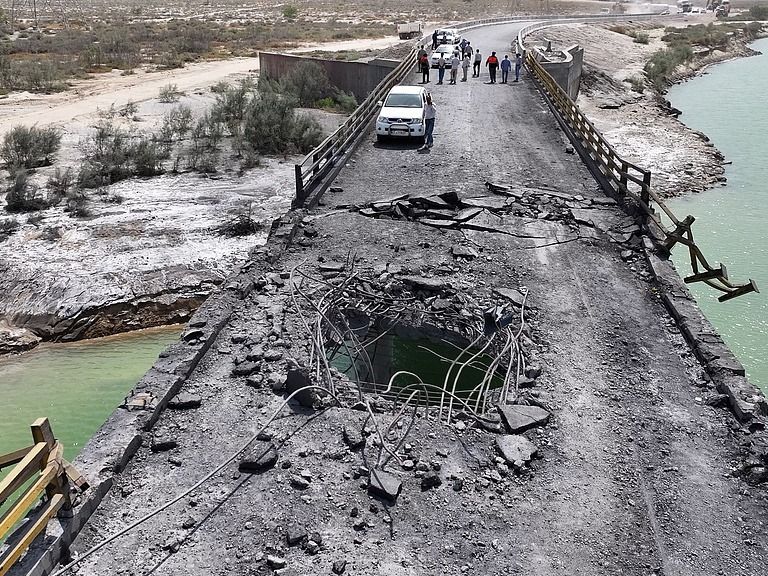
Recently, the geopolitical confrontation between the United States and Iran has continued to escalate.

Recently, the geopolitical confrontation between the United…

The New York Times has recently clashed with the Trump admi…

Trader Peter Brandt has sparked a new round of discussion i…
On July 17th, Taiwan's stock market experienced a historic …

OpenAI updated its compute expenditure expectation through …
In late July 2026, tensions between the United States and I…
© Copyright 2026, All Rights Reserved