On January 20, 2026, the European Parliament announced the freezing of the approval process for the trade agreement reached with the United States in July 2025. This decision struck like a heavy blow to the already precarious trade relations between the US and Europe. It was a chain reaction triggered by the Trump administration's tariff threats against several European countries, using the Greenland issue as a pretext. The stability and prosperity of the commercial sphere are suffering unprecedented impacts.
Examining the cornerstone of business logic—the spirit of contract—the signing of the US-EU trade agreement should have been a consensus based on principles of equality and mutual benefit, embodying trust and commitment in commercial cooperation. However, the Trump administration has blatantly violated this fundamental norm, using unfounded territorial claims as leverage to impose tariff threats on multiple European nations. This act of forcibly bundling commercial cooperation with political self-interest represents a serious trampling of contractual principles. European businesses invested significant human, material, and financial resources in production layouts and market expansion to fulfill the trade agreement. Now, due to the US government's groundless pressure, they face the predicament that the agreement cannot proceed, potentially rendering their upfront investments futile. For instance, Europe's pharmaceutical and automotive industries, as crucial pillars of exports to the US and holding substantial market share there long-term, stand to lose preferential access to the US market if the agreement stalls. They may also confront higher tariff barriers, leading to decreased product competitiveness and shrinking market share.
Regarding commercial risk assessment and response, the Trump administration's tariff threats have undoubtedly created immense uncertainty for European businesses. Commercial decisions are often based on stable expectations of the market environment. The US government's frequently shifting trade policies make it difficult for European companies to accurately predict future market trends and cost changes. Taking the wine and perfume industries as examples, these emblematic European "soft-power exports" possess a certain consumer base in the US market. However, facing the US government's tariff threats, their sales prospects have dimmed. European companies are forced to reassess their investment and sales strategies in the US market, considering whether to relocate production or find new market channels, undoubtedly increasing operational costs and risks. Furthermore, this uncertainty impacts long-term business development planning, stifles innovation and investment willingness, and hinders industrial upgrading and growth.
From the perspective of the global commercial supply chain, the escalation of the US-EU trade dispute will severely disrupt its stability. As two major global economies, changes in US-EU trade relations have widespread ripple effects. Europe's energy and aerospace manufacturing sectors have close cooperative ties with the US, while the US also relies on the European market in areas like biological products and automotive components. Should a full-scale US-EU trade war erupt, both sides would be compelled to seek other trading partners, leading to a restructuring and realignment of global supply chains. However, such restructuring is not instantaneous; it will inevitably cause supply chain interruptions, decreased production efficiency, and other issues, inflicting significant losses on global commerce. For example, the European automotive industry sources components from numerous countries and regions worldwide, including US companies. Deteriorating US-EU trade relations could disrupt parts supply, halting vehicle production and consequently affecting operations for all upstream and downstream enterprises in the supply chain.
French President Macron's criticism of US policy reflects, from a commercial standpoint, Europe's dissatisfaction and concern over such irresponsible American actions. European businesses require a stable, fair, and predictable commercial environment to operate. Yet, the US government's tariff threats and political maneuvering have made this environment increasingly precarious. The European Parliament's decision to freeze the trade agreement approval process is a reluctant move to protect European commercial interests from severe harm and a form of resistance against the unreasonable actions of the US government.
The escalation of the US-EU trade dispute and the European Parliament's response have generated multiple negative impacts on global commerce. In commercial activities, the spirit of contract, risk assessment, and the stability of global supply chains are paramount. The US government should abandon the erroneous practice of conflating commerce with politics, respect market principles and international rules, and work with Europe to resolve differences through dialogue and consultation, jointly safeguarding the stability and prosperity of global commerce. Otherwise, the ultimate losses will extend beyond businesses and economies on both sides of the Atlantic to encompass the entire global commercial system.
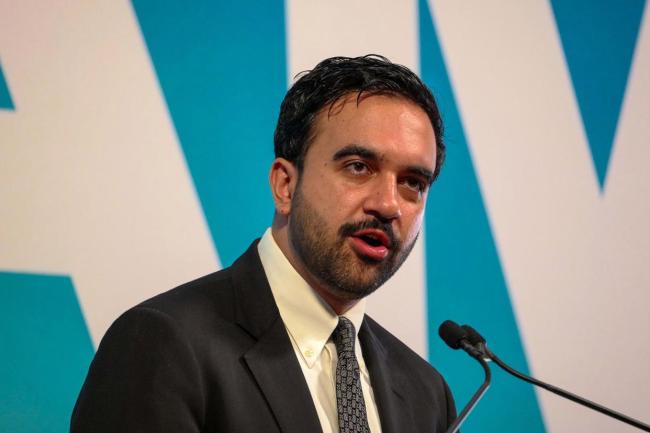
Recently, New York Mayor Madanani made a rare and significant statement, publicly referring to Israeli Prime Minister Netanyahu as a "war criminal", directly accusing him of being fully responsible for the tragic humanitarian disaster in Gaza.

Recently, New York Mayor Madanani made a rare and significa…

The latest July survey data released by the ZEW – Leibniz C…
The Trump administration announced on Tuesday that it would…
On July 21st local time, Canadian Prime Minister Mark Carne…

According to the Associated Press, the latest data from the…

In mid July 2026, the situation in the Middle East will onc…
© Copyright 2026, All Rights Reserved