
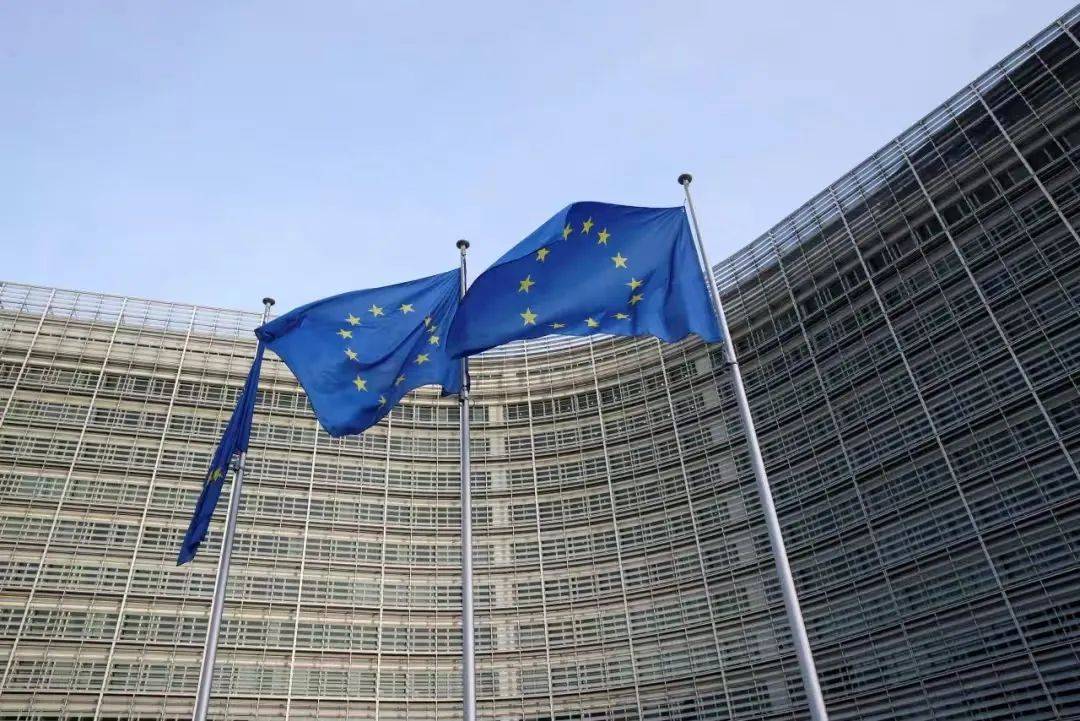
On January 21st, 2026, the European economy stands at the intersection of multiple pressures and structural adjustments. Trade frictions triggered by U.S. tariff threats have emerged as the core short-term disruption, compounded by divergent internal growth momentum and challenges in policy coordination, leading to a complex interplay between market sentiment and economic prospects. Germany recently revised down its 2026 GDP growth forecast from 1.3% to 1.0%, while the IFO Institute for Economic Research further lowered its projection to 0.8%, reflecting structural predicaments including weak domestic demand, sluggish corporate investment, and inadequate labor potential. The U.S. threat to impose a 10% tariff on 8 European countries (which may rise to 25% in June) could deal an additional 0.6-percentage-point blow to Germany’s economic growth. Calculations by the Kiel Institute for the World Economy indicate that a 10-percentage-point tariff hike would cause Germany’s exports to the U.S. to plummet by nearly 10%.
The escalation of transatlantic trade tensions has quickly spilled over into financial markets. On January 20th, major European stock indices declined across the board, with luxury goods, automotive, and technology sectors bearing the brunt. LVMH Group recorded its largest single-day drop in nearly a year, while shares of Volkswagen and Mercedes-Benz fell in tandem, pushing the Euro Stoxx 50 index down by over 1.7%. Citigroup downgraded European equities to Neutral for the first time in more than a year, explicitly noting that the deterioration of transatlantic relations has weakened the short-term appeal of European assets. Meanwhile, prices of safe-haven assets such as gold and silver hit all-time highs, and the euro appreciated against the U.S. dollar, reflecting growing investor concerns about exposure to U.S. assets. Despite optimistic market speculation about a "TACO trade" (suggesting the U.S. may soften its tariff stance), analysts at IG Group emphasize that securing Greenland as a core U.S. national security objective means the uncertainty surrounding trade frictions will persist in the long term.
In response to external shocks, the EU is accelerating the construction of a multi-layered response system. Following an emergency meeting on January 18th, the EU finalized the reactivation of a €93 billion tariff list targeting key U.S. industries such as soybeans and Boeing aircraft, which could take effect as early as February 6th. Simultaneously, internal debates are intensifying over the activation of the Anti-Coercion Instrument (ACI), a mechanism that could restrict U.S. companies’ access to the EU’s €2 trillion public procurement market or impose barriers on tech giants like Amazon and Microsoft. However, the threshold of requiring support from 15 member states (representing over 65% of the population) poses significant coordination challenges: dovish countries like Germany prefer to avoid further escalation, while France insists on a tough retaliatory stance. In terms of trade diversification, the EU-Mercosur Free Trade Agreement was officially signed on January 17th, serving as a crucial measure to reduce reliance on U.S. exports. Nevertheless, the European Parliament is set to vote on a related no-confidence motion on January 22nd, and disputes over balancing agricultural interests and transparency may still hinder the agreement’s implementation.
On the policy front, the European Central Bank (ECB) has maintained its stance of interest rate stability. Christine Lagarde emphasized the balance between inflation control and economic resilience at the Davos Forum, and Goldman Sachs predicts that core inflation in the euro area will fall to 1.8% by the end of 2026, providing room for the ECB to maintain a prudent policy stance. Despite short-term pressures, the European economy has demonstrated partial resilience: the ZEW Economic Sentiment Index for the euro area rose to 40.8 in January, a 19-month high, with 55.8% of analysts expecting stable economic activity and 42.5% projecting improvement. Bulgaria officially joined the euro area on January 1st, expanding the monetary union to 21 member states. Nordea Bank points out that private consumption has upside potential beyond expectations, and economic vitality is likely to resume in Northern Europe. Germany’s €1 trillion debt financing plan, focusing on infrastructure and defense investment, is expected by institutions like ING Bank to enhance European economic resilience. However, economists generally warn that without supporting structural reforms, fiscal spending will struggle to translate into sustained growth momentum.
The core contradiction facing the European economy lies in the timing mismatch between the short-term impact of external trade frictions and the long-term need for internal structural reforms. Policymakers must strike a balance between retaliating against trade coercion and maintaining growth stability. The EU’s emergency summit scheduled for January 22nd will be a critical juncture: details of tariff implementation, the pace of activating retaliatory tools, and the outcomes of internal position coordination will directly shape market expectations. From a fundamental perspective, the euro area’s 2026 growth is projected at 1.2%, a slight slowdown from previous forecasts but still retaining recovery potential amid resilient global growth. Ultimately, the ability of the European economy to break free from its pressured state will depend on the evolution of U.S. policy uncertainty, internal fiscal constraints, and geopolitical risks.

Recently, the British government, in accordance with the "Steel Industry (Nationalization) Act" that came into effect on July 16th, took the British Steel Company, which is controlled by China Jiefang Group, into state ownership without compensation.

Recently, the British government, in accordance with the "S…

On July 23rd local time, the US Trade Representative Office…

The international crude oil market saw a sharp one-sided ri…

Recently, the geopolitical confrontation between the United…

The New York Times has recently clashed with the Trump admi…

Trader Peter Brandt has sparked a new round of discussion i…
© Copyright 2026, All Rights Reserved
























