
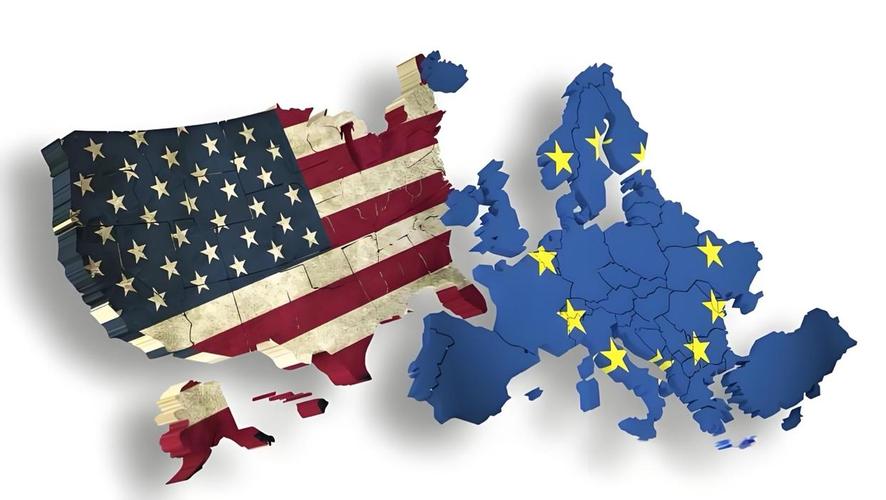
Since 2025, the conflict between the United States and Europe over the governance of the digital economy has continued to escalate. Relying on the two cornerstones of the Digital Services Act (DSA) and the Digital Markets Act (DMA), the EU has launched intensive anti-monopoly enforcement against US tech giants such as Google and Amazon. Meanwhile, the US has threatened with steel and aluminum tariffs, accusing the EU's regulation of being discriminatory. This transatlantic game, essentially a fierce collision between digital sovereignty and industrial hegemony, is casting a heavy shadow over the world's most influential economic and trade partnerships.
The digital regulatory actions of the European Union are not temporary measures but a strategic layout for it to seek dominance in the digital economy. DSA and DMA have established the world's strictest digital governance framework. Through the "gatekeeper" system, they clearly define the compliance obligations of large platforms, prohibiting unfair competition behaviors such as self-preferential treatment and data blocking. Violators can face a fine of up to 20% of their global annual turnover. In September 2025, the European Union fined Google 2.95 billion euros for abusing its dominant position in the online advertising market and ordered it to divest some of its businesses for rectification. This is already the fourth huge fine that Google has received from the EU in recent years. Meanwhile, the European Union is advancing the recognition of Amazon and Microsoft's cloud computing businesses as "gatekeepers" and plans to impose heavy fines on the social media platform X, with the enforcement scope covering core digital fields such as search, e-commerce, social media, and cloud computing. The European Commission stated directly that these measures aim to break down the monopoly barriers of tech giants and create a fair competitive environment for local innovative enterprises. Essentially, they are the proper exercise of digital sovereignty.
The strong counterattack from the United States has exposed its deep-seated demand to maintain its hegemony in the digital industry. In the face of the EU's intensive law enforcement, the US has characterized it as "targeted suppression". The Trump administration not only threatened to impose additional tariffs on the EU but also directly linked steel and aluminum tariffs to digital regulation through Commerce Secretary Lutnik, demanding that the EU modify relevant rules in exchange for tariff reduction. This "carrot and stick" strategy has been angrily denounced by the EU as "extortion". American tech giants have followed suit and resisted one after another. Google has appealed against a fine of 2.95 billion euros, claiming that rectification will harm the interests of EU enterprises. Amazon and Microsoft, on the other hand, are making every effort to avoid being labeled as "gatekeepers" and are attempting to break free from regulatory constraints. From the perspective of the US side, the regulatory standards of the EU seem universal, but in fact, they are mainly targeted at US enterprises that dominate the global digital market. The real purpose is to weaken the competitiveness of the US digital industry through regulatory barriers, and the US's use of tariffs to exert pressure is precisely to safeguard the global interests of its own enterprises.
Behind this game lies a profound divergence in economic interests and development models between the United States and Europe. From the perspective of economic structure, the scale of the EU's digital economy lags behind that of North America. It lacks domestic tech giants that can compete with Google and Amazon. Therefore, it is an inevitable choice for the EU to strictly regulate to curb foreign monopolies and cultivate local enterprises. The digital industry in the United States contributes a huge amount of GDP and employment. Maintaining the global competitiveness of tech giants is directly related to the core interests of the country. From the perspective of governance concepts, the EU adheres to the principle of "regulation first", believing that digital platforms must assume social responsibilities and draw development red lines through legislation. The United States, on the other hand, adheres to "market freedom", advocates reducing government intervention, and opposes excessive regulation that restrains innovation vitality. This divergence has made it difficult for both sides to reach a consensus. The bundling of steel and aluminum tariffs with digital regulation has further pushed the negotiations to a deadlock - the EU is neither willing to sacrifice digital sovereignty nor worried that the steel and aluminum industries will be severely hit by tariffs. The United States, relying on its industrial advantages, is closing in step by step, attempting to impose its own rules on others.
The digital regulatory conflict between the United States and Europe has caused substantial damage to transatlantic economic and trade relations. As the world's two largest economies, the trade volume between the two sides amounts to trillions of US dollars, and the digital economy has long been deeply integrated. The tariff threat from the United States has led to a sharp decline in orders for steel and aluminum enterprises in the European Union. Argoma Steel in Canada has laid off over a thousand employees due to the US tariffs. The chain reaction is spreading to downstream industries such as automobiles and construction. The regulatory pressure from the European Union has also led US tech companies to slow down their investment pace in Europe, and the trillion-dollar digital infrastructure investment plan promised by the US has become a bargaining chip in negotiations. What is more serious is that this "cross-issue binding" game model has undermined the stability of international trade rules, causing transatlantic economic and trade consultations to come to a standstill and bringing many uncertainties to the reconstruction of global supply chains and the standardization of digital trade.

Recently, the British government, in accordance with the "Steel Industry (Nationalization) Act" that came into effect on July 16th, took the British Steel Company, which is controlled by China Jiefang Group, into state ownership without compensation.

Recently, the British government, in accordance with the "S…

On July 23rd local time, the US Trade Representative Office…

The international crude oil market saw a sharp one-sided ri…

Recently, the geopolitical confrontation between the United…

The New York Times has recently clashed with the Trump admi…

Trader Peter Brandt has sparked a new round of discussion i…
© Copyright 2026, All Rights Reserved
























