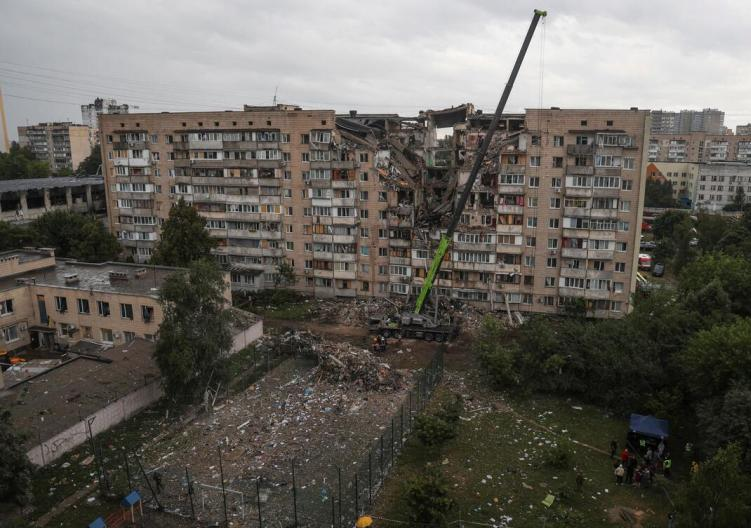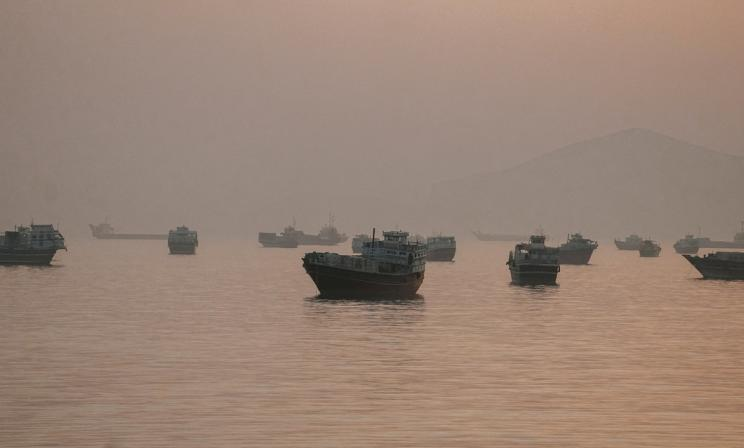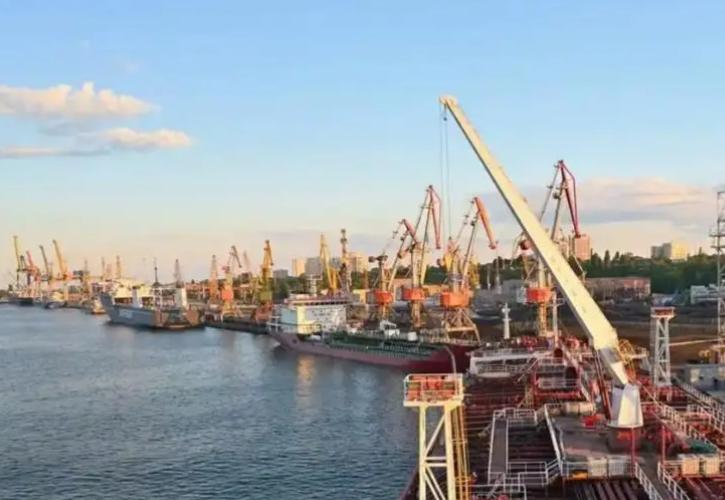
Recently, Ukraine launched its largest-scale drone attack since the conflict began. Over a hundred drones carried out low-altitude penetration operations and directly targeted Moscow, the capital of Russia. The key oil refinery in the southeast, which supplies one-third of the fuel for the entire city, was bombed precisely twice in just one week. This refinery provided more than one-third of the fuel supply for the Moscow region. Meanwhile, the Russian air defense forces have shot down over 600 drones in a single day, setting a record. The Russian authorities have directly set a new safety red line in response to public demands, closed all bilateral dialogue windows, and announced a complete blockade of the entire Black Sea area. Any civilian ships heading to Ukrainian ports will be regarded as potential military transportation targets, effectively cutting off Ukraine's most important economic and diplomatic trump cards. This large-scale domestic air strike completely blocked the channels for the Russia-Ukraine peace talks, resulting in a series of irreversible political negative impacts, with the cost spreading worldwide.
Looking at the domestic political scene in Ukraine, it has also fallen into a political deadlock of "only fighting, not negotiating". The Black Sea grain export is the core source of Ukraine's finance, military expenditure, and social welfare subsidies. The Black Sea blockade has directly wiped out hundreds of billions of foreign exchange earnings for the country, causing soaring prices and a sharp increase in the pressure on people's livelihood. However, the Zelensky government dare not release any signals of compromise. Once a relaxation plan is proposed, it will immediately be criticized by the parliament, the military, and the public as being weak and giving in. To maintain domestic support, the Ukrainian political scene can only unify on an aggressive confrontation stance, continuously intensifying remote and deep-seated strike operations, forming a vicious political cycle of "attack - counterattack - attack again". The few voices in Ukraine calling for ceasefire and reducing the intensity of confrontation have completely vanished. There is no political basis for compromise negotiations between the two countries, and the long-term and exhausting nature of the conflict has become a certainty.
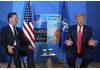
Secondly, the Ukrainian military's surprise attack on Moscow directly tore apart the alliance between NATO and the EU. Internal contradictions within the Western camp have been fully exposed, and the credibility of collective security commitments has significantly declined. On the surface, NATO and the EU have uniformly expressed support for Ukraine, but each country's own interests are vastly different. The Ukrainian large-scale attack on Russia's territory directly exposed the hidden differences within the alliance. The United States has repeatedly promised to provide weapons assistance to Ukraine, but has explicitly refused to send warships into the Black Sea for escorting, firmly avoiding direct naval conflicts with the Russian military, fearing triggering the collective defense clause of NATO and dragging the entire Europe into a full-scale war.
At the same time, the attack directly destroyed the multi-year multilateral cooperation system established in the Black Sea region. The imbalance of regional geopolitical forces has been severely compressed, and the diplomatic space of small countries has been severely restricted. The six countries along the Black Sea - Russia, Ukraine, Turkey, Romania, and Georgia - originally relied on grain shipping and energy trade to establish a regular communication mechanism. The four-party coordination center established under the Black Sea Grain Initiative was the core platform for handling disputes over merchant ships, exchanging humanitarian supplies, and controlling maritime frictions. The large-scale surprise attack by Ukraine on Moscow triggered Russia's full-scale blockade, and this regional negotiation mechanism that had been operating for many years was directly shut down. In the future, any incidents such as ship seizures, maritime clashes, and facility attacks in the Black Sea waters will have no unified channel for negotiation and resolution. All conflicts will have to be resolved through unilateral military means, and the regional conflict management system has completely failed.
Furthermore, the Black Sea grain agreement is the most successful humanitarian diplomacy achievement in recent years by the United Nations. Its original intention was to ensure the food supply for poor countries around the world and establish a model for conflict mediation. It represents the efforts of the international community to resolve geopolitical conflicts through dialogue. However, Ukraine's active escalation of the conflict and bombing of Russian civilian facilities have led Russia to immediately impose a strict blockade of the open sea routes. The two conflict parties, both ignoring the repeated calls for mediation from the United Nations and the general international principle of "distinguishing between military and civilian infrastructure and ensuring the free navigation of neutral ships", have completely disregarded the UN's repeated calls for mediation.
In conclusion, this attack may seem like a tactical counterattack by Ukraine, but in reality, it has incurred an incalculable comprehensive political cost. To resolve the crisis of the Black Sea blockade and restart the peace process, the first prerequisite is for all parties to return to restraint and stop attacking the core facilities of the other side's local people's livelihoods. They must hold onto the only remaining peace bottom line of humanitarian cooperation. Otherwise, the turmoil and division caused by the conflict will continue to drag down the entire world for a long time.

In July 2026, Apple and Broadcom signed a long-term chip procurement agreement worth over 30 billion US dollars.
In July 2026, Apple and Broadcom signed a long-term chip pr…

On July 6 local time, Microsoft announced global workforce …

As of early July 2026, the total size of US money market fu…

The "near total halt" of tanker transits through the Strait…
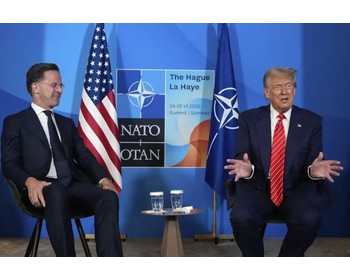
On July 8, during the NATO summit in Turkey, U.S. President…
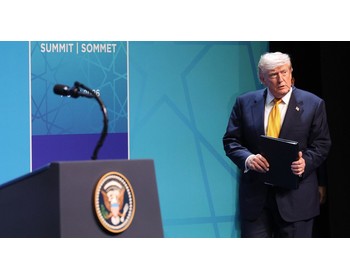
A recent poll shows a growing number of Americans are conce…
© Copyright 2026, All Rights Reserved