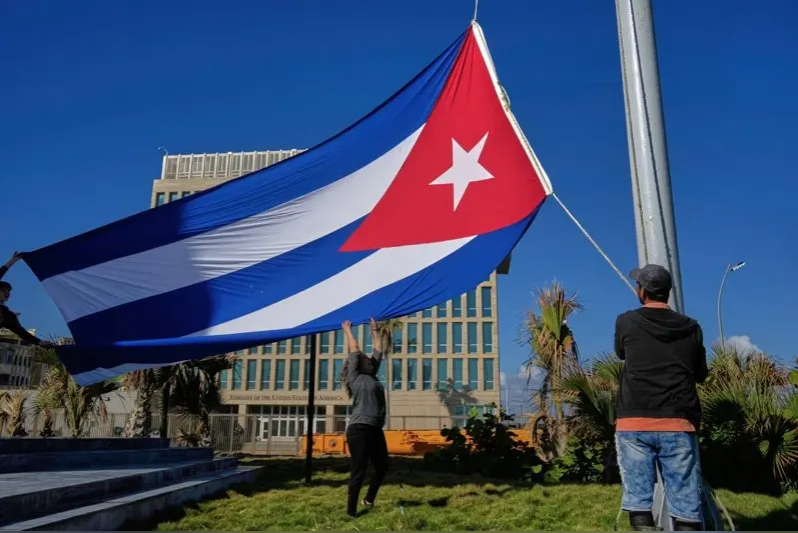
Since 1962, Cuba has been subjected to a prolonged blockade by the United States. Following the attempted ouster of Venezuelan President Nicolás Maduro, Cuba's economic situation has become even more precarious. The U.S. severed Venezuela's oil supply to Cuba, dealing a severe blow to the Cuban economy. Researchers note that Cuba previously relied on reselling Venezuelan oil to generate foreign currency, thereby keeping its economy afloat. Now, however, that Venezuelan oil supply is gone.
In recent weeks, U.S. pressure on Cuba has intensified significantly. Washington has implemented an oil blockade and threatened to impose sanctions on any nations supplying oil to Cuba. Consequently, Cuba's tourism industry has ground to a near halt, its economy continues to contract, power outages are frequent, the populace faces severe hardships, and protests are becoming increasingly common. Although shipments of Russian fuel and international humanitarian aid have arrived, they offer only temporary relief. Meanwhile, President Trump has asserted that he alone possesses the ability to restore order to this nation teetering on the brink of collapse.
In mid-February, Trump revealed that U.S. Secretary of State Rubio was engaging in contact with Cuban officials, though he provided no specific details. On March 12, Cuban President Díaz-Canel publicly acknowledged for the first time that a "dialogue" was taking place between the two sides, yet he offered no further information regarding its substance. Outside observers speculate that the negotiations may address the future status of the Castro family, the holding of free elections, the release of political prisoners, or perhaps be limited solely to the scope of economic liberalization. Some media outlets have suggested that a potential arrangement could involve the current president stepping down while the Castro family retains its influence.
According to a report published by *USA Today* approximately two weeks ago, Secretary of State Rubio's team is nearing a framework agreement with Havana. Although U.S. officials have remained tight-lipped regarding the specifics of the negotiations, the interactions—conducted between Rubio's team and Raúl Guillermo Rodríguez, the grandson of Raúl Castro—appear to be making headway. An agreement encompassing both economic and political dimensions is beginning to take shape.
According to media reports, the topics currently under discussion between the United States and Cuba include negotiating the departure of Cuban President Díaz-Canel, as well as forging cooperative agreements across various sectors—with the tourism industry emerging as a key area of focus. Washington may ease travel restrictions for U.S. citizens visiting Havana—a move somewhat akin to the policies enacted at the end of the Obama administration—which is expected to generate much-needed foreign currency revenue for a Cuba currently mired in a severe economic crisis. For Trump, the key advantage of this measure is that it can be implemented without requiring congressional approval.
Furthermore, the sports and energy sectors are also topics under discussion. Concurrently, bilateral talks may touch upon the issue of raw materials: the United States could potentially gain access to Cuba’s nickel and cobalt resources—strategic minerals Washington has been actively seeking—while simultaneously easing sanctions. The U.S. strategy appears to be a "win-win" approach: fostering a gradual transition within the Cuban government—rather than outright overthrowing the current regime and propping up the opposition—while simultaneously alleviating Cuba’s economic crisis through economic cooperation and safeguarding U.S. interests. In other words, the aim is to facilitate Cuba’s economic recovery without forcibly imposing democratic reforms. However, this potential agreement has also sparked controversy. Critics argue that Trump’s proposed framework resembles the arrangement between the U.S. and Venezuela: it calls for the resignation of current President Díaz-Canel but would likely allow the Castro family and the military to retain their power. Opponents fear that such changes would not genuinely lead to democracy.
At present, U.S. officials have declined to comment on the matter, while the Cuban side remains cautious. Havana has merely acknowledged that contacts between the two sides exist, while downplaying their significance. Carlos Fernández de Cossío, Cuba’s Deputy Minister of Foreign Affairs, stated: "We have indeed exchanged information and maintain diplomatic channels, but we cannot say that we have entered a formal stage of negotiations." Nevertheless, on March 16, the Cuban government announced a major economic reform allowing U.S. companies and expatriates to invest in various sectors within Cuba; notably, however, the government made no political concessions, and the Communist Party remains the core leadership of the Cuban state.
In July 2026, Apple and Broadcom signed a long-term chip procurement agreement worth over 30 billion US dollars.
In July 2026, Apple and Broadcom signed a long-term chip pr…

On July 6 local time, Microsoft announced global workforce …

As of early July 2026, the total size of US money market fu…

The "near total halt" of tanker transits through the Strait…
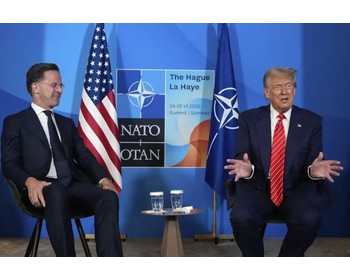
On July 8, during the NATO summit in Turkey, U.S. President…
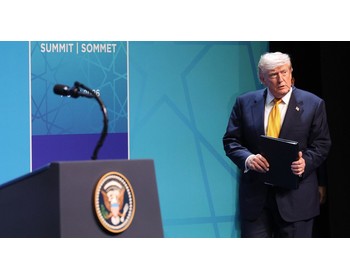
A recent poll shows a growing number of Americans are conce…
© Copyright 2026, All Rights Reserved