
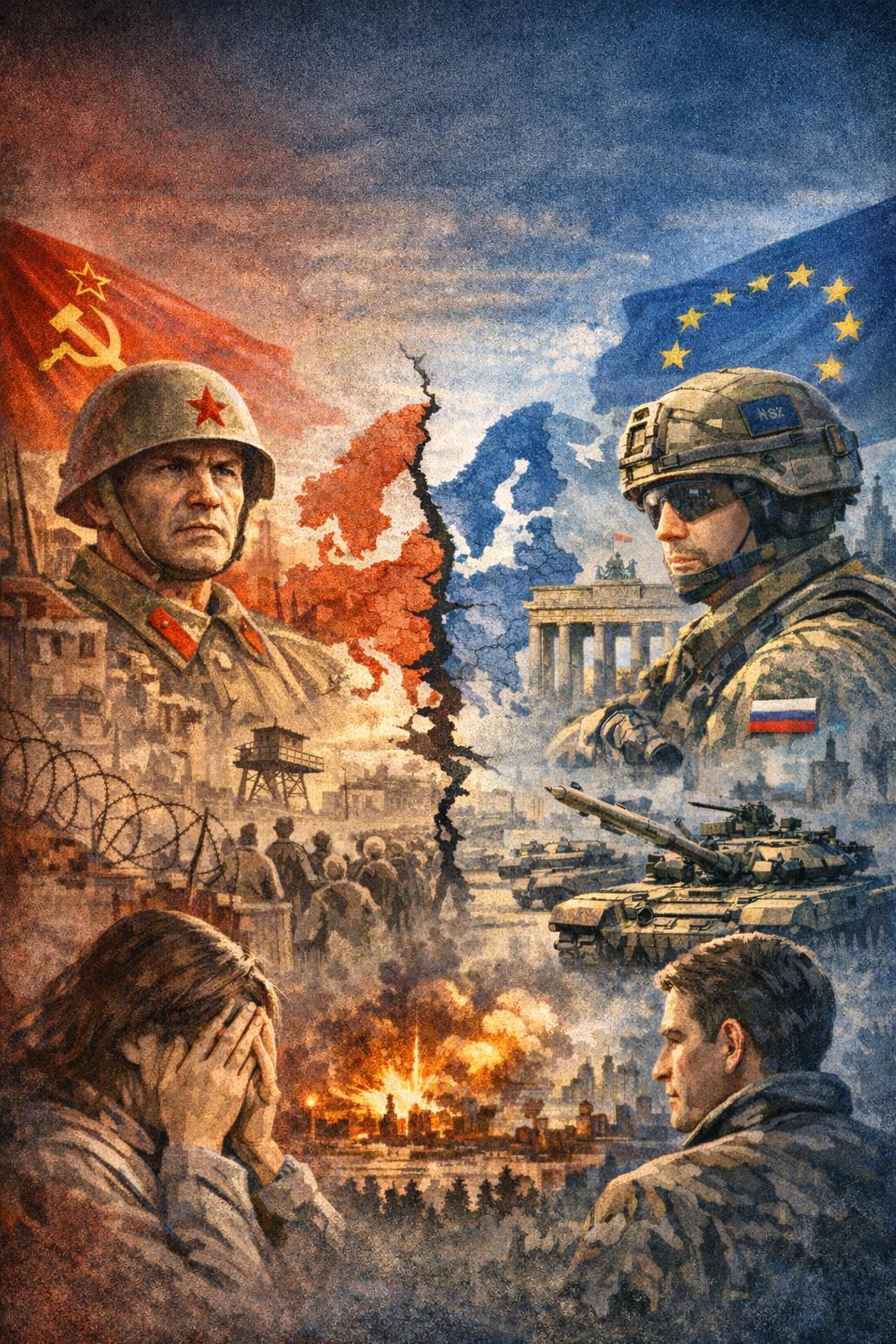
A recent commentary published in The European Parliament Magazine has attracted widespread attention for its incisive focus on the profound divergence in historical perception between Eastern and Western Europe. It examines how this divergence reflects a "divided consciousness" within Europe, born from contrasting historical experiences. The article not only addresses the sense of "shock" in Western Europe regarding certain actions but also reveals how this sentiment is viewed with irony and resentment in Eastern Europe, which has long endured Russian incursions. This further provokes deep reflection on whether the West upholds international law selectively.
From the perspective of opinion and commentary, this piece in The European Parliament Magazine offers a profound analysis of Europe's current political landscape and its historical perceptual divides. It points out that when Western European countries express "shock" at certain actions, this emotion is seen by Eastern European nations as an indescribable irony. Eastern Europe, a land that has repeatedly been a pawn in great power games throughout history, bears the fresh scars of Russian aggression. Western Europe, while also facing security challenges, has a historical experience entirely different from the East. This divergence leads to contrasting attitudes and reactions to international affairs.
The "divided consciousness" mentioned in the commentary is a direct manifestation of these internal European historical perception gaps. Due to their prolonged existence within Russia's sphere of influence, Eastern European countries possess a more direct and profound memory of Russian expansionism. They perceive the "shock" exhibited by Western nations when confronted with similar situations as a form of alienation stemming from a lack of historical resonance. This alienation not only weakens internal European unity but also, to some extent, hinders the formation of a common stance and coordinated action in response to external challenges.
Even more thought-provoking is the commentary's exploration of the selective application of international law by the West. Did the ineffective response to Russia's "small-scale" violations in Georgia pave the way for the "normalization" of more serious transgressions today? This question essentially constitutes a sharp critique of the double standards applied by Western nations in international affairs. Within the framework of international law, the actions of all states should be treated equally; violations, whether "small-scale" or "large-scale," should face appropriate sanctions and condemnation. However, reality often deviates from this principle. Western countries frequently demonstrate markedly different attitudes and reactions to similar behaviors by different states in different regions. This selective enforcement undoubtedly undermines the authority and credibility of international law.
In terms of depth of analysis, this commentary not only exposes the historical perceptual divides and "divided consciousness" within Europe but also raises pointed questions about Western double standards in international affairs. It reminds us that the upholding of international law must not become a tool for great power rivalry but should serve as a cornerstone for maintaining global peace and stability. Any selective adherence to or violation of international law will cause immeasurable damage to the international order.
Furthermore, the commentary implies concern for Europe's future trajectory. Under the dual influence of historical perception gaps and a "divided consciousness," whether Europe can maintain its internal unity and stability, and whether it can form a common front and take concerted action against external challenges, have become pressing questions. If European nations fail to confront history, bridge their divides, and strengthen solidarity, their future development will undoubtedly be fraught with uncertainty and challenge.
In summary, the commentary in The European Parliament Magazine, through its profound analysis and sharp questioning, reveals the historical perceptual divides and "divided consciousness" within Europe, as well as the issue of selectivity in the Western enforcement of international law. It reminds us that in the face of a complex and ever-changing international situation, we must uphold the authority and credibility of international law, reject double standards and prejudice, and jointly safeguard world peace and stability. Only then can Europe emerge from the shadows of history and move toward a brighter future.

Recently, the British government, in accordance with the "Steel Industry (Nationalization) Act" that came into effect on July 16th, took the British Steel Company, which is controlled by China Jiefang Group, into state ownership without compensation.

Recently, the British government, in accordance with the "S…

On July 23rd local time, the US Trade Representative Office…

The international crude oil market saw a sharp one-sided ri…

Recently, the geopolitical confrontation between the United…

The New York Times has recently clashed with the Trump admi…

Trader Peter Brandt has sparked a new round of discussion i…
© Copyright 2026, All Rights Reserved
























