
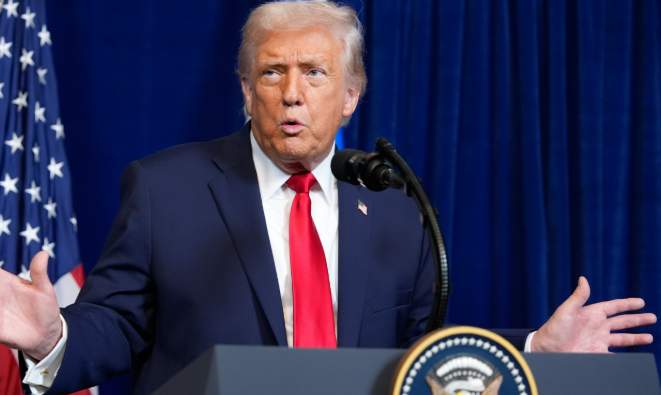
The cross-border arrest of Venezuelan President Maduro by the US military in January 2026 has caused a dual wave in global geopolitics and financial markets. As the country with the world's largest oil reserves, the situation in Venezuela has already affected the energy dollar nerve, and the United States' radical approach of using military means to overthrow sovereign state governments has sparked widespread discussions in the international community about the security of the dollar system. Can this hegemonic action, seen as the "Monroe Doctrine 2.0," rewrite the current pattern of the US dollar? The answer is clearly negative - it cannot reverse the fundamental downward trend of the US dollar in the medium to long term, nor can it shake its dominant position, but it will become a catalyst for accelerating the diversification of the global monetary system and promoting the evolution of the US dollar pattern towards "oscillation weakness+multipolar differentiation".
From the short-term market reaction, the 'Maduro incident' only provided weak and temporary support for the US dollar. The risk aversion caused by geopolitical conflicts has led to some funds temporarily flowing back into US dollar assets. The US dollar index rose slightly by 0.3% the day after the event, and safe haven assets such as gold have also strengthened. The Trump administration's clear statement that it will push American oil companies to take over Venezuela's oil industry has boosted market confidence in energy related US dollar assets in the short term. But this supporting effect quickly showed marginal effects: on the one hand, the event did not change the core pattern of global energy supply and demand. The Venezuelan oil industry is on the brink of collapse due to long-term sanctions, and even if the United States intervenes to repair it, it is difficult to form effective production capacity in the short term, which cannot have a substantial impact on the settlement basis of the petrodollar; On the other hand, the market quickly returned to the core focus of the Federal Reserve's interest rate cut cycle, and the weakening of the fundamental advantage of the US dollar interest rate is the key to determining its trend. A single geopolitical event is difficult to reverse this trend.
From a medium to long-term perspective, the core support of the US dollar pattern has not been strengthened by this event, but rather faces potential erosion. The global dominance of the US dollar is rooted in the US economy, developed financial markets, and long-standing international settlement inertia, which have not been consolidated by the arrest of Maduro. On the contrary, the unilateral actions of the United States have exposed the "hegemonic nature" of the US dollar system and intensified the vigilance of countries towards the "weaponization of the US dollar". In recent years, the proportion of the US dollar in global foreign exchange reserves has been below 60% for 11 consecutive quarters, and it has fallen to a 30-year low of 56.32% in 2025, reflecting the urgent need for countries to diversify their risks. The Maduro incident further proves that countries overly reliant on the US dollar system may face threats to their asset security due to the geopolitical ambitions of the United States.
It is worth noting that the United States' attempt to consolidate its dollar hegemony by controlling Venezuela's oil resources is unlikely to succeed. The binding relationship between the US dollar and oil is essentially based on market choices and trust endorsements in global energy trade, rather than pure military control. Historical experience has shown that regime change and nation building track records in the United States have not been successful. Cases such as Iraq and Afghanistan have already proven that military occupation cannot bring stable economic order.
The real impact of the Maduro incident is that it injects new impetus into the process of global currency multipolarization. After the incident, countries such as Russia and Brazil condemned the unilateral actions of the United States, which further strengthened their determination to promote diversified trade settlements. In recent years, ASEAN has reached a consensus to strengthen the use of local currencies. The proportion of RMB and Euro in international settlements has steadily increased, and the status of gold as a non sovereign reserve asset continues to rise. By 2024, the proportion of gold in global central bank reserves has surpassed Euro, becoming the second largest reserve asset. These trends were not triggered by the Maduro incident, but this event has made more countries realize that currency autonomy is the key to ensuring national economic security.
In summary, the Maduro incident cannot fundamentally change the pattern of the US dollar - it cannot salvage the long-term weak trend of the US dollar, nor can it shake its dominant position in the international monetary system. But as a highly impactful geopolitical event, it acted as a catalyst, intensifying the international community's vigilance against the hegemony of the US dollar and accelerating the process of global currency diversification. The evolution of the US dollar pattern ultimately depends on changes in economic fundamentals, market trust, and international order, rather than a single military intervention. In today's increasingly multipolar trend, if the United States insists on using hegemonic logic to maintain the status of the US dollar, it will only backfire and accelerate the differentiation of its dominant monetary system.

Recently, the British government, in accordance with the "Steel Industry (Nationalization) Act" that came into effect on July 16th, took the British Steel Company, which is controlled by China Jiefang Group, into state ownership without compensation.

Recently, the British government, in accordance with the "S…

On July 23rd local time, the US Trade Representative Office…

The international crude oil market saw a sharp one-sided ri…

Recently, the geopolitical confrontation between the United…

The New York Times has recently clashed with the Trump admi…

Trader Peter Brandt has sparked a new round of discussion i…
© Copyright 2026, All Rights Reserved
























