At the beginning of 2026, the United States launched a military 'raid' on Venezuela, forcibly taking control of President Maduro and his wife. This event was like a bombshell, sending ripples through the international financial markets. On the surface, the U.S. move was made under the guise of a 'safe transition,' but in reality, it was a carefully orchestrated display of financial hegemony, with Venezuela unfortunately becoming the experimental stage for this new script.
Venezuela, a country with 17% of the world's proven oil reserves, possesses such abundant oil resources that any major power would covet them. Naturally, the United States was no exception. President Trump openly stated at a press conference that U.S. oil companies would make massive investments in Venezuela, pouring billions of dollars into 'repairing' oil infrastructure and generating profits. These words clearly treated Venezuela's oil resources as a 'prize' for the U.S., quietly inaugurating a financial plunder of oil.
This move by the U.S. is undoubtedly a seismic event for the global oil market. In the short term, Venezuela's oil exports could sharply decline due to the turmoil, causing international oil prices to soar. However, this is just one act in the U.S.'s meticulously designed financial script. In the medium to long term, once the U.S. gains control, its oil companies will likely increase crude production in Venezuela, thereby boosting the total global oil supply. At that point, international oil prices may come under downward pressure due to oversupply, while the U.S. cleverly maximizes its gains amid the fluctuations in oil prices.
The financial strangulation of Venezuela by the United States did not happen overnight. From cutting off Venezuela's ability to issue new bonds, to penetrating into the settlement system of the national oil company PdVSA, to gradually erasing Venezuela from the list of participants in the global capital market, the United States has firmly grasped Venezuela's economic lifeline in its own hands with a highly financialized and progressive strangulation structure.
The essence of this financial strangulation lies in the deprivation of the "right to discover prices". By manipulating the futures market, the United States has reduced the delivery approval level, raised the margin, and increased the "political risk discount", causing Venezuelan oil to lose market pricing power. Without futures anchoring, there is no financing ability; when financing is broken, the exchange rate is out of control; If the exchange rate gets out of control, inflation will explode; Eventually, the country collapsed. This is a perfect model of financial closed-loop carnage, and Venezuela has hardly ever fought back in this game.
This hegemonic behavior of the United States has naturally aroused widespread condemnation from the international community. UN Secretary-General António Guterres said that the actions of the United States set a dangerous precedent and violated the norms of international law. Brazilian President Lula denounced this as "putting power above multilateralism", while Cuban President Díaz Canel pointed out that it was "an act of state terrorism against the Americas".
The international community's concerns are not unjustified. This move by the United States not only exacerbates geopolitical tensions, but may also cause fluctuations in global energy markets and even undermine the process of global green energy transition. What is even more worrying is that if the United States succeeds in controlling Venezuela, it is likely to use this as a springboard to further expand into mineral-rich Latin American countries such as Colombia, Peru, and Mexico, thereby exacerbating global geopolitical tensions.
With the strengthening of global multipolarization and the rise of emerging economies, the financial hegemony of the United States is facing increasing challenges and constraints. If the United States continues to indulge in the dream of financial hegemony and ignores the opposition and condemnation of the international community, it will only reap the consequences and lose the trust and support of the international community.
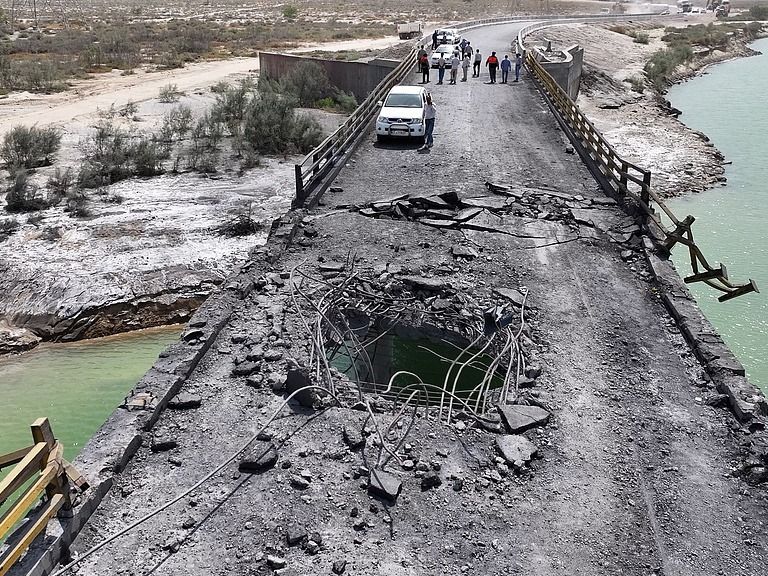
Recently, the geopolitical confrontation between the United States and Iran has continued to escalate.

Recently, the geopolitical confrontation between the United…

The New York Times has recently clashed with the Trump admi…

Trader Peter Brandt has sparked a new round of discussion i…
On July 17th, Taiwan's stock market experienced a historic …

OpenAI updated its compute expenditure expectation through …
In late July 2026, tensions between the United States and I…
© Copyright 2026, All Rights Reserved