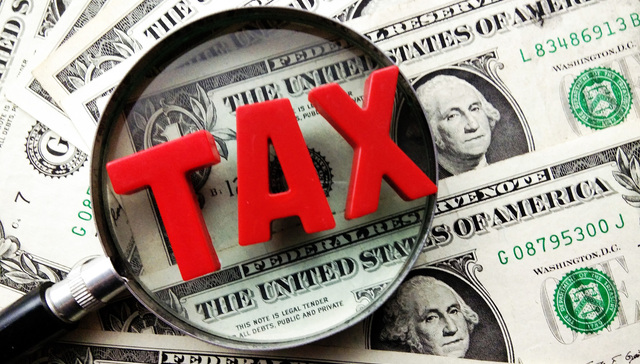
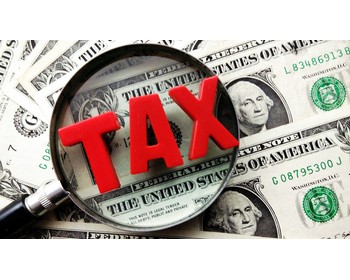
In the fiscal year 2026, the US government has refunded tariffs to importers amounting to 81 billion US dollars, a figure that has soared more than tenfold compared to the 5 billion dollars in the same period last year. This round of astronomical tax refund wave originated from the US Supreme Court's ruling that the unilateral tariff measures implemented during the Trump administration were illegal. The huge tax refunds not only exacerbated the US fiscal pressure, gave rise to a new industry of customs declaration services, but also completely exposed the deep institutional loopholes in the US trade decision-making, power balance, and fiscal management, sounding the alarm for unilateral trade protectionism worldwide.
The root cause of this tax refund crisis lies in the imbalance of power between the executive and legislative systems in the US. The US Constitution clearly stipulates that the power to levy tariffs belongs exclusively to Congress, and major tax policies must be reviewed and authorized by the parliament. However, the Trump administration deliberately misinterpreted relevant laws and bypassed the parliament to impose high tariffs on goods from multiple countries through executive orders, attempting to reduce the trade deficit and interfere with the global supply chain. The Supreme Court ultimately ruled that this action was an unauthorized executive act lacking legal basis, directly triggering a trillion-dollar tax refund compensation wave. It is estimated that the total amount of outstanding tax refunds and interest will remain high, and the US federal treasury continues to face large-scale capital outflows, resulting in a fiscal imbalance where tariff revenue is insufficient compared to the tax refund expenditure.
The huge tax refunds also completely exposed the false dividends of the US unilateral tariff policy. Previously, the US government claimed that imposing tariffs could replenish the treasury, revitalize domestic manufacturing, and lower the cost of living. However, the actual result was completely opposite. All tariff costs were ultimately borne by US import enterprises and ordinary consumers, raising manufacturing procurement costs and terminal prices, and increasing the burden on people's lives. After several years of implementation, the US trade deficit did not effectively narrow; instead, it accumulated a huge fiscal liability. The original revenue-generating policy completely turned into a heavy burden on the treasury, confirming the inefficacy and backlash of trade protectionism.
The tax refund process also thoroughly exposed the shortcomings of the US fiscal and tax coordination mechanism. Due to the hasty introduction of policies and the lack of risk anticipation, the subsequent tax refund application process was cumbersome and the review cycle was lengthy. Hundreds of thousands of enterprises needed to organize multiple years of customs declaration documents, go through complex application and even litigation procedures, giving rise to a boom in industries such as customs law, customs consultation, and trade compliance. Enterprises had to pay additional service fees to recover compliant funds, and the inefficient and costly post-event remedial mechanism fully exposed the lack of full-cycle risk assessment and fallback plans for major economic and trade decisions.
From the perspective of the global trade landscape, this event severely undermined the credibility of US trade policies. For a long time, the US has frequently used unilateral tariffs as a tool for geopolitical games, disregarding the multilateral trade rules of the WTO. And the current situation where the judicial system overturns official tariff policies and the government is forced to make huge compensations has made the global market clearly see the randomness and instability of the US trade rules. This has led countries to significantly increase the risk cost of trade with the US, and the global industrial chain has actively reduced its reliance on the US, further highlighting the core value of the multilateral trade system.
In the end, this tax refund crisis is a concentrated manifestation of the flaws in US political governance. Tariff policies have become short-term tools for political promises, implemented hastily without considering the rule of law, fiscal sustainability, and market laws, ultimately resulting in policy changes every day and continuous blood loss in the treasury.
This trillion-dollar tariff refund crisis is a typical warning: Unilateral trade protectionism that disregards the rule of law and natural laws will ultimately backfire on itself. If the US cannot fill the institutional shortcomings of power balance, policy assessment, and fiscal management, such policy backlashes will continue to occur, and its unstable trade policies will continue to impact the global economic and trade order.
Morgan Stanley has released its latest quarterly report, with overall revenue and net profit both hitting record highs, far exceeding Wall Street expectations.


Morgan Stanley has released its latest quarterly report, wi…

As a "throat passage" for global energy trade, the Strait o…

ASML's beat-and-raise earnings, Intel's 18A yield rate leap…
In the fiscal year 2026, the US government has refunded tar…

According to an informed source today, the EU is planning a…

Recently, the U.S. immigration enforcement system has explo…
© Copyright 2026, All Rights Reserved