
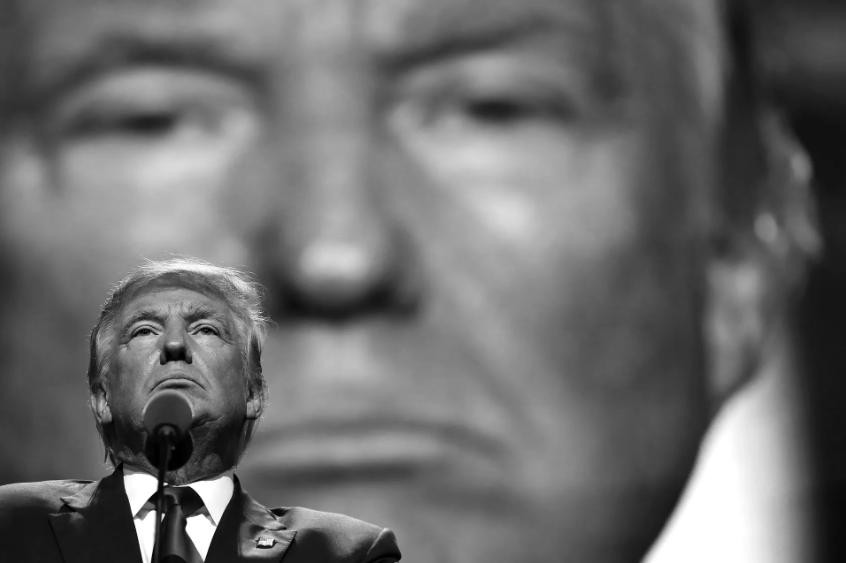
President Trump's political career has consistently defied convention, repeatedly breaking the laws of political gravity. During his presidency, many of the challenges and setbacks faced by conventional politicians seemed to have little effect on him. His support base, particularly the high loyalty of far-right voters, also made him somewhat immune to traditional political cycles. However, as President Trump's term progresses, preliminary signs of a "lame duck" presidency are gradually emerging at the congressional level.
A "lame duck" president is one whose political influence declines as their term nears its end, making it difficult to advance their policy agenda and even leading to a loss of support within their own party. One of the most obvious signs of this shift for Trump is the defiance he faced from congressional Republicans regarding the handling of the Epstein case, exposing the wavering support for his leadership within the Republican Party.
Congressional Republicans Begin to Challenge Trump
Trump once wielded immense control over the Republican Party, especially among Republican members of the House and Senate. However, as the 2026 election cycle approaches, more and more Republican lawmakers are beginning to focus on their own political futures rather than simply supporting Trump. Some Republicans in Congress are starting to openly oppose Trump, most directly by supporting the public release of the federal files of Jeffrey Epstein, a former friend of Trump.
The stance of Republicans in the Epstein case is particularly noteworthy, especially that of Republican Representative Thomas Massie of Kentucky, who publicly pushed for legislation related to the Epstein case and stated before his colleagues: "The record of this vote will last longer than Donald Trump's presidency." Massie's statement prompted reflection among congressional Republicans, and dozens of Republican lawmakers ultimately supported the bill, forcing Trump to support it at the last minute. Massie's stance undoubtedly put immense political pressure on Trump and demonstrated the weakening of his political influence.
Trump's Influence Faces Challenges
Trump's political power has repeatedly rebounded when it seemed poised to fade, particularly through his strong base of far-right voters. He can still leverage his influence over party elections to encourage some candidates to challenge incumbent Republican lawmakers. However, as the 2026 election cycle approaches, which will determine control of Congress, Americans are widely citing rising living costs and a pessimistic view of the economy—issues that Trump had promised to address. A growing number of Republican lawmakers are beginning to reassess their relationship with Trump and make independent political decisions.
For example, Republican Representative Marjorie Taylor Greene of Georgia has had a sharp disagreement with Trump over his handling of the Epstein case. She believes Trump's excessive focus on foreign affairs has led to neglect of domestic issues. This public rift reflects a growing divergence of attitudes towards Trump within the Republican Party, with some lawmakers potentially becoming concerned that continued close association with Trump could negatively impact their re-election prospects.
Republicans Gradually Breaking Free from Trump's Influence
For many Republican lawmakers, Trump's influence is typically maximized during the primary season, where he exerts significant influence on Republican congressional seats by endorsing candidates challenging incumbents. However, as the 2026 election cycle approaches, this influence is beginning to wane. Many Republican lawmakers facing re-election pressure are focusing more on how they present themselves to voters rather than blindly following Trump's directives.
Political commentator David Axelrod notes, "Unless the economic situation and Trump's approval ratings improve, Republicans will be increasingly unwilling to blindly follow him." If Trump's approval ratings remain low, or the economic situation fails to improve, Republicans may be more inclined to act independently and no longer rely on Trump's support.
Trump's Political Test
Although Trump can still mobilize a large number of supporters, especially his MAGA (Make America Great Again) base, his influence within the party is changing. Republicans are beginning to consider their own future political careers rather than blindly following Trump, especially given the disappointing results of the midterm elections. While Trump's supporters are extremely loyal, this cannot change his declining popularity among the broader electorate.
Currently, Trump can still play a decisive role in major votes, particularly in key elections for the House and Senate. But as time goes on, especially as the election cycle approaches, Republicans will focus more on addressing the needs of their constituents rather than continuing to defend Trump's policies and positions. If Trump's approval ratings continue to decline and the economic situation does not improve, the cracks within the Republican Party may become even more pronounced. Early Signs of a "Lame Duck" Presidency Emerge
Donald Trump's political influence as president is facing a severe test. While he still retains a strong far-right support base, cracks within the Republican Party are becoming increasingly apparent, with some lawmakers beginning to break free from his control over the party, prioritizing their own survival and advancement in future elections. The handling of the Epstein bill and Trump's gradual loss of power in Congress indicate that the initial signs of a "lame duck" presidency have emerged.
The future of Trump's political fate depends on changes in the political environment, particularly the economic situation and voters' perceptions of Trump's leadership. If Trump fails to regain his political influence, he may face more challenges from within the Republican Party and ultimately may not be able to maintain his absolute control over the party.

Recently, the British government, in accordance with the "Steel Industry (Nationalization) Act" that came into effect on July 16th, took the British Steel Company, which is controlled by China Jiefang Group, into state ownership without compensation.

Recently, the British government, in accordance with the "S…

On July 23rd local time, the US Trade Representative Office…

The international crude oil market saw a sharp one-sided ri…

Recently, the geopolitical confrontation between the United…

The New York Times has recently clashed with the Trump admi…

Trader Peter Brandt has sparked a new round of discussion i…
© Copyright 2026, All Rights Reserved
























