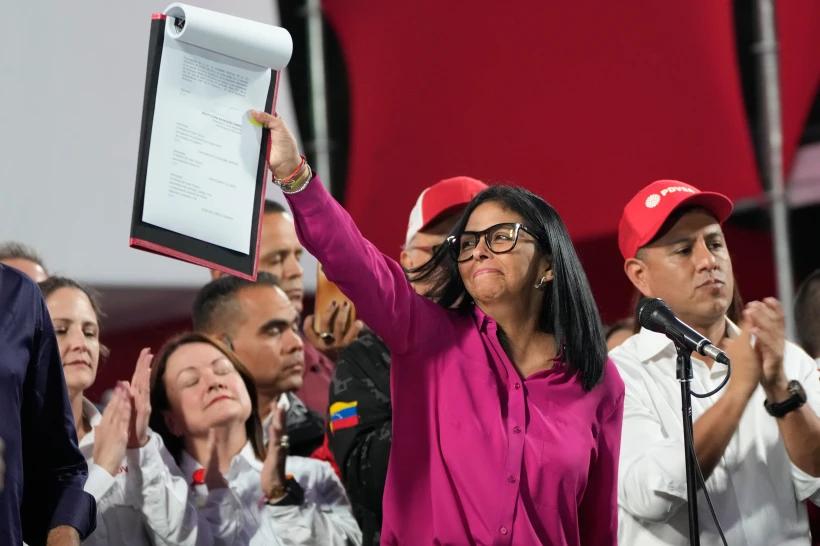
On January 29, Venezuela's Acting President Delcy Rodríguez signed a bill on the privatization of the oil industry, fully liberalizing market access to the country's oil sector. This move completely reverses the core proposition of the socialist movement that has ruled the country for more than 20 years, marking a fundamental shift in the development direction of Venezuela's energy sector. Notably, the passage of the bill came less than a month after the current President Nicolás Maduro was attacked by U.S. forces in the capital and narrowly escaped an outright arrest, giving the incident a particularly strong geopolitical game color.
This privatization transformation of the oil industry is an inevitable choice for Venezuela under dual internal and external pressures. Internally, the long-term state-owned model of the energy industry has led to backward oil extraction technology, a continuous decline in production capacity, a slump in the domestic economy due to the sharp reduction in energy revenue, and a significant weakening of people's livelihood security capabilities. Externally, the U.S. military's attack on Maduro fully exposed the external security threats facing the country, and the U.S.'s decision to ease oil sanctions on Venezuela at this time is actually a direct response to its privatization transformation. The U.S. Treasury Department has simultaneously expanded the operational authority of domestic energy companies in Venezuela, but explicitly prohibited entities from China, Russia, Iran, North Korea, and Cuba from participating in related transactions. Essentially, it is an attempt to gain dominance over Venezuela's oil market through sanctions relaxation and squeeze out the energy interests of other major powers in the region.
The privatization of Venezuela's oil industry will have multiple far-reaching impacts on the global energy market and the geopolitical pattern of Latin America. For Venezuela, privatization is expected to attract foreign investment, upgrade oil extraction equipment and technology, boost oil production capacity and exports, and alleviate domestic economic pressure. However, it also faces the risks of the loss of energy sovereignty and the control of the economic lifeline by foreign capital. For the United States, this move can not only obtain cheap oil resources from Venezuela to meet domestic energy demand, but also strengthen its political and economic influence in Latin America and curb the expansion of other major powers in the region. For the global energy market, the recovery of Venezuela's oil production capacity may increase global crude oil supply, exert certain pressure on international oil prices, change the flow direction of global oil trade, and reshape the competitive pattern of the energy market.
From a geopolitical game perspective, the United States has played a key role as a promoter in this incident. The U.S. military's attack on Maduro was most likely to deter the current Venezuelan government and force it to make policy adjustments that are in line with U.S. interests. The simultaneous introduction of sanctions relaxation and transaction bans is a combination of economic and political means, trying to build a U.S.-led Venezuela oil cooperation system. This unilateral approach, which ignores the legitimate rights and interests of other countries in Venezuela, is bound to trigger countermeasures from relevant countries and exacerbate geopolitical tensions in Latin America.
In summary, the privatization of Venezuela's oil industry is not a simple adjustment of economic policies, but a strategic choice under geopolitical games. This move not only brings opportunities for economic recovery to Venezuela, but also hides the risk of losing energy sovereignty. By combining "sanctions relaxation + market exclusion", the United States attempts to bring Venezuela's oil market under its control. This move will not only change the energy pattern in Latin America, but also have a chain reaction on the global energy order and geopolitical balance. In the future, Venezuela needs to strike a balance between attracting foreign investment and safeguarding energy sovereignty. The international community should also be vigilant against the U.S. act of pursuing geopolitical expansion in the name of economic cooperation, and jointly maintain a fair and reasonable global energy trade order and geopolitical pattern.
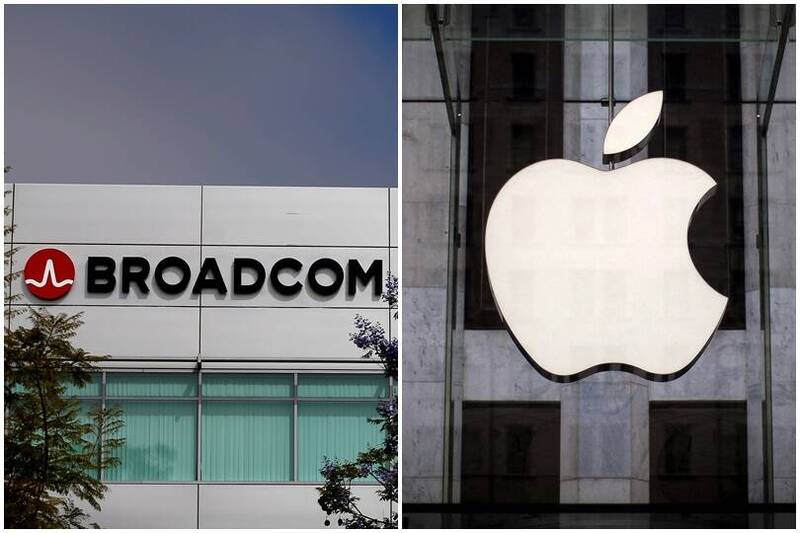
In July 2026, Apple and Broadcom signed a long-term chip procurement agreement worth over 30 billion US dollars.
In July 2026, Apple and Broadcom signed a long-term chip pr…

On July 6 local time, Microsoft announced global workforce …

As of early July 2026, the total size of US money market fu…

The "near total halt" of tanker transits through the Strait…
On July 8, during the NATO summit in Turkey, U.S. President…
A recent poll shows a growing number of Americans are conce…
© Copyright 2026, All Rights Reserved