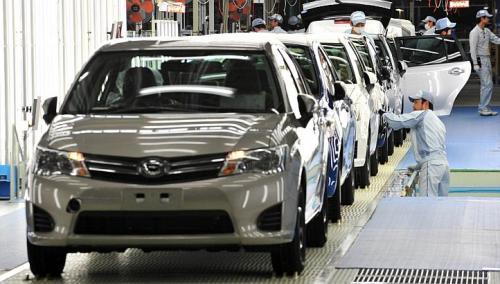
Recently, according to the latest financial reports of Japan's seven major automakers, in the first half of the fiscal year 2025, the imposition of auto tariffs by the United States alone caused approximately 1.5 trillion yen in losses. The losses are expected to expand to 1.89 trillion yen for the entire year. Among them, Toyota alone bore approximately 872 billion yen. This impact caused by tariffs is not merely a trade dispute; it also reveals the deep vulnerabilities of Japan's automotive industry in terms of technological path, global layout, and geopolitical changes.
The crisis originated from the sudden turn of the US trade policy. Since April 2025, the US imposed a 25% tariff on imported cars, although the rate for Japan was reduced to 15% after negotiations, it was still a significant change compared to the previous 2.5% level. What is more ironic is that this "benefit" was achieved at the cost of Japan's commitment to making huge investments in the US. The US market accounts for about one-third of Japan's car exports, and the tariff cost has rapidly eroded corporate profits. Toyota suffered a 450 billion yen loss in operating profit in the first quarter of the fiscal year 2026, Honda's net profit halved year-on-year, and Nissan continued to suffer losses. The industrial foundation has been significantly shaken.
However, the reason why the tariff impact is so lethal lies deeper in the structural problems of Japan's automotive industry itself. Firstly, there is the relative lag in the transition to electrification and intelligence. When the Chinese market has fully shifted to electric vehicle competition centered on intelligence, Japanese car manufacturers still highly rely on hybrid and fuel vehicle advantages, and their pure electric layout started late and was implemented cautiously. This technology path dependence led to their stagnation in the Chinese market and deepened their reliance on the US market, further amplifying the tariff risk.
Secondly, the "lean production" supply chain, once regarded as the core competitiveness, has become a burden under the rise of trade protectionism. Tariffs not only target but also affect components, causing a sudden increase in cross-border division costs. Moving production lines to the US can avoid tariffs, but it requires a huge investment and long-term adjustment, equivalent to a painful reconfiguration of the existing successful model. The conflict between the global production logic and the "domestic priority" policy has squeezed Japanese carmakers into a structural predicament.
The risks thus triggered are spreading to a broader level. To maintain market share, some carmakers choose to absorb the tariff costs themselves, and the price of exports to the US has dropped by nearly 20% at one point. However, "paying with price to increase volume" cannot be sustained. The continuous pressure on profits has led enterprises to cut future investments, Honda tightened its pure electric strategy, Subaru reexamined its electrification plan, forming a vicious cycle of "profit decline - investment reduction - competitiveness weakening". At the macro level, the automotive industry, as a pillar of Japan's economy, its contraction may reduce the GDP by approximately 3.3 trillion yen in 2025. In contrast, the Japanese government plans to impose a weight tax on electric vehicles in the future to make up for the decline in fuel tax, forming a significant constraint on the industrial transformation needs.
Facing this predicament, the government and enterprises' responses are full of helplessness. The government attempts to alleviate the impact through diplomatic mediation and market diversification, but the size of the US market cannot be replaced. At the enterprise level, they accelerate local production and structural contraction. Nissan plans to lay off about 20,000 people and close several factories. The most symbolic is that Toyota even considers exporting its US-produced models back to Japan to balance production and costs. These strategies, objectively speaking, actually complement the US policy goals - attracting investment, production, and employment back to the local area.
Overall, under the US tariff policy, Japan's automotive industry is undergoing a profound strategic test. This is not only a short-term financial impact, but also the concentrated manifestation of slow transformation and path dependence in the global political and economic逆流. Whether it can complete self-renewal in the "tariff cage" and reshape competitiveness in the era of electrification and intelligence will determine whether this industrial giant will adjust and revive or enter a long twilight. This process will also become an important footnote to the fate of traditional manufacturing in the era of globalization.

Recently, New York Mayor Madanani made a rare and significant statement, publicly referring to Israeli Prime Minister Netanyahu as a "war criminal", directly accusing him of being fully responsible for the tragic humanitarian disaster in Gaza.

Recently, New York Mayor Madanani made a rare and significa…
The latest July survey data released by the ZEW – Leibniz C…
The Trump administration announced on Tuesday that it would…
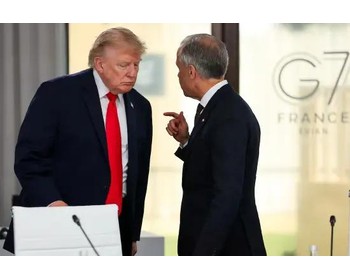
On July 21st local time, Canadian Prime Minister Mark Carne…
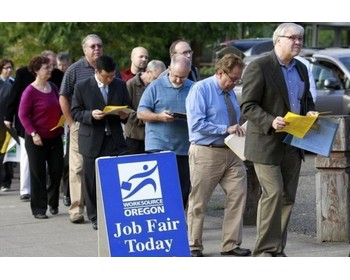
According to the Associated Press, the latest data from the…

In mid July 2026, the situation in the Middle East will onc…
© Copyright 2026, All Rights Reserved