
Since July, the ongoing controversy over the American AI company Anthropic’s programming tool Claude Code having hidden data monitoring mechanisms has stirred up concern. Official risk warnings indicate that all versions from 2.1.91 to 2.1.196 have security vulnerabilities and could transmit sensitive information such as location and identity identifiers to remote servers without user consent. Several leading domestic internet companies have already banned the use of this tool across the board, and a data security trust crisis surrounding commercial AI tools is rapidly spreading across the entire industry.
Unlike typical product bugs, the issue exposed this time is an intentional design flaw. As one of the leading AI code generation tools on the market, Claude Code had previously integrated quickly into the R&D processes of numerous tech companies worldwide due to its precise understanding of complex business logic, with many teams using it for core business code writing and debugging. The hidden transmission mechanism means that sensitive information like a company’s code structure, development progress, and technical plans could be indirectly leaked, posing much greater risks than ordinary data breaches. For the tech industry, which heavily depends on intellectual property, this kind of "backdoored productivity tool" is like planting a hidden data leak bomb within the R&D system.
After the incident was exposed, the response speed from enterprises far exceeded that of ordinary AI security events. Leading companies like Alibaba immediately listed it as high-risk software, requiring all employees to check and uninstall it. More industries with high confidentiality requirements, such as finance and high-end manufacturing, are also following suit with bans. The core logic behind this is that compliance requirements for cross-border data flow are tightening. If companies use foreign AI tools with data backdoors, they not only face business risks like leaks of trade secrets but could also breach data security regulations. Several companies have already been fined for illegally transferring data abroad via foreign tools, and this incident has undoubtedly further amplified compliance anxiety across the industry.
Behind the trust crisis is a restructuring of the global AI programming tool landscape. On one hand, the enterprise-level expansion ceiling of overseas AI tools is becoming apparent. Anthropic, which previously promoted a core brand image of ‘safety alignment,’ has been seriously compromised in this incident, and its business rollout to the enterprise market will be directly hindered. Strict data privacy markets like Europe, Japan, and South Korea are very likely to follow with restrictive regulations. On the other hand, domestic AI programming tools are seeing a clear window of opportunity to replace them. Made-in-China AI programming products, which offer localized deployment, data staying within the domain, and fully auditable processes, are attracting significant enterprise inquiries and purchasing demand, noticeably accelerating the domestic replacement process in the sector.
From an industry development perspective, the Claude Code backdoor incident serves as an important warning in the widespread adoption of AI productivity tools. As AI tools become deeply embedded in core enterprise processes, efficiency is no longer the only benchmark—data security, compliance, and controllability are becoming the key criteria for procurement. For the AI industry as a whole, any commercial expansion cannot come at the cost of breaking user trust or compromising data security. Only by staying within the safety red lines can AI programming tools truly become reliable productivity enablers for industries, rather than hidden-risk 'backdoor carriers.'

In July 2026, Apple and Broadcom signed a long-term chip procurement agreement worth over 30 billion US dollars.

In July 2026, Apple and Broadcom signed a long-term chip pr…

On July 6 local time, Microsoft announced global workforce …

As of early July 2026, the total size of US money market fu…

The "near total halt" of tanker transits through the Strait…
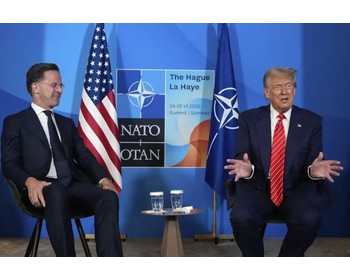
On July 8, during the NATO summit in Turkey, U.S. President…
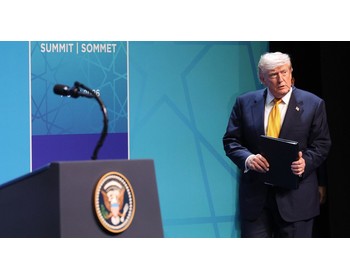
A recent poll shows a growing number of Americans are conce…
© Copyright 2026, All Rights Reserved