A business war in AI, fueled by ideological differences and competing interests, is intensifying between Elon Musk and OpenAI. From Musk's withdrawal from OpenAI's board in 2018 over strategic disagreements to xAI's repeated lawsuits against OpenAI for alleged monopolistic practices and betrayal of its founding principles, this multi-year conflict has long transcended personal grudges to become a pivotal variable reshaping the global AI industry landscape. An analysis of both sides' core leverage and strategic logic reveals no clear winner in this battle, which will ultimately end in a "drainage balance." Meanwhile, industry rules and development directions will be redefined through this confrontation.
Musk's counterattack arsenal essentially combines "public opinion momentum + differentiated positioning + legal sabotage." As a founding veteran of OpenAI, he wields the "mission card" to repeatedly criticize OpenAI's shift from a nonprofit organization to profit-driven operations and its deep partnership with Microsoft, precisely hitting public concerns about AI giants' profit-seeking nature and securing a moral high ground.
On the business front, Musk sidesteps OpenAI's consumer user advantage by leveraging xAI's Grok model with the "open-source card." Although its open-source license includes commercial usage restrictions, making it not purely open-source, it successfully shapes an image of "breaking closed monopolies," forming a stark contrast with OpenAI.
More impactful are legal tactics: xAI has sued OpenAI twice, with the latest involving a joint accusation of illegal collusion between OpenAI and Apple, aiming to use antitrust litigation to dismantle Apple App Store's preferential treatment of ChatGPT and secure fair exposure opportunities for its Grok model while restraining OpenAI's commercialization pace.
In contrast, OpenAI, despite being mired in public criticism and legal battles, possesses formidable core advantages that are difficult to shake.
First, it maintains robust technological and market barriers. ChatGPT dominates approximately 80% of the global generative AI chatbot market, boasting a user base of hundreds of millions and leading in model iterations. Even after the controversial launch of GPT-5, it has not lost its industry leadership.
Second, its capital and ecosystem ties are deeply entrenched. Microsoft’s multi-billion-dollar investment provides ample computational resources and financial support, while its system-level collaboration with Apple grants control over hundreds of millions of iOS devices, forming a closed loop of "technology-capital-channel."
Facing Musk’s offensive, OpenAI has also demonstrated flexible countermeasures. By reclassifying its for-profit subsidiary as a public benefit corporation (PBC), it not only addressed public concerns about mission drift but also opened the door to investor returns with no ceiling, securing continued support from capital sources like SoftBank. This cleverly resolved the resistance to commercialization.
The outlook of this business battle is destined to be a prolonged struggle rather than a quick resolution, as the intractable core conflict makes it difficult for either side to completely defeat the other. In the short term, Musk's legal actions and public relations campaign have indeed put pressure on OpenAI, potentially forcing Apple to moderately open up its App Store recommendation resources and also slowing OpenAI's commercialization process. However, OpenAI's technological and channel advantages cannot be overturned in the short term, and its $300 billion valuation along with ample cash flow provide it with the capital to sustain prolonged operations.
In the medium to long term, the competition between the two parties will center on the "ecological discourse power." OpenAI must strike a balance between profit and its public welfare mission, maintaining technological leadership while addressing regulatory and public pressure to avoid losing trust due to excessive profit-seeking. Meanwhile, Musk needs to deeply integrate xAI with Tesla and the X platform, genuinely building an "energy-compute-application" ecological closed loop rather than remaining at the conceptual hype stage. Notably, the stance of giants like Microsoft and Apple will become a critical variable—Microsoft's continued investment in OpenAI will further consolidate its advantage, while moderate relaxation to avoid antitrust risks may present an opportunity for xAI. Additionally, tightening global AI regulatory policies could serve as a turning point in their competition, where the party that adapts more quickly to regulatory requirements will gain the upper hand in future contests.
Ultimately, the business rivalry between Musk and OpenAI represents a clash between two development paths in the AI industry: "idealism versus pragmatism" and "openness versus closedness." This confrontation will not have a definitive victor but may instead push the industry toward a more rational equilibrium: OpenAI will be compelled to prioritize public interests and transparency, while Musk's presence will continue to remind the industry to guard against monopolistic risks. For ordinary users and the industry, this balance is not a bad thing, as intense competition will force both sides to accelerate technological innovation and optimize service experiences, ultimately driving the AI industry toward healthy development within a regulated framework. Moreover, this prolonged battle between Musk and OpenAI will become a classic case in the history of global tech industry rivalries, a study in the interplay of vision, interests, and strategic foresight.
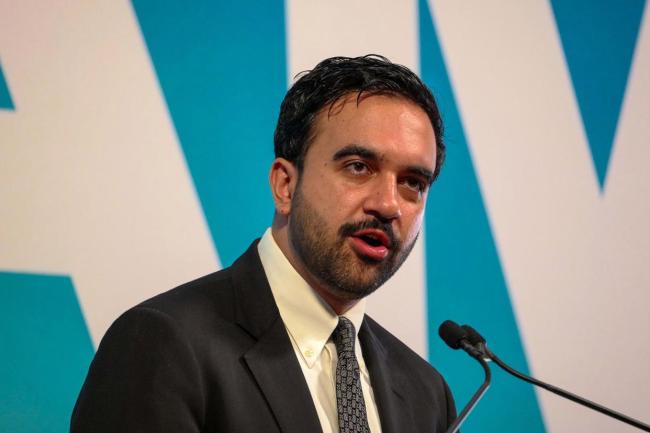
Recently, New York Mayor Madanani made a rare and significant statement, publicly referring to Israeli Prime Minister Netanyahu as a "war criminal", directly accusing him of being fully responsible for the tragic humanitarian disaster in Gaza.
Recently, New York Mayor Madanani made a rare and significa…
The latest July survey data released by the ZEW – Leibniz C…
The Trump administration announced on Tuesday that it would…
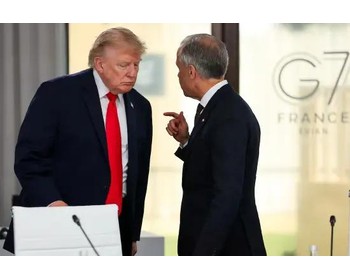
On July 21st local time, Canadian Prime Minister Mark Carne…
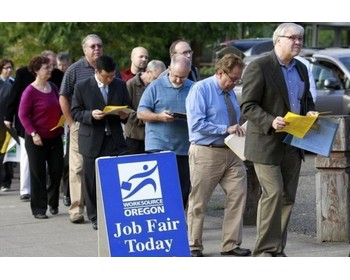
According to the Associated Press, the latest data from the…

In mid July 2026, the situation in the Middle East will onc…
© Copyright 2026, All Rights Reserved