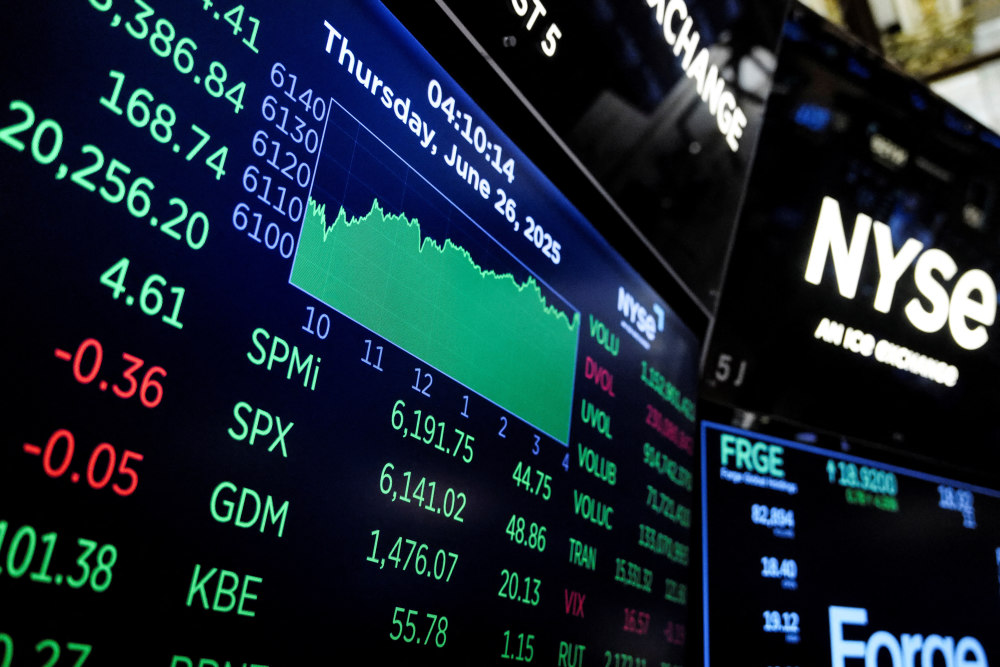
On May 25, 2026, the European and U.S. financial markets presented a distinct pattern of divergent recovery. Affected by statutory holidays in multiple countries, on-site spot trading was generally restricted. Nevertheless, market risk appetite improved markedly. Coupled with the significant easing of geopolitical tensions in the Middle East, risky assets ushered in a phased recovery window. European stock markets surged strongly to hit new stage highs, while U.S. stock index futures trended steadily higher. The overall market sentiment shook off the downturn caused by geopolitical conflicts in early spring, fueling a recovery momentum for global capital markets in late May.
In terms of market trading rhythms, major European and U.S. markets entered a holiday trading mode, forming obvious divergence characteristics. The United States observed Memorial Day, with all on-site stock trading suspended for the day, including mainstream and growth boards, while only over-the-counter derivative markets remained open. Meanwhile, the United Kingdom celebrated the Spring Bank Holiday, leading to a closure of the London stock market and a passive decline in trading activity across partial European markets. Although the holiday effect resulted in weak liquidity in global spot equity markets, it did not curb overall market optimism, and the performance of over-the-counter markets fully reflected investors’ positive outlook.
While U.S. spot equities remained closed, U.S. stock index futures posted robust gains and continued their early recovery trend. As of the daily close, the S&P 500 futures rose by 0.9%, and Nasdaq futures saw a more prominent increase of 1.2%. The strong performance of tech-heavy index futures indicates market recognition of the valuation recovery in the technology sector, as well as optimistic expectations for U.S. economic resilience and improved corporate earnings. In the absence of spot trading volatility, the upward movement of futures fully released bullish sentiment, laying a solid foundation for U.S. stock performance upon reopening.
In contrast to the steady holiday performance of U.S. markets, European stock markets staged a full-scale broad-based rally, emerging as the highlight of global capital markets. All major European benchmark indices closed higher, completely erasing all losses incurred since the outbreak of the Iran-related geopolitical conflict in late February and notching new three-month highs amid a thorough market valuation recovery. Specific data showed that pan-European indices performed strongly: the STOXX Europe 600 rose 1.03%, and the STOXX Europe 50 jumped 2%. On a national level, Germany’s DAX index climbed 2.01% to close at 25,389.10, hitting its highest closing level since January 14; France’s CAC 40 increased 1.76% to 8,258.26, firmly holding its high range; Italy’s FTSE MIB rose 1.43%, breaking the 50,000 threshold to set a new all-time high. The synchronized strength of multiple European stock indices underscores the overall recovery momentum of regional markets.
In terms of sector rotation, European stock markets featured a balanced internal structure with most sectors posting gains, and heavyweight sectors strongly propping up the broader market. The European banking sector led the market with a 2% daily gain, supported by expectations of regional economic recovery and stable monetary policy, driving continuous valuation restoration in financial stocks. Meanwhile, the sharp decline in international crude oil prices effectively eased cost pressures on the aviation and transportation industries, benefiting their earnings recovery, with leading airline Air France-KLM surging more than 6%. The technology and manufacturing sector also gained traction, with leading chipmaker Infineon rising 4.5% and embracing a valuation rebound. In addition, market rumors of a Ubers acquisition boosted local European lifestyle service stocks, with Delivery Hero skyrocketing nearly 12% on the day, making it the most outstanding thematic asset.
Overall, the divergent recovery of European and U.S. stock markets is primarily driven by easing geopolitical risks and improved market sentiment. The de-escalation of Middle East tensions substantially eliminated the safe-haven premium of crude oil, alleviating European inflationary pressures and easing market concerns over economic stagflation, which provided fundamental support for stock market gains. Amid contracting holiday liquidity, market capital sentiment remained stable, and bullish funds pushed up the valuation of risky assets. In the short term, the strong recovery of European stock markets verifies fundamental market resilience, while the upward trend of U.S. stock futures signals improving global risk appetite. Subsequent market movements will continue to evolve alongside inflation trends, geopolitical developments and central bank monetary policy adjustments.

According to a report by The Wall Street Journal on July 22nd, due to the failure of Congress to pass the new fiscal year spending bill, the US federal government will face another partial shutdown starting from July 24th.

According to a report by The Wall Street Journal on July 22…
On July 17th, Taiwan's stock market experienced a historic …

On July 22nd local time, the pre-market short-term decline …

On July 22 local time, Advanced Micro Devices (AMD) officia…

According to the report by Rich Asplund, a columnist of Bar…

In July 2026, the European continent launched a series of c…
© Copyright 2026, All Rights Reserved