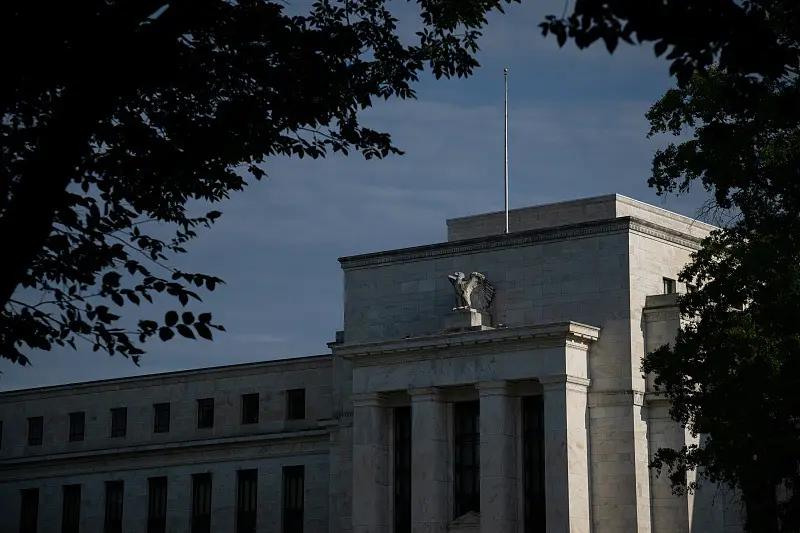
The latest data released by the Federal Reserve shows that in May 2026, the total amount of consumer credit in the US decreased by 182 million US dollars compared to the previous month. This is the first monthly decline in consumer credit since 2024. Analyzing the data breakdown clearly reveals that this credit contraction was entirely caused by a significant reduction in credit card debt. The revolving credit decreased by 5.3 billion US dollars in a single month, marking the largest decline in nearly two years. Although car loans and student loans increased slightly, their volume was completely unable to offset the significant decline in credit card debt. This downward trend is not simply a case of ordinary people saving money for daily living; it is a dangerous signal caused by high interest rates, stubborn inflation, and the pressure of residents' debts. At the same time, it brings a series of consecutive negative impacts on the US economy, and in the long run, it may even push up the probability of an economic recession.
Firstly, the evolution of economic structural contradictions. This credit decline has exposed the typical K-shaped economic division in the US. In simple terms, the rich are not affected, while the middle and low-income groups are forced to significantly reduce their expenditures. The gap between the two extremes is widening, and overall consumption lacks sufficient momentum. The key characteristic of the low-income group is that for every additional dollar they earn, they almost always spend it all, with a marginal consumption propensity far higher than that of the rich. This group collectively reduces credit expenditures, having an extremely obvious drag effect on overall consumption. The debt crisis among young people is particularly prominent. The proportion of cardholders with a 90-day overdue payment among those aged 18 to 29 is close to 10%. A large number of young people have given up plans to buy cars, houses, and postponed long-term large-scale consumption such as getting married and replacing household appliances. The long-term low consumption willingness of young people will directly suppress the growth space of domestic demand in the next decade. The structural imbalance problem of the economy is difficult to be repaired in the short term.
Secondly, it exerts pressure on economic downturn. The first to suffer from the credit contraction are the major banks and consumer finance companies in the US. Credit card business is the most core profit source for financial institutions, with interest and installment fees supporting the majority of the revenue from retail banking. Now that credit card balances are continuously declining, the interest that banks can earn has directly decreased; coupled with the fact that the 90-day overdue rate for credit cards and car loans has climbed to a 16-year high in the past two years, with one out of every thirteen credit card accounts being seriously overdue, banks have to set aside more funds to prepare for bad debt provisions. Under the double squeeze, bank net profits have significantly declined, and market confidence in bank stocks has continued to fall. People are reluctant to borrow actively, and banks are unwilling to lend either. The two-way contraction forms a vicious cycle: credit supply decreases, and even if people want to make installment purchases, they cannot get loans; consumption continues to weaken, and residents' income is unstable, leading to an increase in the number of loan delinquencies. Banks further tighten credit granting. This credit tightening will continue to penetrate the real economy. Small and medium-sized enterprises will find it more difficult to obtain loans for business operations. Business expansion and capital turnover will be restricted.
Furthermore, the pressure on the Federal Reserve has also arisen. The continuous cooling of consumer credit has placed the Federal Reserve in a dilemma. The two policy goals - suppressing inflation and stabilizing employment - have a serious conflict. No matter which policy direction is chosen, it will bring new negative pressure to the economy. From the perspective of stable growth, the continuous weakening of domestic demand and credit contraction force the Federal Reserve to cut interest rates. Only by lowering the overall market interest rate can the interest on credit cards and car loans decrease, reducing the burden of debt repayment for residents, and stimulating people to borrow again, driving the recovery of retail and manufacturing industries, and avoiding a significant increase in the unemployment rate. If the Federal Reserve chooses to maintain high interest rates and continue to suppress inflation, the high monthly payments on credit cards and car loans for residents will persist for a long time. Residents can only continue to deleverage and reduce consumption. Domestic demand continues to weaken, the number of layoffs spreads, and the unemployment rate keeps rising, and the risk of economic recession continues to increase.
In conclusion, US consumer credit has declined for the first time since 2024. This is not a short-term fluctuation but rather a deep-seated problem exposed by the long-term erosion of residents' purchasing power due to high interest rates and stubborn inflation. The most crucial observation indicators for the market in the future are the consumer credit data, retail sales data, and changes in the unemployment rate over the next two to three months. If credit continues to contract, this chain of negative impacts will continue to intensify, and the US economy will face greater downward pressure.
The latest data released by the Federal Reserve shows that in May 2026, the total amount of consumer credit in the US decreased by 182 million US dollars compared to the previous month.
The latest data released by the Federal Reserve shows that …

According to the latest news, the conflict between the US a…

July 13, 2026 — An internal Meta strategy memo leaked to me…

According to TopGear, Bentley has recently unveiled the nam…
According to a report by Bloomberg on July 12th, the US Dep…

Since 2026, the situation in the Middle East has once again…
© Copyright 2026, All Rights Reserved