July 13, 2026 — An internal Meta strategy memo leaked to media has become the biggest catalyst in the European and US tech sector, sending Meta’s stock surging 15% in a single week, marking its strongest weekly gain since February 2024. The document lays out three core strategies covering chip mass production, computing infrastructure expansion and large language model upgrades, laying bare Meta’s long-term roadmap to cut reliance on third-party computing resources and compete head-to-head with Google and OpenAI.
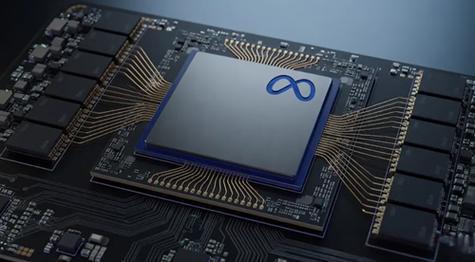
Self-developed chips stand at the core of Meta’s strategic rollout. The memo confirms that Iris, Meta’s proprietary AI training chip, will enter mass production in September 2026. For years, Meta’s massive workloads for social media, short video content and large model training have heavily relied on external high-end GPUs, driving up hardware expenditure, while volatile supply chain lead times have hindered its model iteration pace. Custom-built for general large model training and inference, Iris is fully compatible with Meta’s full lineup of open-source LLMs. Once mass-produced, the chip will drastically slash Meta’s spending on outsourced computing power, secure self-sufficient internal computing supply, and ease capacity constraints stemming from the global shortage of NVIDIA chips.
The chip rollout is paired with a parallel expansion of computing infrastructure. Meta targets to expand its global total data center computing capacity to 14 gigawatts by 2027, effectively doubling its existing computing power. A landmark USD 10 billion investment will fund a hyperscale AI data center cluster in Canada with a capacity of 1.8 gigawatts. North America boasts favorable power costs and supporting low-carbon policies; the new computing hub will primarily power training for next-generation multimodal large models, real-time AI recommendation engines for global social platforms, and video content generation. Low-carbon upgrades are underway across multiple sites, with liquid cooling systems and renewable energy powering server rooms to cut operational energy consumption and comply with prevailing green computing regulations in Europe and the US.
On the software front, Meta’s new in-house large model has completed internal benchmark testing, outperforming Google’s Gemini series in overall performance while carrying a striking cost advantage — its commercial pricing stands at merely one quarter of Google’s comparable offerings. Driven by cost savings from self-developed silicon, Meta can undercut model access fees to attract small and medium-sized enterprises as well as global developers to its AI ecosystem. Industry analysts predict that with dual strengths of low-cost computing power and high-performance open-source models, Meta’s cutting-edge AI competitiveness could comprehensively surpass Google within six months, eroding Google’s long-standing lead in multimodal large models.
Market research firms have revised their outlook on the global AI landscape, forecasting a tripartite market split: OpenAI with closed-source commercial services, Meta focusing on open-source ecosystems and social scenarios, and Anthropic specializing in enterprise customized solutions will dominate the mainstream global AI market. Traditional tech giants including Google and Microsoft face sustained market share pressure due to delayed rollouts of self-designed chips and steep computing costs.
Industry analysts note Meta’s integrated software-hardware strategy delivers powerful synergies. The self-developed Iris chip addresses hardware vulnerabilities, the ten-billion-dollar data center investment guarantees steady computing supply, and low-cost high-performance large models capture commercial market share, forming a closed-loop industrial system. Compared with peers reliant on purchased GPUs, Meta’s long-term cost edge will keep widening, fueling further expansion of the open-source AI track.
The blueprint also generates ripple effects across the European and US chip industry. On one hand, Meta’s large-scale adoption of proprietary chips will reduce its purchases of high-end GPUs, creating near-term demand diversion for NVIDIA. On the other hand, the corporate wave of self-built data centers will lift demand across supply chains for servers, storage devices and liquid cooling hardware. EU regulators have kept a close eye on US tech giants’ computing capacity expansion spree, hinting at potential new compliance reviews over computing monopolies and AI pricing mechanisms.
Overall, the leaked medium-to-long-term strategy signals Meta’s full transformation from a social internet firm to a full-stack AI player. Its three-pronged layout spanning chips, computing infrastructure and large models empowers the company to reshape the competitive order of the global artificial intelligence industry.

The latest data released by the Federal Reserve shows that in May 2026, the total amount of consumer credit in the US decreased by 182 million US dollars compared to the previous month.

The latest data released by the Federal Reserve shows that …

According to the latest news, the conflict between the US a…
July 13, 2026 — An internal Meta strategy memo leaked to me…

According to TopGear, Bentley has recently unveiled the nam…

According to a report by Bloomberg on July 12th, the US Dep…

Since 2026, the situation in the Middle East has once again…
© Copyright 2026, All Rights Reserved