The shockwaves from the geopolitical conflicts in the Middle East are sweeping through European financial markets. On April 1, following the euro zone’s March inflation figure bouncing back stronger than expected to 2.5%, the European Central Bank (ECB) faces an unprecedented monetary policy dilemma. Hawks and doves within the bank are clashing fiercely over the pace of rate hikes. Governing Council member Madis Muller has openly hinted that an April rate hike cannot be ruled out, and markets have quickly priced in up to three 25-basis-point rate increases this year. Meanwhile, ECB President Christine Lagarde pushed back firmly against U.S. views at the G7 meeting, stressing the long-term impact of damaged energy infrastructure, as the ECB shifts its policy focus squarely to curbing second-round inflation effects. Amid the stagflationary shadow of slowing growth and rising inflation, European financial markets are undergoing a sharp repricing of expectations.
This inflation rebound came abruptly. Data from Eurostat on March 31 showed that the euro zone’s harmonized index of consumer prices (HICP) surged to 2.5% year-on-year in March, a sharp jump from 1.9% in February, marking the largest monthly increase since the outbreak of the Russia-Ukraine conflict in 2022, and directly breaching the ECB’s 2% policy target. Although core inflation eased slightly to 2.3%, the rapid rebound in headline inflation was driven entirely by energy prices. Euro zone energy prices rose 4.9% year-on-year in March, a dramatic reversal from a 3.1% drop in February, as volatility in oil and gas prices triggered by Middle East tensions quickly fed through to consumer prices. This figure has completely shattered market expectations of a modest inflation decline, putting the ECB back at the center of monetary policy scrutiny.
The sudden rise in inflation pressure directly triggered policy differences within the European Central Bank. The Estonian Central Bank Governor and member of the governing council, Madis Muller, clearly stated that if energy prices remained high for a long time, the possibility of an interest rate hike on April 30th at the policy meeting could not be ruled out. "It is difficult to judge to what extent the situation will evolve by the end of April. If the energy shock persists, we do indeed need to take action in advance," Muller's hawkish remarks marked the shift of the internal discussion on the timing of interest rate hikes from behind the scenes to the forefront. The German Central Bank Governor, Nagel, followed suit, stating that an interest rate hike in April was a "feasible option", and the Belgian Central Bank Governor, Wensch, also warned that if the conflict persisted until June, an interest rate hike would be inevitable. The hawkish camp believed that the current inflation rebound had reached the policy red line and must take preemptive action to prevent expectations from breaking away.
In contrast, doves led by Banque de France Governor François Villeroy de Galhau have adopted a wait-and-see stance, emphasizing that “it is too early to discuss rate hikes” and calling for more data to assess the persistence of the shock. Most Governing Council members prefer to observe inflation expectations, energy prices and economic activity in early April before deciding whether to deploy rate tools. This split essentially reflects a trade-off between inflation risks and growth risks. Hawks fear a repeat of the 2022 inflation spiral, while doves worry that tighter policy will exacerbate already weak economic downward pressure. The ECB has revised down its 2026 euro area GDP growth forecast to 0.9%, and with growth on the verge of stagnation, any rate increase could be the final straw for the economy.
Markets have already reacted to the hawkish signals in advance. Traders have rapidly adjusted their pricing to include up to three 25-basis-point rate hikes this year, sending the probability of an April increase soaring above 40%. European bond markets led the volatility, with short-term government bond yields rising sharply. Germany’s 2-year bond yield jumped nearly 15 basis points in a single day, pushing the yield curve into a bear-flattening pattern. In foreign exchange markets, the euro strengthened to 1.1523 against the U.S. dollar, reflecting market expectations that the ECB will tighten monetary policy ahead of the Federal Reserve. European equities traded mixed: financial stocks led gains on expectations of improved net interest margins, while high-growth valuations and energy-intensive manufacturing sectors came under pressure. The Stoxx 600 edged up 0.4% on the day, yet could not offset a deep 7.8% cumulative decline in March.
More significant than internal divisions is Lagarde’s tough stance at the G7 meeting. Facing U.S. Treasury Secretary’s optimistic assessment that the economic impact of the Iran conflict would be temporary and energy supply would recover quickly, Lagarde pushed back on the spot, stressing that extensive damage to energy infrastructure meant the shock would not be transient. She stated bluntly that the ECB’s severe scenario projections show that if energy supply disruptions last through the end of the year, inflation could peak at 6.3%, far above current levels. This public clash underscores a stark divergence between the U.S. and Europe in crisis perception. The United States, largely energy self-sufficient, faces limited impact, while Europe, highly dependent on energy imports, stands at the center of an inflation storm.
For Europe, this stagflation test triggered by geopolitical conflict has only just begun. On the one hand, elevated energy prices continue to squeeze manufacturing profits and push up living costs, with consumer confidence falling to a low of minus 16.3, sharply raising recession risks. On the other hand, rebounding inflation is forcing the central bank to tighten monetary policy, and rising financing costs will exacerbate debt pressures in southern European countries, with borrowing costs already climbing in highly indebted nations such as Italy and Greece. Caught between growth and inflation, every decision by the ECB walks a tightrope.
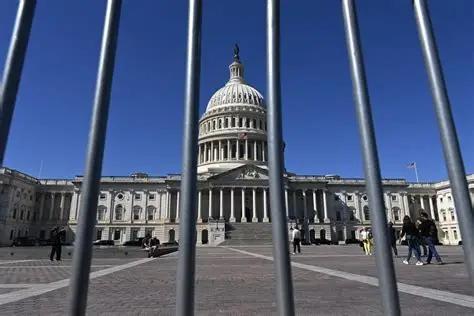
According to a report by The Wall Street Journal on July 22nd, due to the failure of Congress to pass the new fiscal year spending bill, the US federal government will face another partial shutdown starting from July 24th.
According to a report by The Wall Street Journal on July 22…

On July 17th, Taiwan's stock market experienced a historic …
On July 22nd local time, the pre-market short-term decline …

On July 22 local time, Advanced Micro Devices (AMD) officia…

According to the report by Rich Asplund, a columnist of Bar…

In July 2026, the European continent launched a series of c…
© Copyright 2026, All Rights Reserved