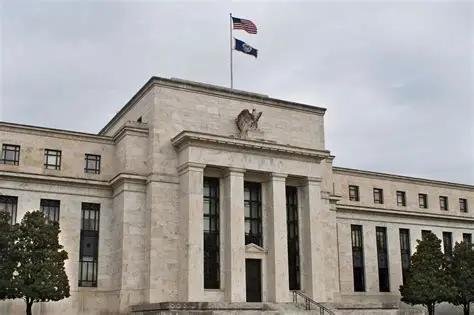
When Federal Reserve officials once again reiterated that "bringing the inflation rate down to 2% is crucial," global financial markets seemed to collectively respond with a derisive laugh—the target, repeated for five years, now appears increasingly absurd amid the smoke of the Strait of Hormuz. International oil prices have surged past $100 per barrel, the U.S. CPI rose 3.3% year-on-year in March, yet the Fed's interest rate decisions resemble puppets hijacked by geopolitics, jumping back and forth between "rate cuts" and "wait-and-see."
Since the Fed announced the "average inflation targeting" framework in 2021, its policy system has fallen into a logical paradox: on one hand, it acknowledges that inflation may temporarily exceed 2%, while on the other hand, it treats this number as an inviolable golden rule. Reality has dealt a harsh blow—today in 2026, U.S. core PCE inflation stubbornly remains at 2.7%, while rising energy prices are pushing overall inflation above 3%. Even more ironically, Fed officials claim that "tariff and energy shocks are one-off in nature," yet they delay rate cuts due to oil price increases, exposing the inherent contradictions of the policy framework: when supply-side shocks become the norm, clinging to a 2% target is like carving markings on a boat to measure a sword.
Expectations for Fed rate cuts are now entirely tied to the progress of U.S.-Iran negotiations, a scenario that can be described as dark humor in modern monetary policy. On April 9, the market pushed the probability of a rate cut this year up to 43% due to a ceasefire agreement, only for it to plunge to 23.8% just two days later after news of an Israeli airstrike in Lebanon. This "reacting to the situation" monetary policy exposes the Fed's double dilemma: if it acknowledges the persistence of energy shocks, it must accept inflation persistently above target; if it sticks to the 2% target, it must endure the suffocating effects of high interest rates on the economy. As Barclays Bank has remarked: "The Fed is looking for an inflation signal that has already vanished through a telescope."
In 2024, the market generally expected the Federal Reserve to cut interest rates three times; by early 2026, this number had been revised to twice; now, with oil prices soaring, even the last rate cut has become precarious. CME interest rate futures show that traders have pushed the timing of the first rate cut from June to September, and some have even started betting on 'no rate cut within the year.' Behind this reversal of expectations lies the continuous erosion of the Fed's credibility—when policy is repeatedly hijacked by geopolitical factors, the market begins to question whether the central bank that once prided itself on being 'data-driven' has now become a 'hostage' to geopolitical conflicts.
The Fed's hesitation is pushing the U.S. economy to a dangerous edge. High interest rates have led to an expected GDP growth of only 1.3% in the first quarter of 2026, far below potential; meanwhile, rising oil prices act like a blunt knife, continuously eroding household purchasing power—the U.S. gasoline price has risen 20% since the beginning of the year, directly driving a 10% month-on-month increase in the March CPI energy component. Ironically, internal disagreements over policy at the Fed are comparable to Congressional debates: hawks warn, 'sustained high oil prices require restarting rate hikes,' while doves insist, 'deteriorating labor markets necessitate rate cuts.' This split exposes a harsh reality: under the dual pressures of supply shocks and weak demand, the Fed has lost control over the direction of the economy.
The Fed's policy wavering is triggering a global chain reaction. Emerging market currencies are under pressure from the stronger dollar; the Eurozone faces the risk of 'stagflation' due to soaring energy import costs; and even the Bank of Japan is forced to weigh whether to raise rates amid the U.S.-Iran conflict. This 'pushing the consequences onto neighbors' effect is exactly as former Fed Chairman Paul Volcker warned: 'When the central bank of the largest economy loses direction, the whole world pays the price.'
Standing at the crossroads of 2026, the Fed’s monetary policy has become an absurd play: inflation targets are like mirages, rate cut expectations are like bubbles, and geopolitical events have become the black swan that could burst everything at any moment. Perhaps, as The Economist said: 'When central banks begin to use a “flexible average inflation target” to justify policy missteps, one should realize that we have entered a monetary era without anchors.' In this era, every policy swing by the Fed is nothing more than the futile steering of the global economy's great vessel in the storm.
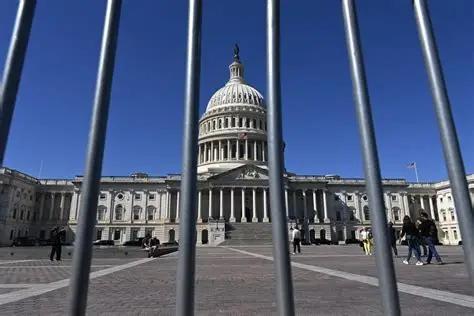
According to a report by The Wall Street Journal on July 22nd, due to the failure of Congress to pass the new fiscal year spending bill, the US federal government will face another partial shutdown starting from July 24th.
According to a report by The Wall Street Journal on July 22…

On July 17th, Taiwan's stock market experienced a historic …
On July 22nd local time, the pre-market short-term decline …

On July 22 local time, Advanced Micro Devices (AMD) officia…

According to the report by Rich Asplund, a columnist of Bar…

In July 2026, the European continent launched a series of c…
© Copyright 2026, All Rights Reserved