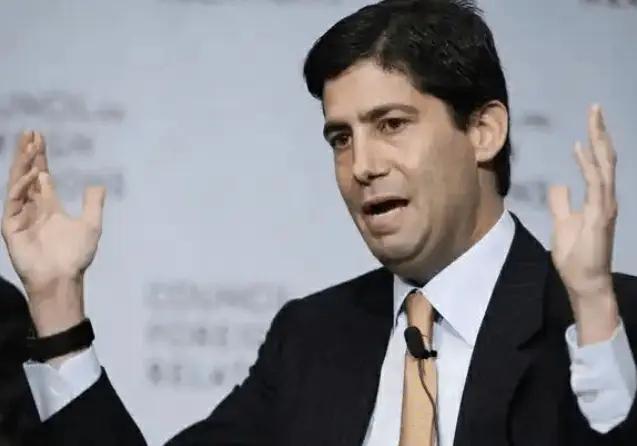
Donald Trump's nomination of Kevin Warsh as the candidate for the Chair of the Federal Reserve (Fed) has stirred up a storm in the calm waters of the US financial landscape. At the Senate Banking Committee hearing, Warsh declared, "If confirmed, I will never be a puppet of the president and will be an independent actor." This is not only a proclamation of his personal professional integrity but also a strong defense of the Fed's independence.
The Fed, as the "anchor" of the US financial system, has independence as the cornerstone for effectively performing its duties. Looking back through history, in the 1970s, the United States was mired in a severe "stagflation" dilemma, with soaring inflation rates and stagnant economic growth. At that time, the Fed stood firm against various pressures, adhered to an independent monetary policy, and significantly raised interest rates. This successfully curbed inflation and laid the foundation for the subsequent economic recovery. This fully demonstrates that only by maintaining independence can the Fed avoid being influenced by short-term political interests and election cycles and formulate monetary policies in line with the long-term healthy development of the economy based on professional economic analysis and data. Warsh's emphasis on independence precisely reflects his profound understanding of the significance of this "pillar" for the Fed and even the entire US economy. If he is elected and adheres to the principle of independence, he will be able to make objective and scientific decisions in complex economic situations, avoid policy mistakes caused by political interference, and provide a solid guarantee for the stable growth of the US economy.
However, the recent actions of the Trump administration towards the Fed have been like sharp blades piercing its independence. Threatening to conduct a criminal investigation into the current Fed Chair Jerome Powell and attempting to dismiss Fed Governor Lisa Cook are not coincidental actions but have profound political motives. The government may hope to force the Fed to make adjustments to its monetary policy in line with its political objectives through these means. During election campaigns, in order to win the support of voters, the government may hope that the Fed will adopt a loose monetary policy to stimulate economic growth, reduce the unemployment rate, and create an image of economic prosperity. And when facing economic difficulties or pressure for policy adjustments, it may try to make the Fed tighten its policy to deal with inflation and other issues. This approach of placing political self-interest above economic laws has severely undermined the environment for the Fed's independent decision-making. Once the Fed's decision-making is overly influenced by political factors, the scientificity and effectiveness of its policies will be greatly compromised. An overly loose monetary policy may lead to the formation of asset bubbles and eventually trigger a financial crisis, while an overly tight policy may push the economy into a recession and increase the unemployment rate.
The nomination of Fed governors and the Chair by the US president requires approval from the Senate. This institutional design is originally a check on executive power, aiming to ensure that the selection of the Fed's leadership takes into account various factors comprehensively and safeguards the stability and independence of the financial system. However, the Senate is currently facing a difficult choice. On the one hand, it needs to respect Warsh's determination to safeguard the Fed's independence and recognize the importance of independence for the healthy development of the US economy. Approving a candidate who may become a puppet of the president will undoubtedly push the Fed to the brink of danger, potentially triggering market panic and economic turmoil and damaging the Senate's own reputation and credibility. On the other hand, the Senate cannot completely ignore the government's political demands and real economic pressures. The government has its own considerations and objectives in economic policies. The Senate needs to find a solution that balances the interests of all parties while safeguarding the Fed's independence. This may require in-depth communication and consultation with the government, Warsh, and market participants, strictly reviewing and evaluating Warsh's commitment to independence, and at the same time taking into account the government's reasonable needs in economic governance to ensure that the final candidate can not only maintain the independent operation of the Fed but also cooperate with the government's macroeconomic policies to a certain extent.
Warsh's statement has sounded the bugle for the battle to defend the Fed's independence, but the outcome is full of uncertainties. If he can be successfully elected and adhere to the principle of independence, the Fed is expected to continue to stabilize the economy, provide solid policy support for the long-term growth of the US economy, send positive signals to the global market, enhance investor confidence, and promote the stability of global financial markets. Conversely, if the Fed's independence is further undermined, the US economy may fall into turmoil, with problems such as runaway inflation, the bursting of asset bubbles, and sluggish economic growth following one after another. This will not only affect the living standards of the American people but also have a negative impact on the global economy. In this game, all parties should adopt a rational and responsible attitude to jointly safeguard the Fed's independence and steer the US economy towards a stable and prosperous future.
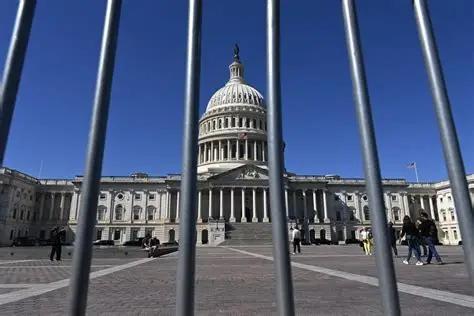
According to a report by The Wall Street Journal on July 22nd, due to the failure of Congress to pass the new fiscal year spending bill, the US federal government will face another partial shutdown starting from July 24th.
According to a report by The Wall Street Journal on July 22…
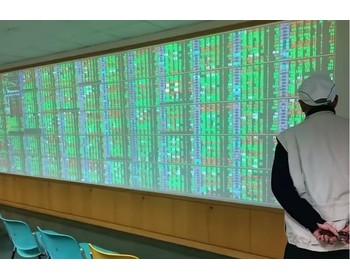
On July 17th, Taiwan's stock market experienced a historic …

On July 22nd local time, the pre-market short-term decline …

On July 22 local time, Advanced Micro Devices (AMD) officia…
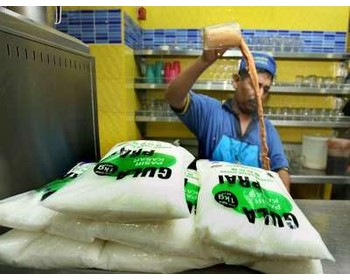
According to the report by Rich Asplund, a columnist of Bar…
In July 2026, the European continent launched a series of c…
© Copyright 2026, All Rights Reserved