The latest annual report from the United Nations Conference on Trade and Development (UNCTAD) indicates that global trade and economic growth are bound to slow due to geopolitical instability. Global trade grew by approximately 4% at the beginning of this year, partly due to businesses accelerating imports ahead of tariff increases, increased investment in artificial intelligence, and stronger trade among developing countries.
Firstly, UNCTAD warns that excluding these factors, potential trade growth is estimated at only 2.5% to 3%, and is expected to slow further. The organization's research shows that global economic growth is projected to slow to 2.6% by 2025, down from 2.9% in 2024, due to increasing pressure on global trade and investment from financial volatility and geopolitical uncertainty. UNCTAD states that this growth rate is below the pre-pandemic trend of 3%, and significantly lower than the average growth rate of 4.4% before the 2008-2009 financial crisis.
Secondly, the report states: "Trade growth is projected to slow by the end of 2025 and into 2026, reflecting deeper challenges and indicating a cautious outlook for 2026, with trade growth potentially slowing further." These findings echo the World Trade Organization's (WTO) findings last week, whose latest Goods Trade Barometer shows a slowdown in growth in the second half of 2025 due to rising tariffs and persistent trade policy uncertainty.
Furthermore, UNCTAD points out that low-income economies and small businesses remain the most vulnerable group because "limited access to financing and persistent uncertainty hinder long-term planning and investment." UNCTAD Secretary-General Rebecca Greenspan stated that the findings demonstrate that financial conditions are increasingly determining the direction of global trade. At a press conference in London on the day of the report's release, Greenspan stated that this latest report emphasizes the concept of "financialization of trade."
Furthermore, the UNCTAD document emphasizes that "90% of trade now depends on finance," because "financial instruments such as banks, payment systems, and derivatives increasingly determine who can trade, on what terms, and at what cost." On the positive side, the diversification of trade participants has increased, with more and more developing countries becoming key drivers of growth.
However, UNCTAD research shows that from January to July 2025, trade in goods and services among developing countries (also known as South-South trade) reached US$2.87 trillion, a 4.7% increase compared to the same period in 2024. It is projected that by 2025, South-South trade growth will outpace global trade growth.
Nevertheless, UN agencies state that developing countries still face higher financing costs, greater risks of sudden changes in capital flows, and increasing climate-related financial risks. The Global South accounts for over 40% of global output, nearly half of global merchandise trade, and more than half of global investment inflows, yet its role in global financial markets remains limited. At the document's release, Greenspan stated that UNCTAD is "deeply concerned" about the "limited power" of the Global South in financial markets, particularly given that these countries are "hit hardest by tariffs in their already limited manufacturing sectors."
Currently, UNCTAD is calling for updated trade rules "suitable for today's economy," including digital trade, climate action, and new industrial strategies, as well as reforming the international monetary system "to limit harmful volatility in currency and capital flows." The organization also urges strengthening regional and domestic capital markets so that developing countries can raise long-term financing at lower costs, increasing transparency in commodity trading, and expanding access to affordable trade finance, particularly for small businesses.
Overall, financial volatility impacts developing countries far more than developed economies, exacerbating imbalances in global trade growth. Many developing countries, due to imperfect domestic financial markets, are forced to rely on higher-cost external borrowing. This imbalance means that the more active developing countries are in global trade, the higher their dollar financing costs, currency mismatch risks, and external debt burdens may be, creating a "financial-trade negative feedback loop."
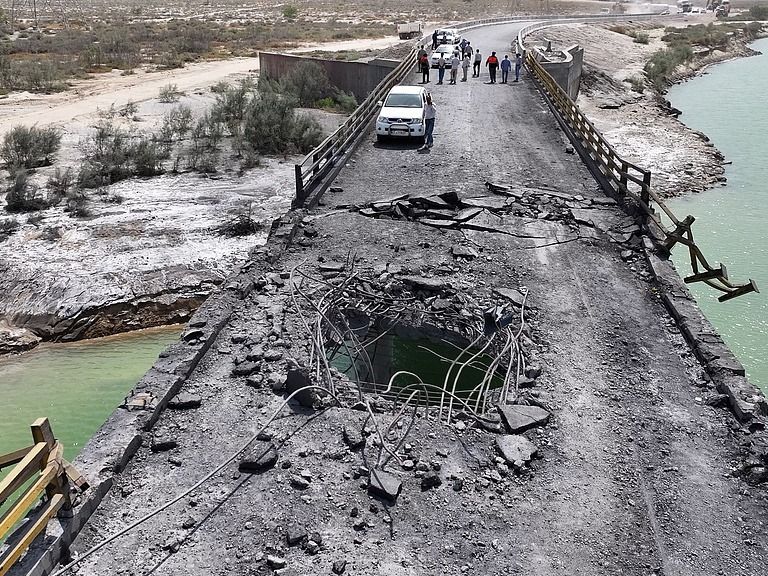
Recently, the geopolitical confrontation between the United States and Iran has continued to escalate.

Recently, the geopolitical confrontation between the United…

The New York Times has recently clashed with the Trump admi…

Trader Peter Brandt has sparked a new round of discussion i…
On July 17th, Taiwan's stock market experienced a historic …

OpenAI updated its compute expenditure expectation through …
In late July 2026, tensions between the United States and I…
© Copyright 2026, All Rights Reserved