
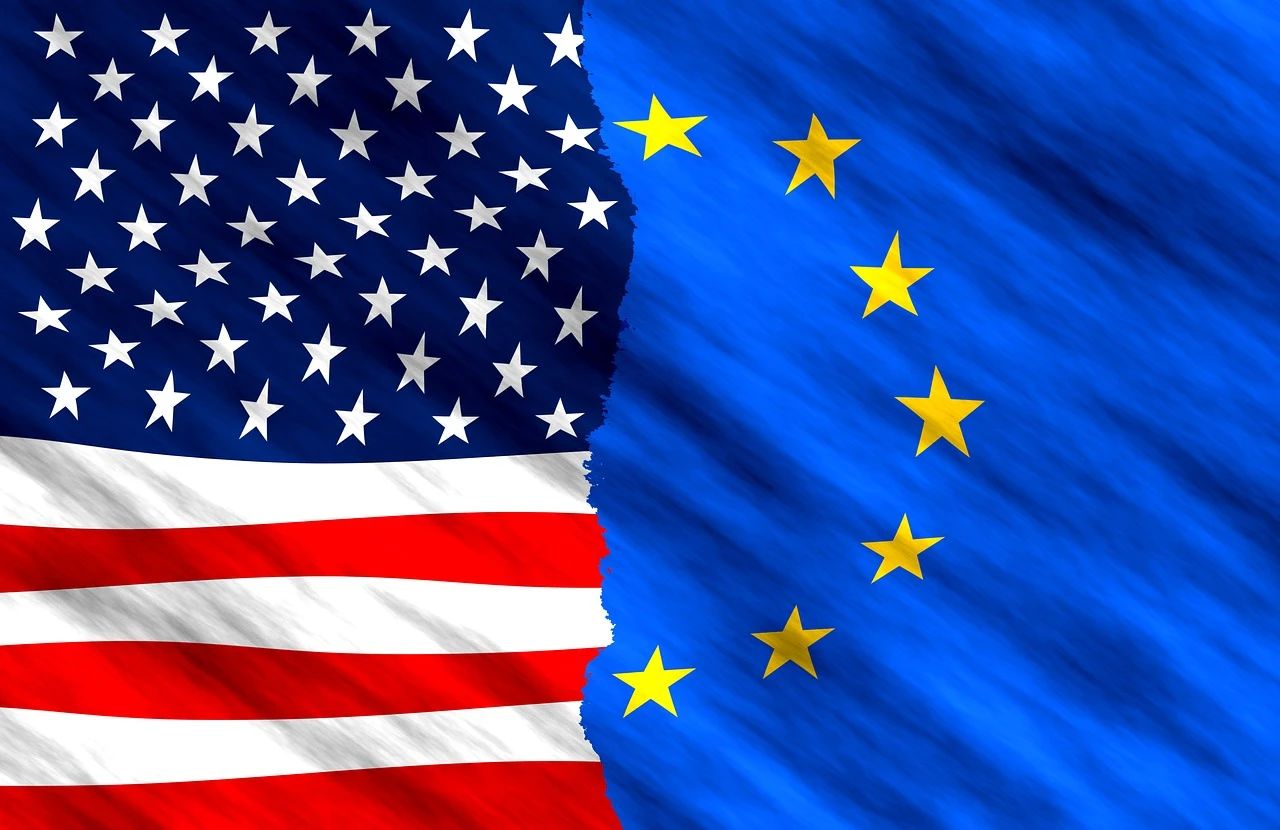
Recently, the US State Department issued a visa ban, adding Thierry Breton, a former member of the European Commission and a key designer of the EU's Digital Services Act (DSA), to the sanctions list. The US side accused it of leading "coercive" regulatory actions against US technology companies. This move quickly triggered a strong backlash from the European Union. The President of the European Council and French President Emmanuel Macron strongly condemned it, calling it "unacceptable intimidation". This seemingly individual sanction is actually like a precise scalpel, stabbing at the most sensitive nerve of the digital geopolitical competition on both sides of the Atlantic, marking that the years-long digital friction between the two sides has sharply escalated from commercial fines and compliance disputes to a strategic game over the rule-making power itself.
The foreshadowing of this conflict had long been sown. In recent years, the European Union has launched a systematic regulatory hunt against US tech giants through the Digital Services Act and the Digital Markets Act (DMA). From imposing antitrust fines amounting to billions of euros to listing companies like Apple and Microsoft as "gatekeepers" and imposing strict obligations, the European Union has been taking frequent actions. Its official narrative has always been based on "defending digital sovereignty" and "protecting European citizens", claiming to establish a fairer and safer digital single market. However, in Washington's strategic vision, the core of this meticulously constructed regulatory system is interpreted as a kind of "sophisticated digital protectionism". The United States believes that the true purpose of the European Union is to use regulatory power to systematically weaken the global competitive edge of American enterprises and create space for domestic competitors. The drama of this sanction lies in the fact that it bypassed corporate entities and directly targeted the "architects" behind the rules. This sends a clear strategic signal: The United States has regarded the EU's digital legislation itself as a "strategic challenge" that must be curbed.
Ironically, this substantive struggle for interests and power has been packaged by both sides as a lofty debate about values. The United States, citing the First Amendment of the Constitution, accused the European Union of building a "digital high wall" and suppressing freedom of speech. The EU, on the other hand, holds high the banners of "humanized digitalization" and "fundamental rights" to counter the hypocrisy of the United States and its own data monitoring practices. This rhetorical battle between "freedom" and "rights" has successfully elevated the dull debate over technical standards to an ideological drama that attracts global attention. However, stripping away the flowery language, the core contradiction is cold and hard: this is a battle over who has the right to define the global digital game rules of the 21st century. For the United States, maintaining the global hegemony of its tech giants is related to its core economic interests and national security. For the European Union, in the face of the reality of lacking comparable local giants, strict regulation is the most important "counterbalance weapon" and "rule lever" in its hands, and it is also the inevitable path for it to pursue "strategic autonomy".
The continuous escalation of the conflict is triggering multiple and dangerous spillover effects. The most direct threat is the risk of "fragmentation" in the global digital space. If the US and Europe eventually go in opposite directions, forcing global enterprises to operate two or more contradictory systems, the essence of the Internet's interconnection and interoperability will be undermined, the cost of innovation will soar, and ultimately it will be paid for by global users. Secondly, the digital war is spreading to traditional trade areas. From steel and aluminum tariffs to green subsidy disputes, the loss of mutual trust in the digital domain is poisoning the overall transatlantic economic relationship. The deeper crisis lies in the fact that it is eroding the crucial strategic trust foundation among NATO Allies. When the United States uses sanctions against former high-ranking officials of its Allies, the hostile signals it conveys are far from being compensated for by a few trade negotiations.
Looking ahead, there will be no simple winner in this conflict. The EU has no way back in terms of legal and political symbolism, and its digital sovereignty legislation is not tradable. The two major parties in the United States also have a consensus on dealing with so-called "digital protectionism", and their positions are becoming increasingly tough. In the short term, intense public opinion battles and limited retaliatory measures may become the norm. This sanctions incident has revealed a cold geopolitical reality: in the digital domain, the transatlantic partnership is undergoing a profound transformation, increasingly shifting from a "community of interests" to a "competitor of rules". This dispute, which began in the conference room and the courtroom, will eventually leave its mark in the grand narrative of reshaping the power landscape of the future world.

Recently, the British government, in accordance with the "Steel Industry (Nationalization) Act" that came into effect on July 16th, took the British Steel Company, which is controlled by China Jiefang Group, into state ownership without compensation.

Recently, the British government, in accordance with the "S…

On July 23rd local time, the US Trade Representative Office…

The international crude oil market saw a sharp one-sided ri…

Recently, the geopolitical confrontation between the United…

The New York Times has recently clashed with the Trump admi…

Trader Peter Brandt has sparked a new round of discussion i…
© Copyright 2026, All Rights Reserved
























