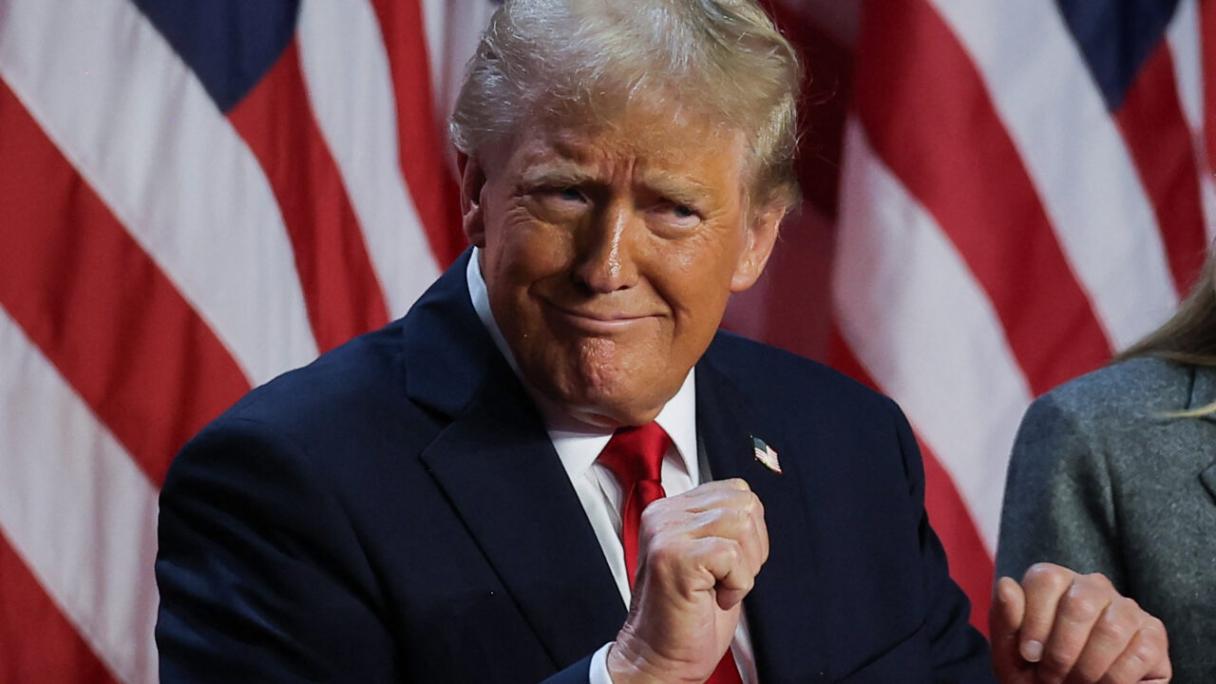
The relationship between the Trump administration and the US bond market has been a focal point of attention in global financial markets. The US Treasury market is the world's largest and most important debt market, with a debt size reaching $30 trillion, and any fluctuations can have profound implications for the global financial system. Particularly after President Trump's trade tariff policies triggered market turmoil, the interaction between the government and investors became especially complex and delicate. Although the Trump administration attempted to stabilize the bond market through a series of measures, the market remains wary of the US government's fiscal policies and debt levels. Behind the calm surface of the bond market, significant risks and uncertainties still lurk.
Trump's Tariff Policies Trigger Bond Market Turmoil
The Trump administration's announcement of "Independence Day" tariffs led to sharp fluctuations in the US bond market. The imposition of tariffs directly affected international trade and domestic economic expectations, raising concerns about the US fiscal situation. To address the instability in the bond market, the Trump administration implemented a series of policy adjustments and information management measures to avoid further conflict. By reducing the tariff rates and delaying their implementation, the government temporarily eased market anxieties. However, the uncertainty in the bond market has not completely disappeared, especially with the continued rise in the US fiscal deficit and debt levels, which has led investors to have more doubts about the future.
The Government-Investor Showdown
Although the bond market has been stable at times, investors remain wary of the US government's high deficit and debt levels. Many executives at banks and asset management companies managing trillions of dollars in assets believe that a "showdown" is underway between the Trump administration and the bond market. The core of this struggle lies in the fact that the US government needs to continue borrowing to cover its massive fiscal deficit, while investors worry that the government is unable to effectively control the size of the debt. The bond market acts as a "watchdog," punishing the government by raising bond yields when its fiscal behavior is irresponsible. In fact, this "watchdog" role has appeared many times in US history, especially in recent years.
Treasury Department Policy Adjustments and Market Reactions
To avoid excessive volatility in the bond market, the Trump administration implemented some targeted fiscal measures. Treasury Secretary Mnuchin stated that the government's primary task was to lower long-term bond yields, especially the yield on 10-year Treasury bonds. Lower yields help reduce government borrowing costs, thereby easing pressure on the fiscal deficit. To stabilize the market, the Treasury Department expanded its bond repurchase program and maintained close communication with investors, conveying the government's determination to control debt.
In addition, the Treasury Department also signaled to investors through its interaction with the bond market that it did not want bond yields to spiral out of control. These measures alleviated market anxiety to some extent, and some investors reduced their bets on falling bond prices, leading to a short-term stabilization of the market. However, this stability remains fragile, especially given that the US fiscal deficit still accounts for about 6% of GDP, and the long-term sustainability of the debt remains an unresolved issue.
Risk Discrepancies Between Short-Term and Long-Term Bonds
When addressing the fiscal deficit, the Trump administration preferred to raise funds by issuing short-term bonds rather than long-term bonds. The advantage of this approach is that short-term bonds have lower interest rates, helping the government reduce immediate financing costs. However, this also means that the government faces frequent refinancing risks. If interest rates suddenly rise, the government may need to refinance at a higher cost, increasing the fiscal burden. Furthermore, this accumulation of short-term debt may be interpreted by the market as an unstable fiscal management strategy, leading to a lack of trust among investors.
Impact of External Factors: Inflation and International Situation
The stability of the bond market is not only affected by government fiscal policy but also closely related to other external factors. First, tariff policies and the international trade situation may have a direct impact on the bond market. Trump's tariff measures may lead to higher commodity prices, thus driving up inflation expectations. Second, with the rise of emerging technologies such as artificial intelligence, market bubbles may appear, which could also negatively impact the bond market. In addition, the Federal Reserve's monetary policy is also a factor that cannot be ignored. If the Federal Reserve suddenly adopts a hawkish stance and raises interest rates to combat inflation, demand for bonds may plummet, further exacerbating market instability.
The Future of Fiscal Policy: Stability and Uncertainty
Although the Trump administration attempted to stabilize the bond market through various means, many market experts believe that this stability is only temporary. The debt problem has not been fundamentally resolved, and long-term fiscal health still faces huge challenges. Market concerns about US debt may trigger volatility again in the future. Especially in the context of rising inflation and slowing economic growth, demand in the bond market may fluctuate sharply.
More importantly, the stability of the bond market depends on a series of uncertain factors. The scale of the US fiscal deficit is enormous, requiring substantial financing each year to cover the shortfall. If inflationary pressures increase, the Federal Reserve adopts tightening policies, or the international economic environment changes, the bond market could face significant volatility again. Furthermore, the Trump administration's short-term debt strategy may also have long-term negative consequences, especially if the pace of debt accumulation accelerates, potentially leading to greater market skepticism about the US fiscal outlook.
Conclusion
Overall, the relationship between the Trump administration and the bond market is complex and uncertain. While the government has stabilized the market through fiscal measures and policy adjustments, the continued growth of debt levels, the potential impact of tariff policies, and other external economic factors still present significant challenges. The bond market's "watchdogs" have not completely disappeared, and market scrutiny of the US government's fiscal health continues. In this unstable environment, how the US manages its debt and fiscal deficit will directly impact the future direction of the bond market and the stability of global financial markets.

Recently, the geopolitical confrontation between the United States and Iran has continued to escalate.

Recently, the geopolitical confrontation between the United…

The New York Times has recently clashed with the Trump admi…

Trader Peter Brandt has sparked a new round of discussion i…

On July 17th, Taiwan's stock market experienced a historic …

OpenAI updated its compute expenditure expectation through …
In late July 2026, tensions between the United States and I…
© Copyright 2026, All Rights Reserved