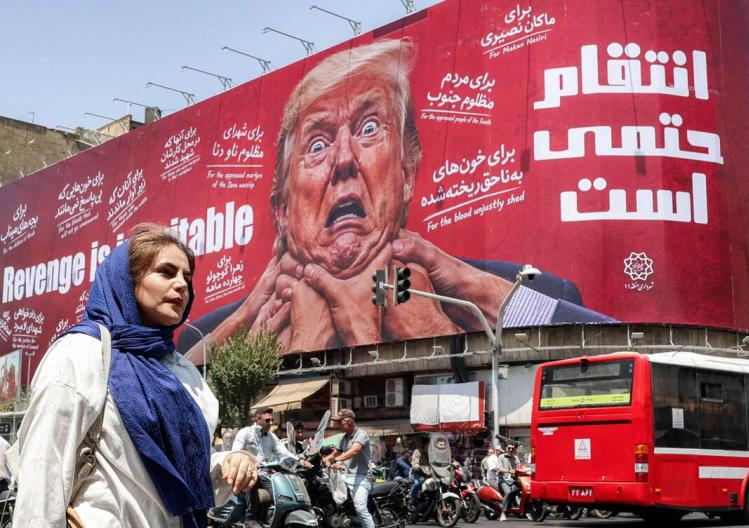
(Tehran/Washington, combined report) The suspension of mutual attacks by the United States and Iran has reignited hopes that the peace process is moving back on track. However, Iran claims that it is not seeking to resume negotiations. Meanwhile, US President Trump has once again threatened to destroy Iran's infrastructure.
Iran's Foreign Ministry Spokesperson Bagae said on Monday (July 27th) that Iran is currently not engaged in any negotiations with the United States, but the two sides continue to convey information through mediators. He emphasized that Tehran will not allow the United States to determine the timing of war and peace.
Regarding the highly concerned issue of navigation in the Strait of Hormuz, Bagae emphasized that the situation in the strait has not changed and this vital energy transportation route remains closed. He also stated that the consultations between Iran and Oman regarding the management of the strait have nothing to do with the United States.
Iranian media reported that on Monday morning, Iran forced six vessels that were violating the rules to turn back. It was reported that these ships were attempting to pass through the Strait of Hormuz without obtaining Iran's permission, and one of the ships had an "accident".
The United States stopped its attacks on Iran starting from last Friday (the 24th), breaking the previous 13 consecutive nights of air strikes. This has prompted Iran to also suspend its retaliatory attacks in the Persian Gulf region.
Reuters reported on Sunday (the 26th) that an unnamed Iranian official said Iran's stance remains to retaliate in kind. As long as the US stops its attacks, Iran will also cease its actions. Iran has conveyed this information to the US.
The official said that Tehran was more skeptical about Trump's suspension of air strikes, believing that this was done for tactical reasons rather than due to a significant change in the US's negotiating stance.
On Sunday, the US representative to the United Nations, Waltz, said that Trump's suspension of the strikes against Iran was aimed at creating more room for diplomatic mediation. He stated that the US and Iran are conducting negotiations at various levels.
When asked whether Trump had given up on intensifying military action against Iran, Waltz said that Trump was still considering all options.
Waltz also refuted reports that the US military allowed some of Iran's attacks to penetrate its defense in order to save its weapons inventory. He told NBC: "The US military... has all the resources needed to launch a military operation against Iran. Those who spread such nonsense should be put in prison."
On Sunday, Trump posted a series of images on social media that were generated by artificial intelligence (AI) and depicted the bombing of Iranian ships and energy infrastructure such as the oil export hub of Halak Island by the US military. He continued to put pressure on Tehran.
On the other hand, the situation in the Red Sea remains tense. The Houthi rebels in Yemen claimed on Monday that they had attacked multiple oil supply and transportation points connecting the eastern part of Saudi Arabia with the Red Sea city of Yanbu.
The Saudi Ministry of Defense also announced on the same day that it had intercepted and targeted drones that were targeting oil facilities in the eastern region of Saudi Arabia and in Riyadh. These drones were launched by Iraqi armed groups that receive support from Iran.
Nevertheless, the cessation of hostilities between the US and Iran has brought relief to the market and pushed down oil prices. As of noon Greenwich Mean Time on Monday (8 p.m. Singapore time), the price of Brent crude oil dropped by 8% to $86 per barrel. Due to the continuous hostilities between the US and Iran over the past few days, Brent crude oil broke through $100 per barrel for the first time since May last week.
The New York Times analyzed that Trump, who believed he held almost unrestricted power, is now mired in the quagmire of the Iran war.
When Trump decided to wage war against Iran, he originally expected to quickly terminate Iran's nuclear program and overthrow the Iranian government. However, five months have passed and these goals still haven't been achieved. Trump seems to have lost his way and appears hesitant about resuming a large-scale offensive.
Trump's staff members disclosed that the successive setbacks have deeply frustrated Trump and made his actions more erratic. The New York Times pointed out that Trump is now faced with three options, but all of them are unacceptable.
First of all, Trump could choose to escalate military actions and target Iran's power plants and other infrastructure as well as its missile capabilities. However, this could lead to a large number of civilian casualties and trigger a widespread famine.
The second option is to intensify economic sanctions against Iran. However, this approach has a slow effect and requires the United States to maintain a long-term military presence, thereby increasing the risk of more conflicts breaking out in the Persian Gulf region.
The last option is to directly declare victory for the US and withdraw its troops. However, given that Iran still has its highly enriched nuclear materials buried under the rubble and that Iran actually controls the Strait of Hormuz, doing so would not solve the problems that triggered this war. Instead, it might create new crises in the global energy market.
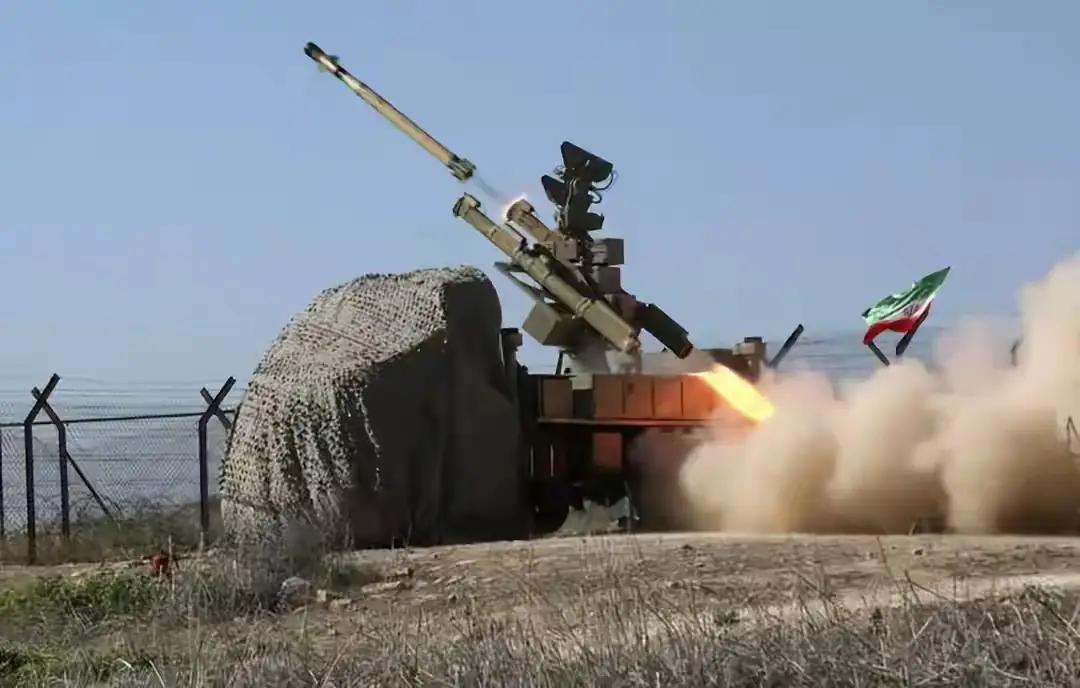
The sudden suspension of the 13 day US airstrike on Iran has become the biggest variable in the recent geopolitical situation in the Middle East.
The sudden suspension of the 13 day US airstrike on Iran ha…
The results of the Federal Reserve's July rate meeting are …

In July 2026, the euro area economy is characterised by fra…

British Prime Minister Barnham vowed in an interview on Mon…

Various public opinion polls conducted by different Japanes…
The suspension of mutual attacks by the United States and I…
© Copyright 2026, All Rights Reserved