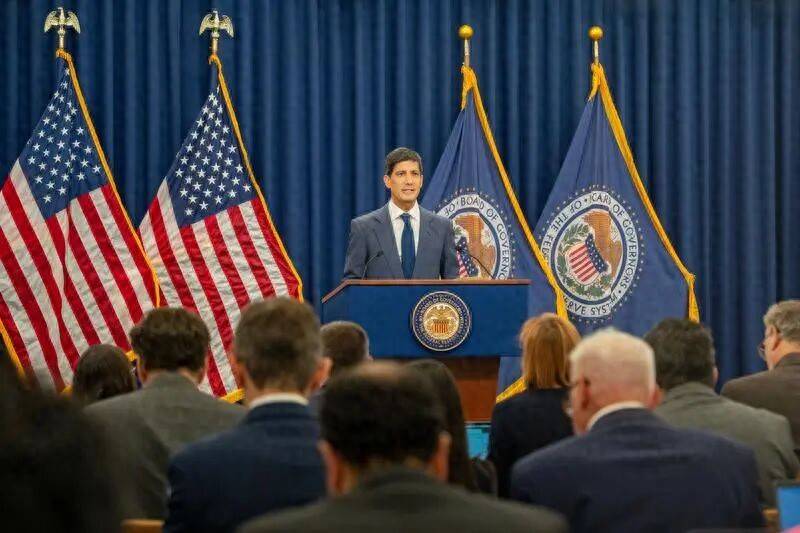
The results of the Federal Reserve's July rate meeting are set to be released. As a key focus in the current global macroeconomic landscape, there is a record high divergence in the market's expectations for this meeting. The Fed's policy choices will directly shape short-term global liquidity trends, affecting the pricing logic of stocks, bonds, currencies, and commodities, and setting the tone for the global financial markets for the rest of the year.
Within just one week, market expectations for interest rates have seen dramatic reversals. Previously, the market unanimously thought the Fed would keep interest rates high and pause rate hikes. But due to earlier spikes in international oil prices and rising inflation risks, market expectations quickly reshaped. Current data shows there’s now a 36% to 38% chance of a 25 basis point rate hike in July, up sharply from 13% just a week ago. What’s more notable is that the market sees over an 80% chance of another hike in September, meaning optimism for a rate cut this year has been completely abandoned, further extending the cycle of high global interest rates.
The intense fluctuations in policy expectations stem from a deep interplay of multiple fundamental factors. On one hand, the repeated turbulence in the Middle East continues to disturb global energy prices, injecting uncertainty into U.S. inflation. Prior geopolitical conflicts pushed up the oil risk premium, with oil prices once breaking the $100 mark. Energy price hikes pass along the supply chain, increasing U.S. inflation stickiness. Even though recent tensions have eased and oil prices have dropped quickly, supply-side risks have not been fully resolved, and inflation rebound risks remain, limiting the Fed’s room for easing.
On the other hand, the U.S. job market has been more resilient than expected, providing fundamental support for tighter monetary policy. Currently, U.S. unemployment data remains low, the labor market is hot, and consumer demand is stable, meaning the economy isn’t being significantly suppressed by high interest rates, and the risk of a recession is limited. Against this backdrop, the Federal Reserve’s policy focus remains on fighting inflation, without the need to cut rates to stimulate the economy, and the fundamentals for raising rates are solid.
In addition, the Fed’s new chair has abandoned the traditional forward guidance, completely breaking the market’s usual expectations. In the past, the Fed would use official statements or dot plots to signal policy shifts in advance and stabilize market expectations. But now, with no clear pre-commitment signals, the market can only infer moves based on data like inflation, employment, and oil prices, greatly increasing the uncertainty of this meeting and making sentiment unusually cautious.
These two policy tones could lead to very different global asset movements. If the Fed signals a hawkish stance, confirming possible rate hikes, the dollar, U.S. Treasuries, and gold will likely strengthen, while high-valuation tech stocks and growth assets could suffer from higher financing costs, potentially triggering a temporary adjustment in global risk assets. Conversely, if the Fed keeps rates steady and signals a moderate stance, market expectations for easing will rebound, risk assets like stocks may recover, and the dollar and U.S. Treasury yields could weaken temporarily.
Looking at the market, investors have already entered a cautious trading mode. On the eve of the decision, the 10-year U.S. Treasury yield fell to around 4.63%, the dollar index dipped slightly, and funds generally chose to wait and watch, making trading more conservative. For the global market, Fed policy affects not just the U.S. domestically but also has strong spillover effects. With Europe’s economy weak and limited room to cut rates, most emerging markets face currency depreciation, capital outflows, and rising external debt pressure, leaving them forced to follow the Fed’s rhythm to adjust monetary policy and hedge against external shocks.
The Fed’s July meeting is a key turning point in the global liquidity cycle. With geopolitical risks, inflation fluctuations, and labor market resilience all intersecting, this policy decision will reshape global asset allocation logic and determine the volatility and direction of global financial markets in the coming months, making it one of the most important indicators of the global economy right now.
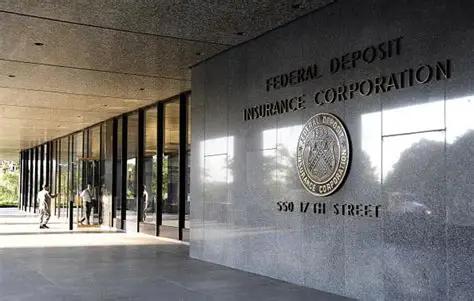
On July 27th local time, the Federal Deposit Insurance Corporation (FDIC) of the United States took emergency control of Horizon United Bank, with assets exceeding 80 billion US dollars.
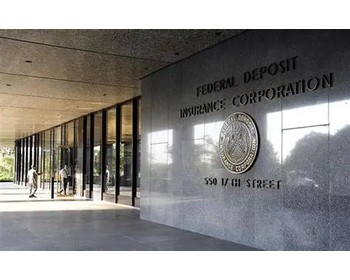
On July 27th local time, the Federal Deposit Insurance Corp…

On July 20, 2026, British politics welcomed its seventh pri…
In July 2026, the global financial market was at a critical…

The global stock market experienced a widespread sell-off o…

The sudden suspension of the 13 day US airstrike on Iran ha…

The results of the Federal Reserve's July rate meeting are …
© Copyright 2026, All Rights Reserved