In July 2026, the global financial market was at a critical juncture where multiple factors were intertwined. Geopolitical conflicts, changes in the monetary system,and cross-border debt pressures all converged, completely disrupting the stable market rhythm. The three core contradictions - high interest rate stagflation pressure, reconfiguration of gold reserves, and debt crisis in emerging markets - all emerged simultaneously. Coupled with the continuous amplification of the US dollar's tidal effect, the global monetary system and capital markets are undergoing a profound structural adjustment.
The geopolitical situation in the Middle East remains tense. The standoff between the US and Iran has disrupted the shipping order in the Strait of Hormuz, directly driving the international crude oil prices to surge significantly. Imported inflation has once again swept across major economies around the world. The rebound in inflation has completely reversed the previous expectations for interest rate cuts in the market. The Federal Reserve and the European Central Bank have all released hawkish policy signals, and the expectations for interest rate cuts this year have all vanished. The global high-interest-rate cycle has been further prolonged. The continuously rising 10-year US Treasury yield has put continuous pressure on the global bond market. Major economies are in a dilemma: loose monetary policies will exacerbate the energy inflation crisis, while maintaining high interest rates will continuously suppress corporate investment and consumer spending, continuously weakening the economic recovery momentum. Stagflation has already become the core theme of global macroeconomics in the second half of the year. The double upward movement of energy and interest rates has overturned the traditional asset pricing logic. The US dollar, crude oil, and gold have all strengthened simultaneously, and the volatility risk in global financial markets has continued to intensify.
Against the backdrop of global monetary tightening and fluctuating US dollar credit, the international reserve system is quietly undergoing a reshaping process, with the process of moving away from the US dollar advancing steadily. The latest financial data shows that gold has surpassed US Treasury bonds and become the largest reserve asset for global central banks. Central banks of many countries such as China, Poland, and Singapore have been continuously increasing their holdings of gold, accelerating the repatriation of their overseas gold reserves, and gradually reducing their holdings of US Treasury assets. Each country actively adjusts the structure of its foreign exchange reserves, with the core purpose being to hedge against geopolitical risks of US dollar assets and to break away from excessive reliance on the single US dollar system. This global reshaping of reserve assets is not a one-off process of the "dollar exit" trend, but rather a rational layout made by countries to prevent financial risks. In the long term, it will gradually dismantle the old pattern of the US dollar's dominance in the global currency system and promote the transformation of the international financial system towards a diversified direction.
The strengthening of the US dollar and the high-interest-rate environment have also plunged emerging markets into a severe financial predicament. The combined debt burden of more than 20 emerging economies, totaling 1.4 trillion US dollars, is approaching a concentrated maturity window. The continuously high US debt is exerting a strong capital siphoning effect, causing global capital to continuously flow back to the United States. As a result, currencies of many countries, such as the Indonesian rupiah and the Indian rupee, have continued to depreciate, and the foreign exchange market has remained turbulent. The IMF has issued multiple warnings, and several high-debt developing countries are on the verge of debt restructuring. The fiscal double deficits in countries like Argentina and Egypt are difficult to solve. To stabilize the local currency exchange rate and resist capital outflows, emerging markets have been forced to passively maintain high-interest policies, further squeezing the space for local economic recovery. The divergence and gap between global economies have continued to widen.
The various risks in the current global financial market are not isolated from each other. Energy geopolitical conflicts, changes in the monetary system, and debt pressures in emerging markets interact with and reinforce one another, forming the core challenges of the current global finance. In the short term, the market will still be dominated by US dollar liquidity and fluctuations in international oil prices, and volatile market conditions will become the norm. From a medium to long-term perspective, the diversification of reserve assets and the multipolarization of the financial landscape are irreversible development trends. The global market will also enter a new cycle of transformation through risk games.
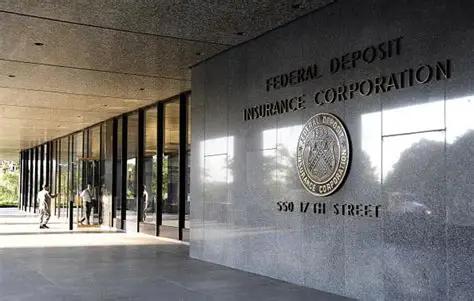
On July 27th local time, the Federal Deposit Insurance Corporation (FDIC) of the United States took emergency control of Horizon United Bank, with assets exceeding 80 billion US dollars.
On July 27th local time, the Federal Deposit Insurance Corp…

On July 20, 2026, British politics welcomed its seventh pri…

In July 2026, the global financial market was at a critical…

The global stock market experienced a widespread sell-off o…

The sudden suspension of the 13 day US airstrike on Iran ha…

The results of the Federal Reserve's July rate meeting are …
© Copyright 2026, All Rights Reserved