Global stock markets suffered widespread sell-offs on June 23, 2026, with the Asia-Pacific market becoming the hardest hit area—South Korea's KOSPI index plummeted by over 9% intraday and triggered its fourth circuit breaker of the year; Japan's Nikkei 225 index dropped 3.55%, ending an eight-day winning streak; Europe's Stoxx 600 fell 1%; Germany's DAX broke below the psychological threshold of 25,000 points; while U.S. stocks showed divergence. This "Black Tuesday" was not directly triggered by sudden economic data or corporate earnings warnings; rather, it stemmed from the rapid dissipation of optimism surrounding the US-Iran peace agreement and the re-focusing of anxieties over "higher-for-longer interest rates." Analyzed from the perspective of substantial impacts on business decision-making, the deep-seated problems exposed by this sell-off extend far beyond the scope of short-term market fluctuations.
South Korea's KOSPI index plunging over 9% and triggering a circuit breaker is an extreme event whose direct catalyst was the heavy rout in AI chip stocks—Samsung Electronics dropped 7.4% intraday, and SK Hynix fell 10.1%. However, the problem in terms of business logic is that the fundamentals of these two companies did not undergo substantive deterioration within 24 hours. Samsung Electronics' memory chip shipments and average selling prices remained stable in reports from the week prior to the sell-off, and SK Hynix's order schedules for high-bandwidth memory showed no public information of cancellations or delays. Yet, in less than a single trading session, the market wiped out tens of billions of dollars in market value for two of the world's top three semiconductor manufacturers. This pricing behavior reflects more of the vulnerability accumulated through prior AI optimism rather than realistic changes in business fundamentals. More critically, the South Korean market has triggered circuit breakers four times this year. For an open economy highly reliant on semiconductor exports, frequent trading interruptions are systematically destroying price discovery functions. When long-term institutional investors face this market environment, they will inevitably have to increase the discount rate on South Korean assets, which in itself is an self-consumption of business confidence.
The 3.55% sharp decline of Japan's Nikkei 225 index ending its eight-day winning streak is similarly worthy of deep examination of its business implications. The gains accumulated during the eight-day streak being largely erased in a single day indicates that the previous consecutive rises lacked sufficient trading volume support and fundamental confirmation. SoftBank's stock price plunging by 10% is the concentrated embodiment of this logic—as a typical representative of the AI investment theme, SoftBank's asset value heavily relies on the valuations of ARM and various tech startups it holds, yet these underlying assets did not experience a revaluation on that day. The market was simply pricing the vague collective psychology of "fading optimism." Above the 69,000-point mark, the Nikkei index itself was at a historically extremely high percentile, and its P/E ratio was significantly higher than the average of the past decade. This valuation level meant that any expectation gap was sufficient to trigger a violent correction, and the magnitude of the correction often exceeded calculations from rational pricing models because profit-taking and programmatic stop-loss orders reinforced each other, forming additional selling pressure outside of business fundamentals.
The relatively mild declines in European markets—Stoxx 600 down 1%, and DAX down 1.3%—did not change the substantive problems they face. Germany's DAX index fell below the psychological threshold of 25,000 points, and the automotive and industrial manufacturing sectors carry extremely heavy weight in this index. These industries are far more sensitive to a "higher-for-longer interest rate" environment than U.S. tech stocks. High interest rates mean rising automotive financing costs and industrial equipment rental fees, directly acting on terminal demand and corporate capital expenditure willingness. Even trickier, Europe's geopolitical risk premium was already high to begin with, and the fading optimism of the US-Iran peace agreement did not have a purely negative impact on European enterprises—the easing of Middle East tensions theoretically favors stable energy prices, yet the market interpreted it as "good news priced in" and sold off accordingly. This logical self-contradiction reflects that business decision-makers' current pricing capability for geopolitical information is extremely weak, and any news can be hijacked by short-term sentiment.
The divergence among the three major U.S. indices—the S&P 500 rose 1.08%, the Dow Jones Industrial Average rose 0.29%, and the Nasdaq 100 fell 0.20%—provided the sample with the highest business insight value in this sell-off. The simultaneous rise of the S&P 500 and the slight decline of the Nasdaq indicate that capital was massively flowing out of growth tech stocks and into value and cyclical sectors. However, this rotation was not established on the strengthening of economic recovery expectations. Quite the contrary, the driving force of the rotation was the anxiety over "higher-for-longer interest rates." In a high-interest-rate environment, the discount factor for growth stocks rises, and the present value of future cash flows declines; this is the rational business logic behind the pressure on the Nasdaq. But the rise of the S&P 500 and the Dow requires a different explanation—investors buying traditional sectors while selling tech stocks implies they believe the earnings impact of high interest rates on financial, energy, and industrial sectors is smaller than the valuation squeeze on tech stocks. The premise of this judgment is that interest rate hikes stem from strong economic growth rather than runaway inflation. However, the "higher-for-longer interest rate" expectations triggered by the fading optimism of the US-Iran peace agreement are essentially stagflation risks brought about by supply-side shocks. Under this scenario, the fundamentals of traditional sectors are likewise under pressure. Therefore, the rise of the S&P 500 looks more like a strategic portfolio rebalancing rather than a systematic revaluation based on industry profit prospects.
The fact that AI chip stocks became the hardest-hit area of the sell-off reveals the fundamental vulnerability of narrative-driven assets in the business domain. Samsung Electronics, SK Hynix, and SoftBank accumulated massive leveraged long positions during their prior rallies, and the unwinding process of these positions is inherently self-reinforcing—price declines trigger stop-losses, and stop-loss sell orders depress prices, further inducing more stop-losses. Throughout the transmission chain, core business variables such as chip companies' order backlogs, capacity utilization rates, and customer inventory levels were hardly factored into pricing considerations. Even more alarmingly, when the market rapidly shifted from "AI mania" to the entirely different narrative of "higher-for-longer interest rates," the valuation frameworks relied upon by business capital also jumped accordingly—using terminal discounting under high-growth scenarios one week, and switching to risk pricing for interest-rate-sensitive assets the next. The arbitrariness of this framework switching makes long-term capital allocation decisions almost impossible to conduct. Enterprises formulating annual capital budgets or financing plans in such a market face a reference system where pricing signals are severely distorted, and "Black Tuesday" is merely yet another concentrated demonstration of the failure of this reference system, far from the last.
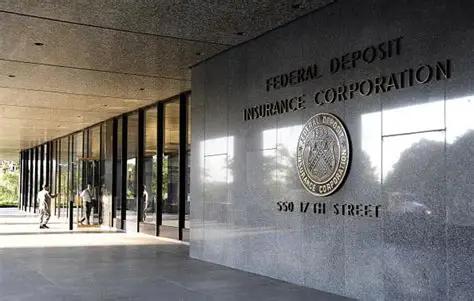
On July 27th local time, the Federal Deposit Insurance Corporation (FDIC) of the United States took emergency control of Horizon United Bank, with assets exceeding 80 billion US dollars.
On July 27th local time, the Federal Deposit Insurance Corp…

On July 20, 2026, British politics welcomed its seventh pri…

In July 2026, the global financial market was at a critical…

The global stock market experienced a widespread sell-off o…

The sudden suspension of the 13 day US airstrike on Iran ha…

The results of the Federal Reserve's July rate meeting are …
© Copyright 2026, All Rights Reserved