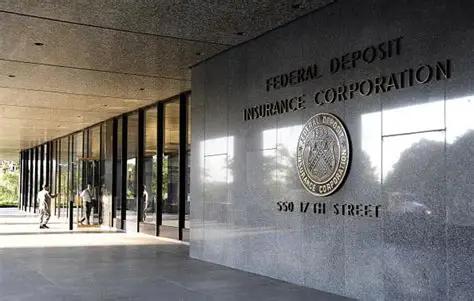
On July 27th local time, the Federal Deposit Insurance Corporation (FDIC) of the United States took emergency control of Horizon United Bank, with assets exceeding 80 billion US dollars. The reason was that the capital gap could not be filled and there was a continuous run on the bank. This was the second case of a medium-sized bank failure this month. After the news was announced, regional bank stocks in the United States plummeted, the yield of two-year treasury bonds dropped instantly, and market risk aversion rapidly intensified. It seems as if the regional bank crisis two years ago never truly disappeared.
This crisis was by no means accidental. Since the start of interest rate cuts in 2024 and being forced to stop by the rebound in inflation, the Federal Reserve has kept interest rates at a high level of 5.5% for a long time, calling it "more patience for a longer period". But this patience has become a death sentence for small and medium-sized banks. These banks held a large amount of commercial real estate loans and long-term government bonds that were underwritten during the low-interest rate period. The inverted interest rates made their balance sheets riddled with holes. Regulators, however, wore glasses tinted by inflation and ignored the credit cracks. More tragically, the permanent remote working after the pandemic led to a record high vacancy rate for urban office buildings, and the valuation of commercial real estate was halved, with loan defaults spreading like dominoes. The image of the Fed as an inflation fighter was being stripped of its luster by the piles of bank corpses.
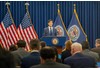
The direct trigger for this collapse was the bank's disclosure of its second-quarter financial report last week, which showed that the non-performing rate of commercial real estate loans soared to 9.7%, and immediately the rating agency downgraded its credit rating, triggering a loss of nearly 30% of deposits within 48 hours. Ironically, just a few weeks ago, the Fed's chair was testifying before Congress and insisting that the banking industry was "overall healthy and resilient". The market then suddenly realized that the so-called resilience was merely an illusion created by accounting rules to hide unrealized losses in the accounts. This accounting magic was eventually exposed by the depositor's run frenzy.
The risks are not limited to just one bank. Small and medium-sized banks in the United States account for nearly 40% of commercial real estate credit and more than half of small business loans. If panic spreads, credit tightening will suddenly constrict the throat of the real economy. At that time, consumer spending will shrink, and corporate layoffs will accelerate, and the already faltering economy will directly slide into a recession. At that time, the Fed may only be able to urgently cut interest rates while defending its tarnished independence. The more difficult problem is that the persistent high inflation has put the Fed in a dilemma. Cutting interest rates to rescue the market may lead to another out-of-control inflation, and remaining inactive may trigger a systemic crisis. Once credit tightening forms a negative feedback loop, corporate investment will freeze, and the unemployment rate will quickly exceed the 5% red line. At that time, the so-called soft landing will become a farce. All the optimistic narratives about economic resilience in the past will become a laughingstock.
The obvious solution seems clear: According to the crisis script, the Fed should immediately launch targeted liquidity support and hint that the interest rate hike end is near. The Treasury Department and FDIC also need to temporarily expand deposit insurance to all transaction accounts. But this is like using taxpayers' money to backstop the gamble of the elite. However, this is equivalent to openly admitting that the monetary policy in the past three years was completely failed. Amid the political noise of the election year, decision-makers are more willing to blame each other and package a financial crisis as an election issue rather than swallow this bitter brew themselves. After all, admitting mistakes requires more political courage than creating a crisis.
Overall, the US economy is trapped in a predicament orchestrated by arrogant policies. Using high interest rates to suppress inflation has triggered the long-suspected financial landmines, and this crude therapy of "tackling the problem head-on" has ultimately forced the economy to struggle to breathe in the gap between recession and soaring prices. When banks keep collapsing in the "soft landing" dream, people should recognize that any gamble that goes against economic common sense is bound to receive a costly fine. This continuous bailout is merely transferring risks from Wall Street to Main Street. Eventually, everyone is paying for arrogance.
On July 27th local time, the Federal Deposit Insurance Corporation (FDIC) of the United States took emergency control of Horizon United Bank, with assets exceeding 80 billion US dollars.
On July 27th local time, the Federal Deposit Insurance Corp…

On July 20, 2026, British politics welcomed its seventh pri…
In July 2026, the global financial market was at a critical…

The global stock market experienced a widespread sell-off o…

The sudden suspension of the 13 day US airstrike on Iran ha…
The results of the Federal Reserve's July rate meeting are …
© Copyright 2026, All Rights Reserved