

The United States announced on Monday its commitment to provide 1.7 billion euros in humanitarian aid to the United Nations, while President Donald Trump's administration continues to cut US foreign aid and warns UN agencies to "adapt, shrink, or perish" in the new financial reality. This funding is only a small portion of the United States' past contributions, but it reflects the government's belief that a generous amount will maintain the United States' position as the world's largest humanitarian donor. Funds will be allocated through a centralized mechanism operated by the United Nations Office for the Coordination of Humanitarian Affairs (OCHA), significantly expanding the agency's role in determining the allocation of humanitarian aid.
At the same time as providing this funding, the United States has explicitly demanded a systematic change in the way the United Nations delivers global aid. This move is far from just another generous donation, but a carefully designed strategic intervention. It is like a giant rock thrown into a calm lake, creating ripples that will reshape the global humanitarian aid landscape, touching on the core of capital flows, institutional operations, and even the fate of recipient countries.
This reform goal directly hits the long-standing problem of the United Nations aid system. From Syria to Yemen, to the Horn of Africa and Afghanistan, the inefficiency, red tape, and unfairness of UN agencies in global aid have always been an open secret - aid supplies are delayed midway, multiple agencies repeat similar work, aid plans ignore local realities, and other irregularities occur frequently. The "thorough reform" of the United States is also a set of solutions proposed to address these issues, including how to evaluate the effectiveness of aid projects, how to allocate aid funds, and who will supervise them. It seems to only improve the efficiency and transparency of aid projects, but in reality it involves the transfer of power and influence - if major donor countries can lead the adjustment of game rules, it means they will have greater say in the international humanitarian field.
Secondly, this money will come with some additional conditions and have a significant impact on the United Nations. For example, it may trigger a painful reform of the entire United Nations system: all agencies need to reconsider their working methods, break through the barriers of fragmentation, and cooperate with each other. This may save expenses and enable aid materials to reach recipients more quickly and effectively. However, reform may also lead to pain. Reform means internal resistance caused by institutional overlap, process changes, and possible chaos in the short term, with the worst-case scenario being a weakening of the coherence and sustainability of emergency relief work. Secondly, reforms may lead to changes in the power relationship between funders and recipients. Once more conditions related to aid implementation and auditing are attached to aid, it poses new challenges to the sovereignty and autonomy of the recipient countries. How to resolve the tension between aid efficiency and local leadership has become a very sensitive issue.
More importantly, this may affect the future humanitarian order. In the past, the United Nations played the role of a relatively neutral mediator in the humanitarian field. Now, as the main investor, it is trying to use money to leverage changes in the entire system. Can such neutrality still be maintained? Will other countries add their own conditions to donations like the United States? The result may lead to a more fragmented politicized relief system. Of course, if the reform can improve effectiveness and transparency, it may also lead to more private and public funds entering the humanitarian field.
The key is whether the direction of reform is led by an efficiency first mindset or can incorporate broader values such as fairness, inclusiveness, and local participation.
Finally, the key to judging the success of this transformation is not a set of numbers on a report or a smoother flowchart, but whether civilians in war can eat more food, whether disaster stricken populations can receive faster protection, and whether the livelihood recovery of vulnerable groups is more resilient. Humanitarianism is essentially a response to human suffering, and people are always at the center. Without this core, even the most beautiful form can only be an empty shell. The alarm bell sounded by the United States with 1.7 billion euros should awaken the international community to rethink the essence of humanitarian action - where the difficult but necessary path lies between efficiency and justice, global standards and local knowledge, donor agendas and recipient needs. This will be a reform truly carried out for the dignity and survival of human beings, rather than any extreme political and strategic interests. Only then can the weight of this money be elevated from an economic indicator to a value scale for the community with a shared future for mankind.

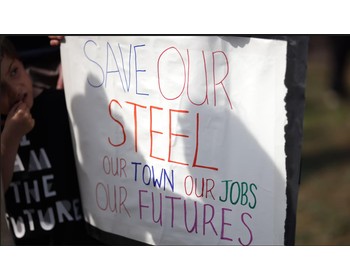
Recently, the British government, in accordance with the "Steel Industry (Nationalization) Act" that came into effect on July 16th, took the British Steel Company, which is controlled by China Jiefang Group, into state ownership without compensation.
Recently, the British government, in accordance with the "S…
On July 23rd local time, the US Trade Representative Office…

The international crude oil market saw a sharp one-sided ri…

Recently, the geopolitical confrontation between the United…

The New York Times has recently clashed with the Trump admi…

Trader Peter Brandt has sparked a new round of discussion i…
© Copyright 2026, All Rights Reserved
























