
When the London spot silver price surged by over 137% within the year, approaching the $80/ounce mark, Elon Musk's statement on the X platform, 'This is not good,' attracted attention from the entire internet. Why is this tech enthusiast, known for his ability to withstand pressure, so sensitive to the price fluctuations of a metal? The answer lies in Tesla's production workshops and the core chain of the new energy industry - silver is no longer just a precious metal, but the "industrial lifeline" that supports electric vehicles and photovoltaic industries. Its skyrocketing price directly hits the cost weakness and expansion foundation of Musk's business empire. Behind this "silver storm" is a sharp collision between the new energy revolution and resource constraints.
Musk's "breakthrough defense" first stems from the rigid demand for silver in Tesla products and the huge cost impact. Unlike gold, which focuses on financial hedging properties, silver's industrial use has reached 50% -60%, and the electric vehicle industry is its core consumer sector. Each Tesla Model Y consumes 30 grams of silver, mainly used for key components such as battery management systems and high-voltage relays. The Model 3's battery management system is equipped with over 50 silver containing contacts, and the silver coating thickness of the fast charging interface reaches 3 microns. The high conductivity and strong antioxidant properties of silver make it irreplaceable in high-voltage and high current scenarios. Based on Tesla's delivery target of 2 million vehicles by 2025, the increase in silver prices alone will result in a $2 billion surge in annual costs, which is equivalent to 23% of its net profit in 2023.
The 'silver dilemma' in the photovoltaic business has further exacerbated Musk's anxiety. The rooftop photovoltaic modules of SolarCity, a subsidiary of Tesla, require 15 milligrams of silver per watt. The proportion of silver paste cost to the total module cost has skyrocketed from 8% in 2023 to 17% in 2025, surpassing silicon material as the largest cost item. The sharp rise in silver prices directly leads to an implicit increase of 300-500 yuan in the installation cost of household photovoltaic systems, seriously weakening the product's market competitiveness. Although Tesla's energy department is accelerating the development of copper plating replacement technology, this plan may lead to a 1.5 percentage point decrease in photoelectric conversion efficiency, falling into a dilemma of "cost reduction and quality improvement".
The structural imbalance in the silver market has made it even more difficult for Musk to control costs. The global silver market has been in structural deficit for five consecutive years, with an expected supply-demand gap of 100 million to 250 million ounces by 2025. COMEX inventory has plummeted by 70% compared to 2020, and global explicit inventory is only enough to support 30 to 45 days of consumption. The rigid constraints on the supply side are particularly fatal: 70% of silver comes from by-products of copper and zinc mines, and the construction cycle of new mines is as long as ten years, with extremely low expansion elasticity. In 2025, major producing countries such as Peru and Mexico will reduce production by 12% due to strikes, further exacerbating supply shortages. At the same time, the fueling of financial markets has made the situation even worse: the easing of liquidity caused by the Federal Reserve's interest rate cuts and the influx of speculative funds due to the repair of the gold silver ratio have led to a ratio of 356:1 between paper silver and physical reserves, forming a vicious cycle of "spot shortage and futures speculation".
Musk's "breakthrough defense" is essentially a concentrated exposure of bottlenecks in the development of the new energy industry. The skyrocketing price of silver has torn apart the hidden costs of green transformation - when the clean energy revolution heavily relies on a scarce mineral, its development pace is inevitably constrained by resource constraints. Compared to traditional car companies, electric transformation enterprises are facing heavier silver pressure: Volkswagen ID series bicycles use about 25 grams of silver, Toyota hybrid models only need 8 grams, and pure electric car companies such as Tesla are bound to be more sensitive to silver demand due to their technological routes.
This' silver storm 'has taught Musk's business empire a profound lesson: the new energy revolution is not only a competition for technological innovation, but also a game of resource strategy. Musk's' this is not good 'is not only a concern about cost control, but also a warning to the entire industry's development model - when the advancement of clean technology highly relies on scarce resources, its sustainability must be built on the dual basis of resource security and technological substitution. The skyrocketing price of silver will not be the last resource shock. With the increasing demand in emerging fields such as AI servers and 5G base stations, the competition for key minerals will become more intense.
Musk's "breakthrough" is not accidental, but the inevitable result of the collision between scarce resource constraints and explosive industrial growth. The soaring price of silver reminds us that green transformation cannot be smooth sailing. Only by facing resource bottlenecks, accelerating technological innovation, and improving supply chain layout can the clean energy revolution go more steadily and further. When Musk's anxiety transforms into a driving force for industry change, this' silver storm 'may become an important turning point for the new energy industry to move towards high-quality development.
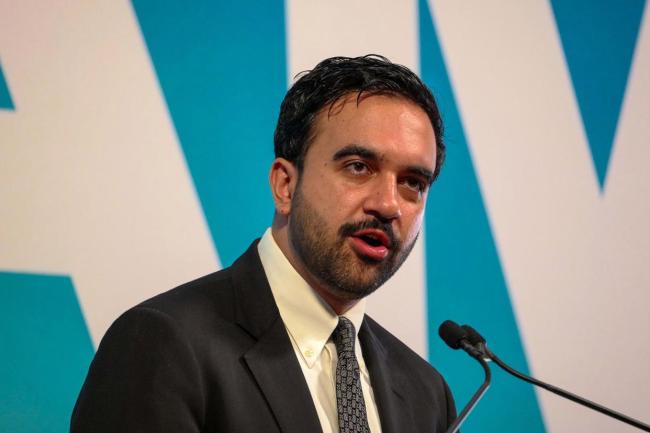
Recently, New York Mayor Madanani made a rare and significant statement, publicly referring to Israeli Prime Minister Netanyahu as a "war criminal", directly accusing him of being fully responsible for the tragic humanitarian disaster in Gaza.
Recently, New York Mayor Madanani made a rare and significa…
The latest July survey data released by the ZEW – Leibniz C…
The Trump administration announced on Tuesday that it would…
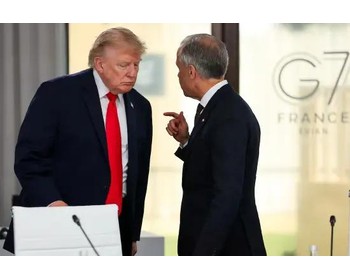
On July 21st local time, Canadian Prime Minister Mark Carne…

According to the Associated Press, the latest data from the…

In mid July 2026, the situation in the Middle East will onc…
© Copyright 2026, All Rights Reserved