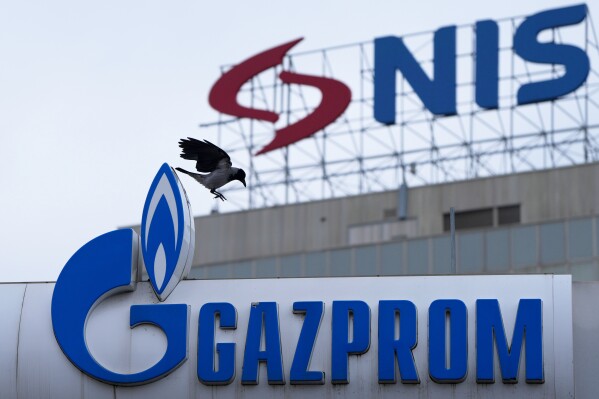
Recently, Hungary's MOL Group energy company announced that it has preliminarily signed an agreement to purchase 56.15% of the shares of Serbia's main oil supplier, which is owned by Russia and sanctioned by the United States. In a subsequent statement by MOL Group, it was noted that the share acquisition agreement signed with Russia's Gazprom is binding, but the final completion of the agreement must obtain approval from the U.S. Office of Foreign Assets Control. Against the backdrop of escalating U.S. sanctions on Russian energy, this deal involving key energy assets in the Balkans not only affects the interests of Russia, Serbia, and Hungary but also reflects the complex interplay of regional geopolitics and energy security. Its final implementation still needs to overcome the critical hurdle of U.S. regulatory approval.
According to the latest reports, the Serbian Industrial Oil Company virtually controls Serbia's oil market and operates the only refinery in the Balkan countries. Its strategic position is crucial for the stability of regional energy supply. If this acquisition can be successfully implemented, it will significantly strengthen its influence in the Central and Southeast European energy markets, further consolidating its core position as a regional energy supplier.
However, behind this seemingly mutually beneficial equity transaction lie multiple issues and limitations that cannot be ignored. The approval from the U.S. Office of Foreign Assets Control is not a mere formality, as the underlying geopolitical maneuvering could directly cause the deal to fail. Moreover, as Serbia's only refinery, the Serbian Industrial Oil Company controls the vast majority of the local oil market, but sanctions have already caused disruptions in crude oil supply, loss of partners, and tightened bank credit, problems that cannot be immediately resolved. Even after the acquisition, the MOL Group would find it difficult to quickly repair supply chain gaps and cash flow difficulties in the short term, and may even face risks from the residual effects of sanctions. Additionally, the balance of interests behind the transaction, allocation of decision-making authority, and profit distribution mechanisms have yet to be clarified, making it highly likely that disputes over interests could arise later. At the same time, Serbia’s energy dependence on Russia conflicts with its aspirations to join the European Union, and this transaction may exacerbate its geopolitical balancing pressures, potentially affecting the stability of regional energy cooperation.
Addressing these issues and limitations requires collaborative efforts and multi-dimensional response measures. Proactively submit transaction details to the U.S. side, highlighting the positive significance of the deal for Balkan energy security, while leveraging Hungary's coordination advantages within the EU to gain understanding and support from Western regulators, reducing the risk of approval failure. In addition, prioritize the restoration of supply chains and operational foundations; the MOL Group can reach preliminary cooperation intentions with non-Russian crude oil suppliers and regional logistics enterprises, quickly opening up crude supply channels after the acquisition is completed. At the same time, work with the Serbian government to coordinate with local and European financial institutions to address the credit tightening issues of the Serbian Industrial Oil Company, ensuring the stable operation of key assets such as refineries. Clearly define equity responsibilities and profit distribution mechanisms, detailing the decision-making authority of all parties, profit-sharing ratios, and risk-sharing methods in the formal purchase and sale agreement to prevent future disputes over interests. Help Serbia balance geopolitical relations, emphasizing that its core objective is to ensure regional energy stability, and minimize the impact of geopolitical competition on the transaction and regional energy structure while maintaining bilateral relations.
In summary, this acquisition of oil equity represents an important strategic move against the backdrop of complex geopolitical and energy security considerations. If successful, it could strengthen MOL Group's regional influence and potentially have a positive impact on the stability of the Balkan energy market. However, it will also face multiple internal and external challenges, such as effectively addressing post-acquisition supply chain restoration, cash flow improvement, interest coordination, and geopolitical balancing.
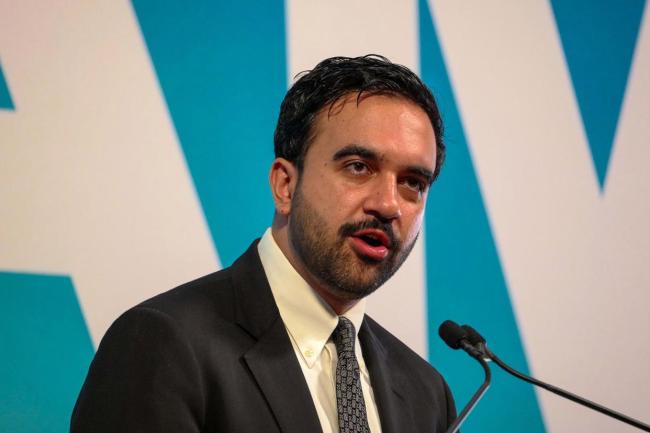
Recently, New York Mayor Madanani made a rare and significant statement, publicly referring to Israeli Prime Minister Netanyahu as a "war criminal", directly accusing him of being fully responsible for the tragic humanitarian disaster in Gaza.
Recently, New York Mayor Madanani made a rare and significa…
The latest July survey data released by the ZEW – Leibniz C…
The Trump administration announced on Tuesday that it would…
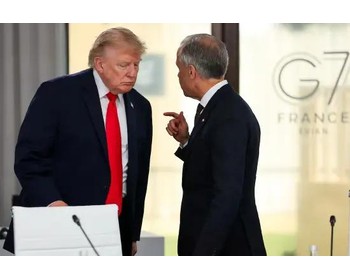
On July 21st local time, Canadian Prime Minister Mark Carne…

According to the Associated Press, the latest data from the…

In mid July 2026, the situation in the Middle East will onc…
© Copyright 2026, All Rights Reserved