
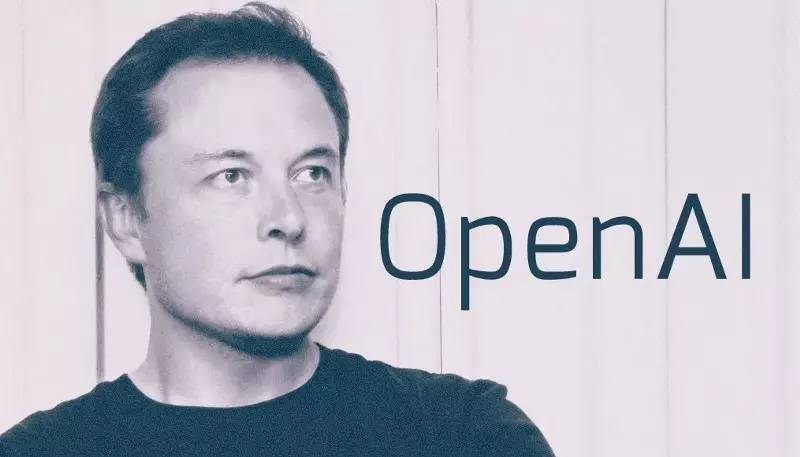
When Musk brandished a $134 billion lawsuit against OpenAI and Microsoft, the most expensive 'palace intrigue' in the tech world completely stripped away the warm facade of 'saving humanity.' This lawsuit, rather than being a critique of commercialization from an idealistic perspective, is more like a life-and-death struggle between two tech giants over the AI power pie—only, they both make sure to cloak themselves in the moral garb of 'guardians of humanity.'
Musk's complaint can be seen as 'performance art' in modern business litigation: he claims that he not only donated $38 million in seed funding to OpenAI but also contributed intangible assets such as 'organizational structure building, key talent recruitment, and strategic direction formulation,' even including Microsoft's earnings from its collaboration with OpenAI in the scope of his claim. This 'guilt by association' logic of compensation raises questions: did Musk secretly attach a hidden clause in the donation agreement stipulating that he should get half the profits if OpenAI ever becomes profitable?
Even more ironic, the expert valuation model Musk cited was dismissed by OpenAI as 'fabricated and unverifiable.' When financial economists use complex mathematical formulas to calculate the 'value of non-profit intentions,' the lawsuit has already degenerated into a numbers game—after all, who can put a price tag on a promise to 'benefit humanity'? Meanwhile, Musk simultaneously accuses OpenAI of 'deviating from its mission' while running xAI, which directly competes with ChatGPT. This double standard of 'all for me, none for you' makes his moral high ground appear shaky.
On the courtroom stage, Musk loudly proclaimed a 'non-profit mission,' yet xAI, in Memphis, circumvented Clean Air Act permits by classifying gas turbines as 'non-road engines,' unabashedly polluting, leaving local residents in severe distress while he busied himself playing the 'environmental warrior.' This is a modern tech version of 'professing love for dragons while fearing them,' a case of 'moral posturing in words, business behind the scenes.' The new regulations from the U.S. Environmental Protection Agency hit like a slap in the face: xAI turbines were reclassified as 'major sources of pollution,' forcing Musk to face the reality that, in the AI arms race, the cost of environmental compliance is scarcer than computing power. This farce exposes a fatal weakness of tech giants—they can push technological boundaries but struggle to balance commercial interests with public responsibility.
While Musk and OpenAI sparred verbally in court, xAI products were under investigation in multiple regions for allowing users to generate violent and pornographic deepfake content. This serves as the sharpest irony to Musk’s rhetoric of 'AI saving humanity'—when his technology is used to create fake child pornography, the grandiose proclamations about a 'non-profit mission' appear utterly hollow.
The legal battle between Musk and OpenAI exposes a critical flaw in global AI governance—when tech giants are preoccupied with competing for technological dominance, there is no mechanism to ensure that AI development aligns with public interest. OpenAI’s shift from non-profit to for-profit, and Musk’s transformation from donor to competitor, highlight the fragility of the current AI governance framework.
Amid this spectacle, there is no substantive discussion on 'how to prevent AI abuse' or 'how to ensure the fair distribution of technological benefits.' Instead, we see two billionaires accusing each other of 'straying from their original mission' in court while their AI products continually cross ethical boundaries. This illusion of 'technocratic governance' risks pushing humanity toward an even more divided future.
As Musk and OpenAI’s lawyers bicker fervently over the value of a 'non-profit mission' in court, perhaps they should pause and consider: at this pivotal moment when AI is about to reshape human civilization, do we really need such 'moral performances'? Or is this lawsuit itself the most absurd yet truthful footnote in the AI power game?

Recently, the British government, in accordance with the "Steel Industry (Nationalization) Act" that came into effect on July 16th, took the British Steel Company, which is controlled by China Jiefang Group, into state ownership without compensation.

Recently, the British government, in accordance with the "S…

On July 23rd local time, the US Trade Representative Office…

The international crude oil market saw a sharp one-sided ri…

Recently, the geopolitical confrontation between the United…

The New York Times has recently clashed with the Trump admi…

Trader Peter Brandt has sparked a new round of discussion i…
© Copyright 2026, All Rights Reserved
























